
Appearance
Record the color sample, print position, visible surface and acceptable variation.
Use your quality checklist to connect an approved sample with the bottle and complete pack that will be supplied. Cover the appearance, dimensions, component operation and packing requirements relevant to your product, with clear references for each check.
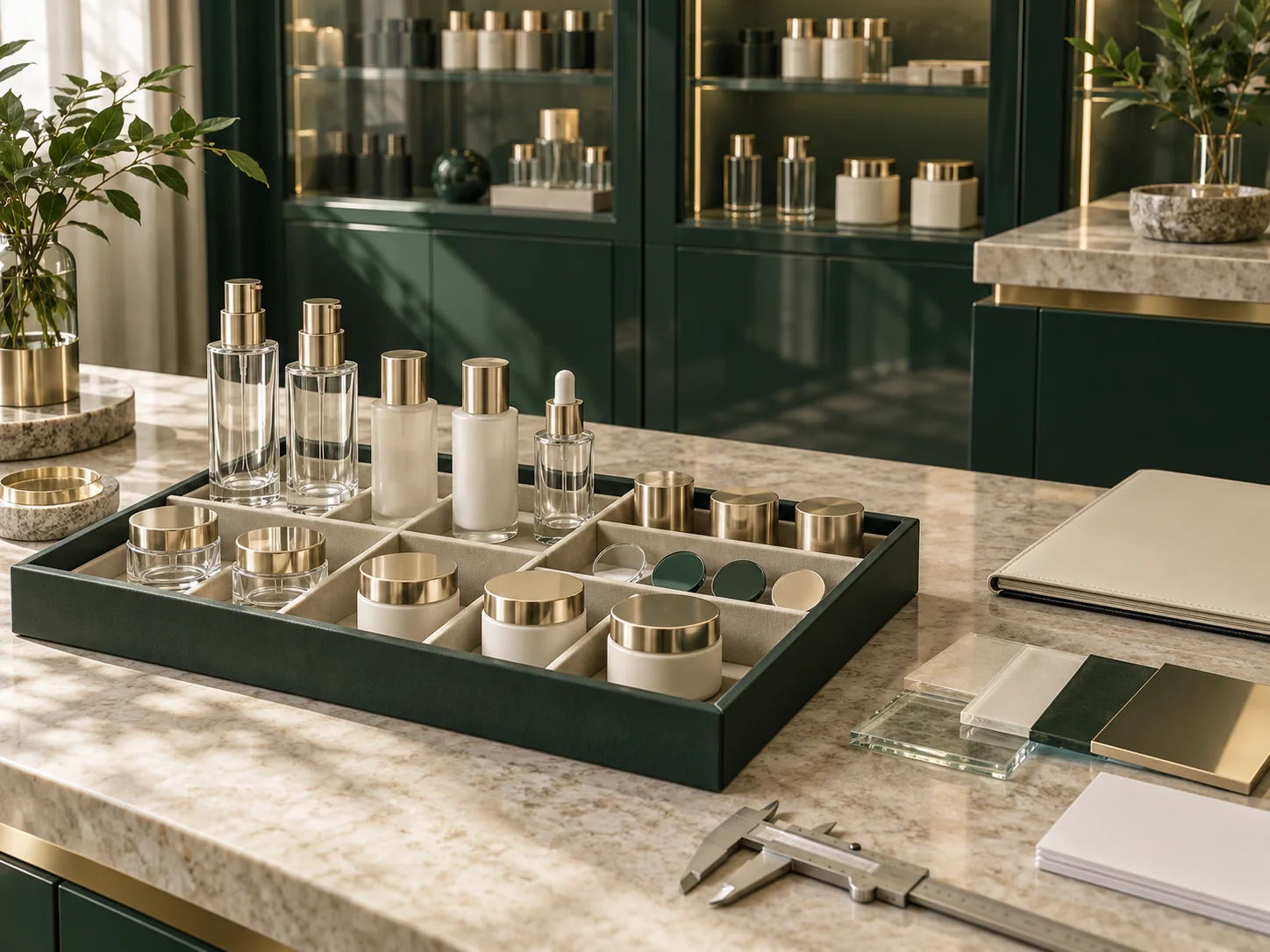
Your packaging choices

Record the color sample, print position, visible surface and acceptable variation.
Identify the drawing revision and the interfaces that need to fit together.
Evaluate closure, dispensing and relevant product-contact performance on the selected assembly.
Review separation, support, labels and protection for the intended delivery route.
A useful quality checklist describes the actual pack: component references, drawings, artwork and the sample used for comparison. State which features matter to function and which define appearance. Keep the accepted visual range and test conditions with the specification so different teams are working toward the same result.
Bottle dimensions and visual condition matter, but the closure interface also needs review. Check the selected pump or cap, liner and bottle together. Include priming, dispensing, closing or opening as appropriate. A component that passes an individual check can behave differently after decoration, assembly or filling.
Review print position, label application, color and surface finish on the final substrate. Check the assembled pack in its insert or shipping case. Protective packing should account for projecting caps, glass contact and the weight of the finished unit. Agree suitable handling or transit checks for the actual distribution route.
Record what was inspected, the component or batch reference, the method and the outcome. If something differs from the approved sample, identify the affected feature and agree the next action. Recheck a changed component or process before treating the earlier approval as sufficient for the revised pack.
Start by identifying the pack and sample version being reviewed. Then separate appearance, dimensions, component operation and packing protection. Record the relevant reference for each area and describe any issue clearly enough that the next sample can address it. A note such as “adjust the finish” is less useful than identifying the surface, the comparison sample and the result you want to see.
Bring the completed pack into the review where possible. A bottle, closure and carton approved separately may still need evaluation as a set. PauPack can help coordinate that assembled view and keep the agreed references connected to the order. If a component or artwork changes later, return to the checklist to identify which checks need to be repeated, rather than assuming the earlier approval covers the new version.

People behind your packaging
Since 2013, PauPack has combined manufacturing and trade services for packaging projects. Investment in four factories supports our work across bottle development, production and complete packaging coordination.
Explore our history ↗
Customer feedback
“Their attention to detail, from material selection to final finishing, ensures our products always stand out on shelves.”
Claud** Wagn** · Watsons
Published in PauPack’s customer feedback
Packaging questions
A visual sample establishes appearance only to the extent agreed. Confirm whether it also contains the final materials, closure and filling configuration. Dispensing, sealing and product-contact questions need their own review with representative components and the intended formula where relevant.
Review the selected neck drawing, threads or attachment features, sealing surfaces and engagement with the cap or pump. The nominal diameter alone is not a complete interface specification. Keep the bottle and closure references together with the assembled sample.
Review a change to the resin, liner, pump, cap, neck, decoration or assembly method against the functions it can affect. Confirm the revised configuration before release, especially when an earlier approval applied to a different combination.
Include the pack or component references, batch, inspection method, agreed criteria and observed results. Photos can help show an appearance issue, but they should be connected to the sample or batch being discussed.
Include the approved sample and revision, dimensions, neck and closure fit, dispensing or opening function, appearance, decoration placement and protective packing. Add the formula-contact, filling and transport checks relevant to the product. Record acceptance criteria and responsibility for each check. A useful checklist defines what a pass means for the actual package. Quality Control Testing →
Identify the pack and revision, the characteristic checked, the method and acceptance limit, and the result. Include the relevant sample reference and reviewer. Record any deviation and its disposition so the next order is not based on an unresolved or undocumented exception. Quality System →
CONTINUE YOUR PROJECT
 CONTINUE READING
Explore related guides and practical project tools.
APPLY THE GUIDANCETurn your references and product requirements into a design, sample and production brief.
 APPLY THE GUIDANCE
Agree the test conditions, acceptance limits and records needed for your packaging and formula.