
Bottle finish
Use the relevant drawing and actual sample to compare engagement and sealing surfaces.
PAUPACK / RESOURCES
Choose the dispensing experience your product needs, then match the bottle and closure as a complete assembly. This guide explains why neck designation, sealing geometry, component construction and sample conditions all matter.
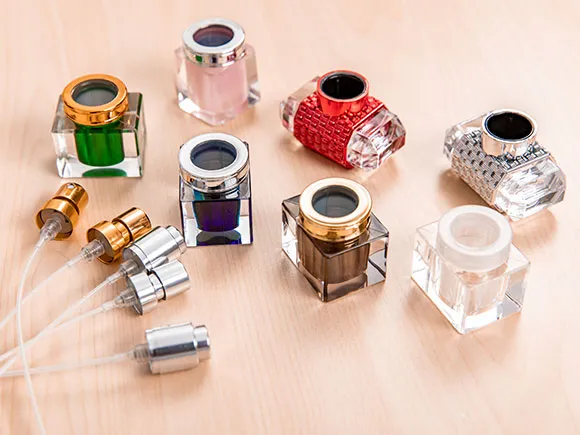
Your packaging choices
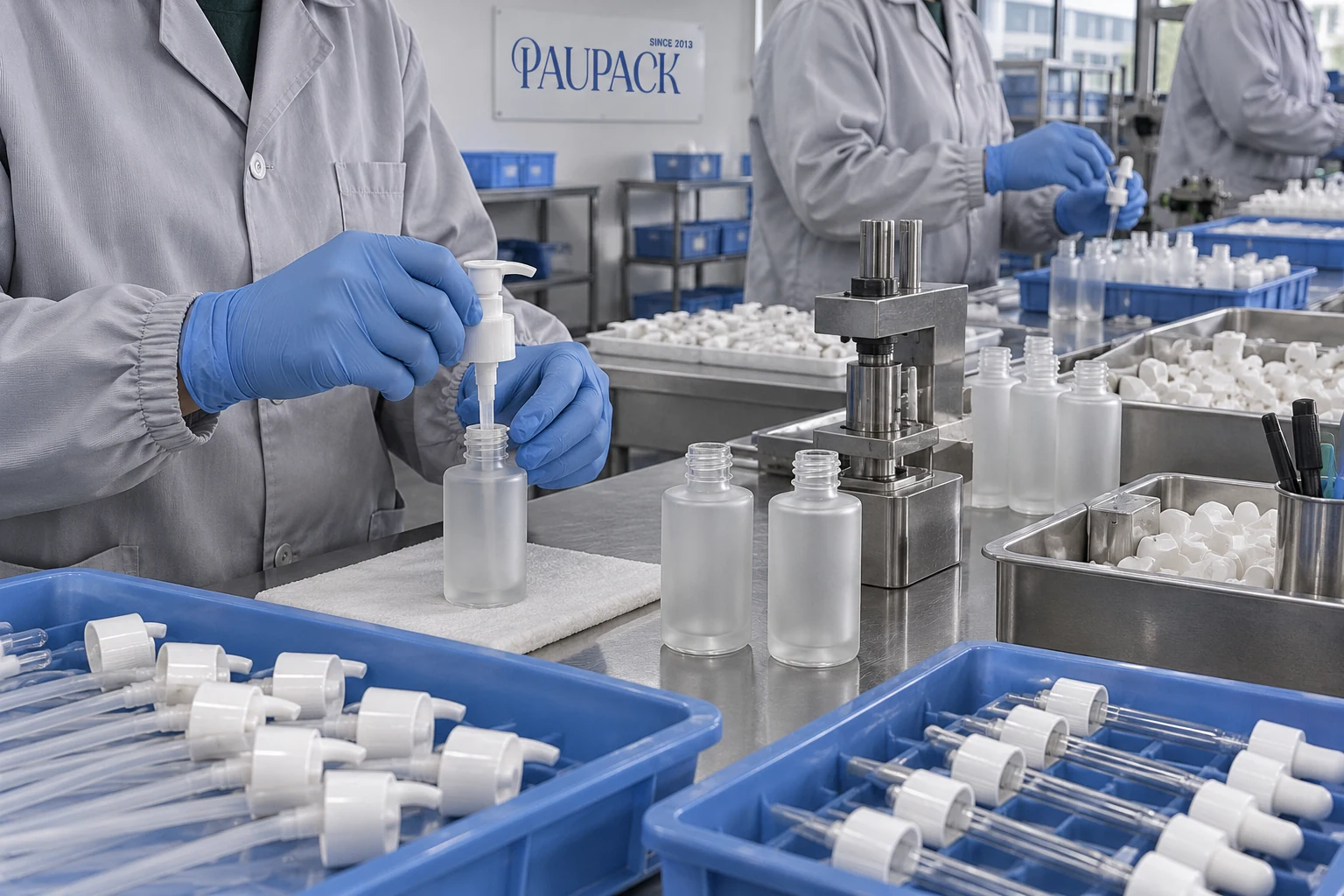
Use the relevant drawing and actual sample to compare engagement and sealing surfaces.
Identify the exact construction, liner or gasket and closing method.
Include your formula when evaluating the selected contact materials and dispensing behavior.
Record the component combination and conditions used for the accepted sample.
Review the complete assembly
Bring component interfaces and test conditions into the same review.
READ THE GUIDEBring component interfaces and test conditions into the same review.
READ THE GUIDEConnect bottle form, pump, cap and decoration decisions.
TECHNICAL REFERENCE
Use the bottle and closure drawings together. A similar appearance or a nominal neck diameter alone does not establish a working fit.
| Drawing or specification item | What to compare |
|---|---|
| Drawing reference | Match the product reference and revision on the bottle, closure and assembly drawings. |
| Capacity & main dimensions | Distinguish nominal fill from brimful capacity. Review overall height, width and the dimensions relevant to filling and packing. |
| Neck finish & seal | Compare the attachment details and sealing surfaces of both parts, then evaluate representative assembled samples. |
| Dispenser & fittings | Review the pump or sprayer reference, collar, cap, dip tube and intended dispensing action as applicable. |
| Packing information | Confirm unit weight, case quantity, shipping dimensions and pallet configuration for the selected assembly. |
FROM LEARNING TO A PROJECT
PREPARE THE BRIEF
Download the project brief and review checklists, then bring the relevant drawings, formula category and samples to the discussion.
Get the checklistsThe closure is part of the way someone experiences your product. A spray, lotion pump, dropper or jar lid creates a different interaction, even when the container has a similar appearance. Begin with the intended use: how the product should leave the pack, how it will be handled and whether it needs to be locked or covered between uses. Those questions help PauPack narrow the component options before color and surface finish are finalized.
The contents provide important context. A component selected for one product may not perform in the same way with another. Share the formula category and relevant filling or handling conditions with the team responsible for evaluating compatibility. Packaging selection and product testing should stay connected throughout the sample process.
A stated neck size is helpful for identifying a possible match, but it is not a complete specification for the assembly. The bottle finish, thread or engagement features, sealing surfaces and closure construction need to be considered together. For a dispensing pack, the dip tube, pump or sprayer and any decorative collar are also part of the combination.
When you already have a bottle or closure, an actual sample and its available drawing can make the discussion more precise. If the reference is being replaced, identify which features must remain the same. This allows the project team to assess a proposed alternative against the requirement rather than relying on visual similarity.
An assembled sample lets your team look at practical details that are not obvious in separate component photographs. Consider opening and closing, pump unlocking, the feel of the actuator, overall height and the relationship between the cap and bottle. The visual result matters too: collars, finishes and colors should support the same brand direction when the parts are brought together.
The review should reflect the intended use and distribution conditions. Define which checks are needed and who is responsible for them, including any evaluation performed by your filling partner. Keep the sample version and component references with the results so the approval can be traced to the actual combination.
A visually similar replacement component can still change the assembled result. Material, construction, sealing details or dimensions may differ, so a proposed substitution deserves review before it is used. The same applies when a bottle is resized, a closure finish is changed or a refill system is introduced. Treat the change as a packaging question, not just a purchasing substitution.
PauPack can help coordinate bottles, pumps, caps and supporting components within one project. Use the matching checklist to organize the references you already have, then explore the relevant component and quality pages. If the combination is still undecided, a sample-matching discussion is a practical place to begin.
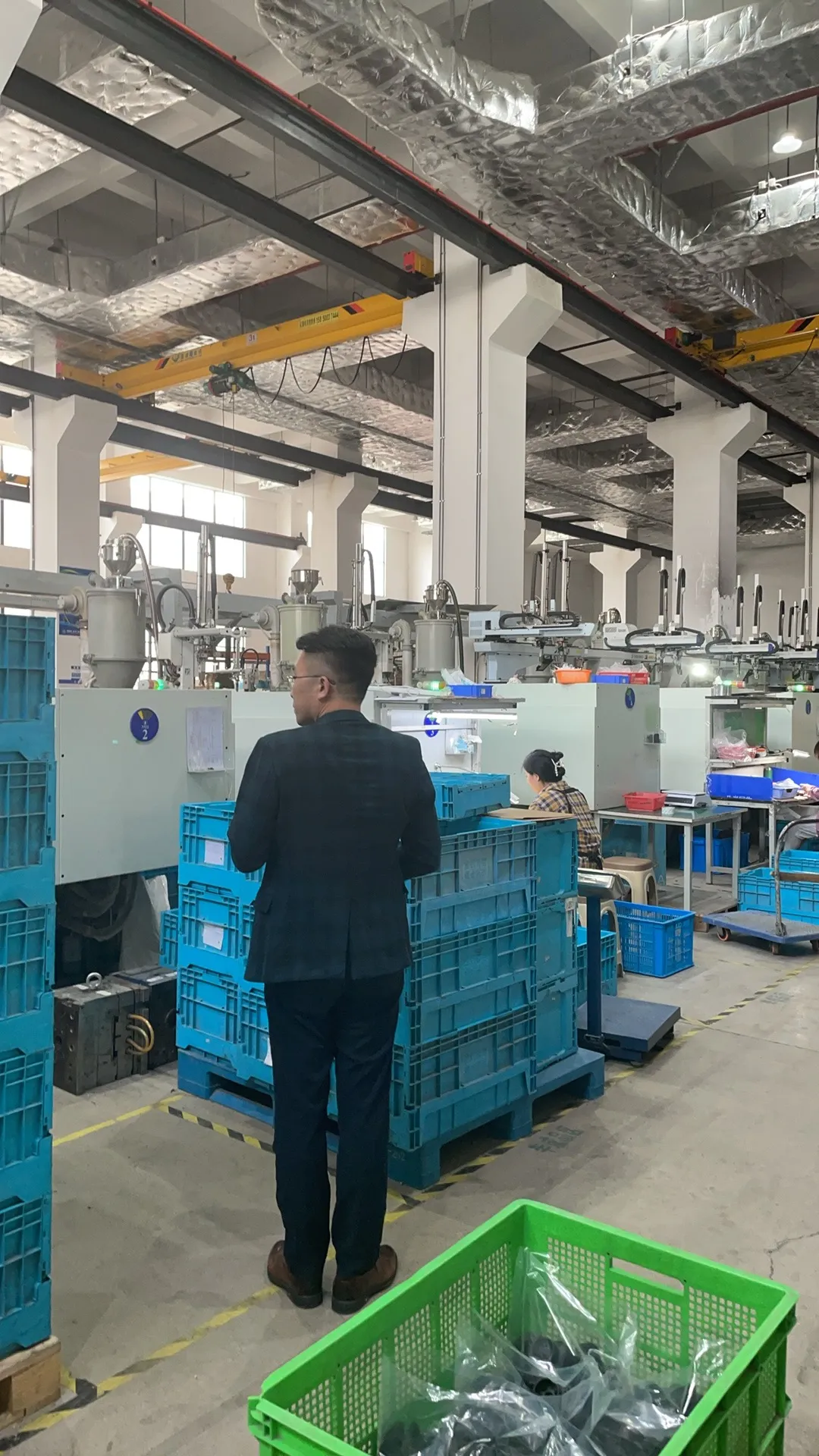
People behind your packaging
Since 2013, PauPack has combined manufacturing and trade services for packaging projects. Investment in four factories supports our work across bottle development, production and complete packaging coordination.
Explore our history ↗
Customer feedback
“Their attention to detail, from material selection to final finishing, ensures our products always stand out on shelves.”
Claud** Wagn** · Watsons
Published in PauPack’s customer feedback
Questions & answers
Identify the exact bottle and cap references and compare the neck drawing, sealing parts and assembly conditions. Keep the formula and observed failure with the samples. Review the complete combination before assuming that a tighter application or another similar cap will resolve the issue. Closure Compatibility →
Review the actual neck finish, attachment, sealing parts and installed height. Check opening and closing on the intended container rather than judging compatibility by nominal diameter. The cap finish and weight should also be reviewed with the bottle so function and appearance are approved together.
CONTINUE YOUR PROJECT
YOUR NEXT STEP
Share the product use, target size, material direction, estimated quantity and launch needs. Choose the route that matches the information you have today.
For a new form, custom tooling, decoration or a coordinated packaging system.
CHECK A REFERENCEFor a bottle, pump, cap or assembly that needs a fit and performance review.
COMPARE OPTIONSFor a selected product family and an initial commercial discussion.