Component list
Identify every supplied part, its current reference and whether it is already approved.
Bring your bottles, pumps, caps, decoration and paper boxes into one coordinated project. PauPack helps connect component decisions and supply responsibilities so your team can review the finished pack without managing every interface separately.

Your packaging choices
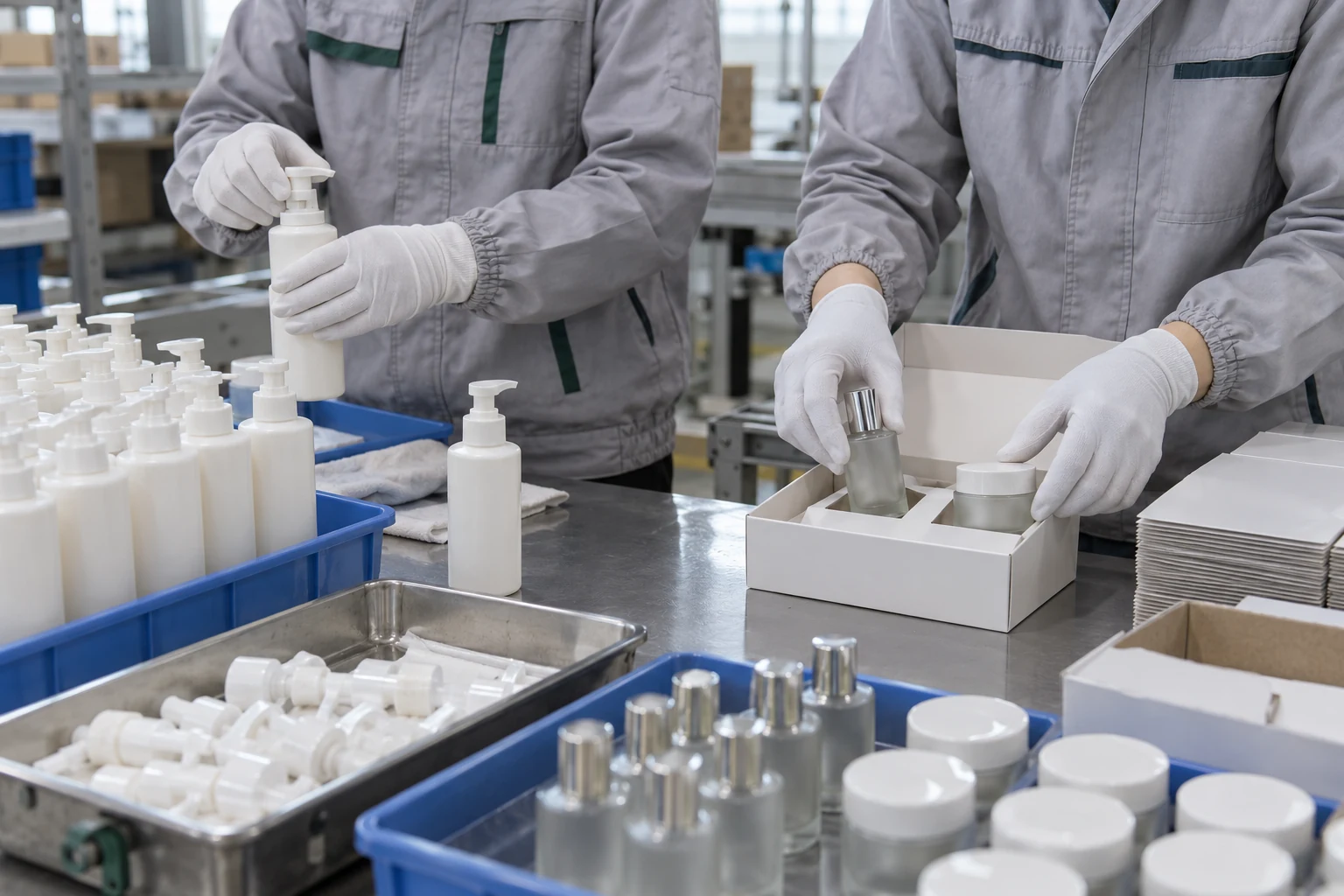
Identify every supplied part, its current reference and whether it is already approved.
Review the bottle neck, closure, assembled height and box insert together.
Keep the finish and artwork consistent across materials and suppliers.
Agree what arrives assembled, separately packed or ready for your filling partner.
Component fit, formula contact, decoration and distribution conditions should be reviewed together.
Consolidation is useful when a change in one part affects the rest of the packaging. A revised bottle height can change a dip tube and carton; a coating may need extra transit protection. We review these connections before release and keep the current references with the order. Your team can then compare the complete supply scope and understand which responsibilities remain with each manufacturing or filling partner.
A packaging project can become difficult to manage when the bottle, closure, decoration and carton are discussed separately. A change made with one supplier may affect another component, and the person responsible for the complete result can become unclear. PauPack brings those connected decisions into one project conversation, with the scope and supply responsibilities identified at the start.
Begin by listing the components and the current stage of each item. Some may already have approved references, while others may still be under development. This makes it possible to focus coordination on the interfaces and decisions that remain open instead of restarting the whole project.
The benefit of consolidation is clearest when the team can review the finished combination. Bring the container, closure, decoration and supporting pack together and identify the approved versions. Keep the assembly and delivery requirements with that reference, so the quotation and production handover describe the same scope.
If a component changes, assess the effect on the rest of the pack and the schedule before release. PauPack can help organize those discussions and keep the relevant parties working from consistent information. The aim is fewer disconnected decisions and a clearer view of the finished packaging, while the actual manufacturing and supply responsibilities remain defined for the project.
Bring your current component list and identify the handoffs that consume the most time; those are useful priorities for the first review.

People behind your packaging
Since 2013, PauPack has combined manufacturing and trade services for packaging projects. Investment in four factories supports our work across bottle development, production and complete packaging coordination.
Explore our history ↗
Customer feedback
“Their attention to detail, from material selection to final finishing, ensures our products always stand out on shelves.”
Claud** Wagn** · Watsons
Published in PauPack’s customer feedback
Packaging questions
The limiting item is usually the container, a custom closure, color batch, decoration process, insert or secondary pack with the highest manufacturing minimum. Identify that item early so the team can compare a faster stock alternative with the requested premium specification.
The brand should define the commercial and visual brief; the filler should confirm process-relevant requirements; and the packaging supplier should document the proposed components, samples, stated checks and production assumptions. A shared approval record avoids gaps at handover.
Approve the assembled system, material and finish reference, artwork, relevant fit or performance checks, packing configuration, quality criteria and delivery instructions. Any project-specific documentation should be confirmed before it is quoted or used in a market claim.
One coordinated specification reduces repeated conversations about bottle dimensions, pump fit, artwork and carton size. PauPack can bring those decisions into a shared sample and approval route. Savings depend on the project: an existing mold may avoid tooling, while shared components may simplify purchasing. Compare the full quoted scope before assuming a particular cost reduction. Complete Packaging Systems →
No. Bring the approved bottle, closure or artwork references and identify where coordination is difficult. We can review the missing components or handoffs around those references. Any proposed replacement should have a clear reason and go through the relevant sample approval. Complete Packaging Systems →
CONTINUE YOUR PROJECT
 CONNECTED PROJECT STEP
PauPack solutions connect product selection, custom development, decoration, component matching, quality coordination and commercial delivery.
 CONNECTED PROJECT STEP
Turn your references and product requirements into a design, sample and production brief.
CONNECTED PROJECT STEPReview the shape, wall sections, neck interface and decoration area before finalizing the design.
PACKAGING GUIDESUse the related guidance before confirming the next selection or sample.
READ THE GUIDEIdentify the information and approvals needed before production release.