Requirements
Application, material, capacity, closure, volume, market and timing.
A staged process from brief and selection through validation, production and delivery.
DEVELOPMENT ROUTE
Compare an existing format, decorated stock and full custom development.
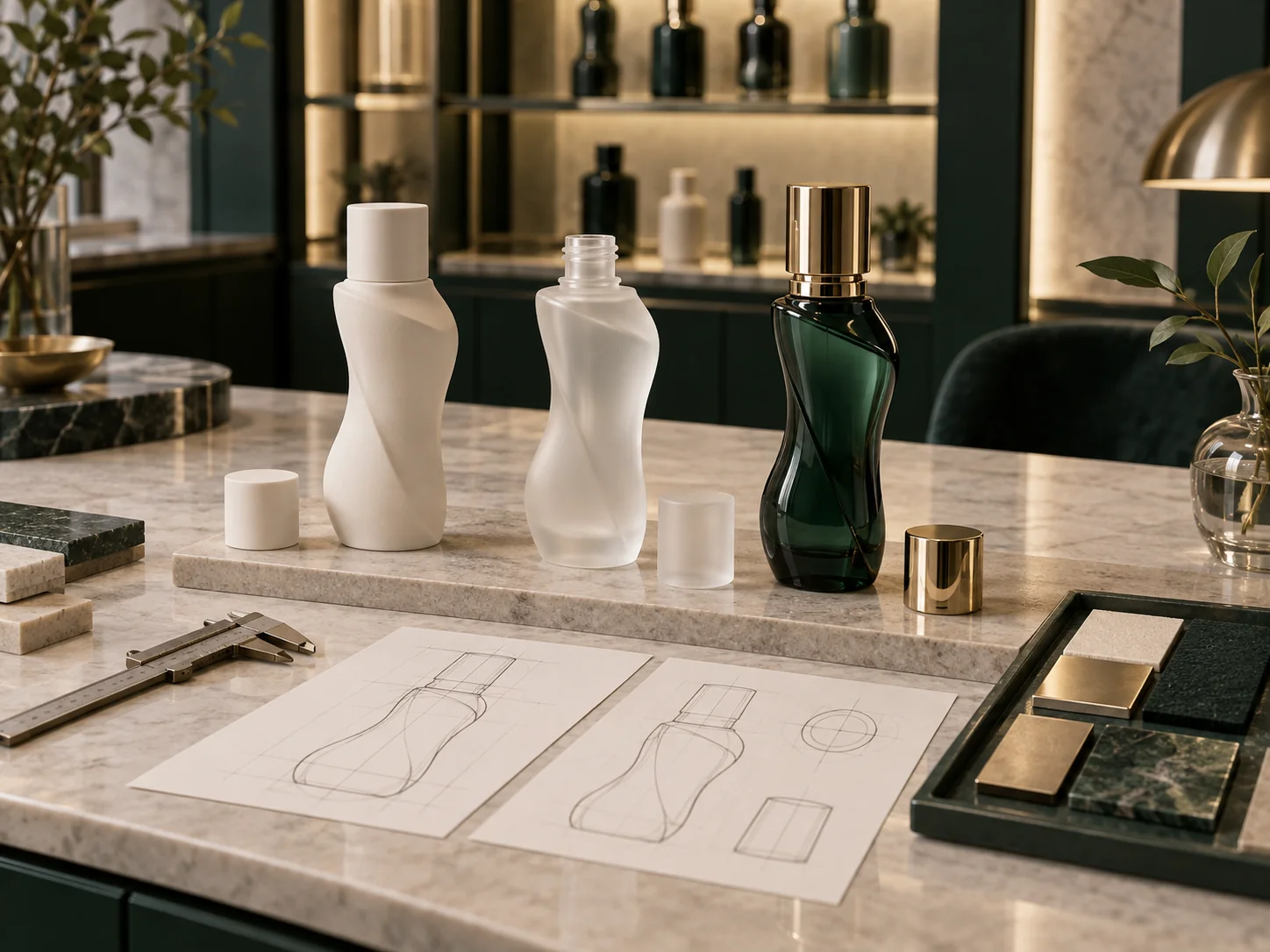
STAGE 02Review the shape, wall sections, neck interface and decoration area before finalizing the design.
STAGE 03Agree the tooling scope, ownership, trial samples and change process before work begins.
STAGE 04Review quotations, sample criteria and approval before production release.
STAGE 05Connect the approved drawing and sample to material, process and inspection requirements.
STAGE 06Define which components arrive assembled, how the pack is protected and who checks the finished set.
STAGE 07Confirm pack-out, inspection records, shipment identification and responsibilities at handover.
Quality checks run throughout the project. The exact scope, quotation, sample plan and production release are agreed for the selected route.
A staged process from brief and selection through validation, production and delivery. Confirm the available options, technical limits and required validation in your project brief.
Application, material, capacity, closure, volume, market and timing.
Stock, decorated, custom-developed or integrated system route.
Samples, compatibility, dimensions, quality and transit checks.
Approved specification, production standard and delivery plan.
Component fit, formula contact, decoration and distribution conditions should be reviewed together.
Agree the requirement and scope.
Use objective limits and tests.
Test actual production components.
Keep approval and revision evidence.
Some clients come with a drawing; others have a finished product and no packaging selection yet. PauPack can begin at either stage. Tell us what is already decided and what is still open. A reference sample, visual direction or filling requirement can be enough to focus the first discussion. We then connect the available product routes with the design and supply work the project needs.
When an existing format fits, the next decision may be a closure, finish or carton. When the shape is central to the brand idea, the project may move into design review and tooling feasibility. The development route should follow the requirement rather than add steps that do not help the product.
A visual concept helps choose a direction, but a production reference needs more detail. Keep the selected container, component combination, artwork and finish together as the project develops. Review samples with a clear question in mind: appearance, fit, dispensing or the completed presentation. Record any changes before the next stage begins.
Before an order moves forward, align the approved pack with the commercial and delivery scope. This gives your brand, purchasing and filling teams a common reference. For a later reorder, review any changes to contents, components, artwork or delivery conditions before relying on the earlier approval.
Packaging questions
Approve the assembled component set, material and finish reference, relevant fit or performance criteria, artwork, packing configuration, delivery instructions and any required project documentation. Record the decisions so every stakeholder works from the same version.
Start with the product brief and choose a bottle or collection. Develop the shape, components and finish; commission tooling only where needed. Review samples before approving production and decoration, then coordinate assembly, quality checks and delivery. Quotation and sample discussions begin early and continue when a specification or order changes. Custom Packaging Development →
Set the required function, capacity, main geometry and interfaces with closures or other components. Identify decoration and packing constraints, then agree the drawing revision and trial-sample route. A distinctive feature should have a clear purpose and a practical way to be produced and checked.