Container and closure
Review engagement, sealing surfaces and the selected assembly conditions.
Solutions
Reduce avoidable problems by reviewing your bottle, closure and finished pack as one system. PauPack connects component matching, sample inspection, decoration review and transit packing with the acceptance criteria for your product.
Your packaging choices

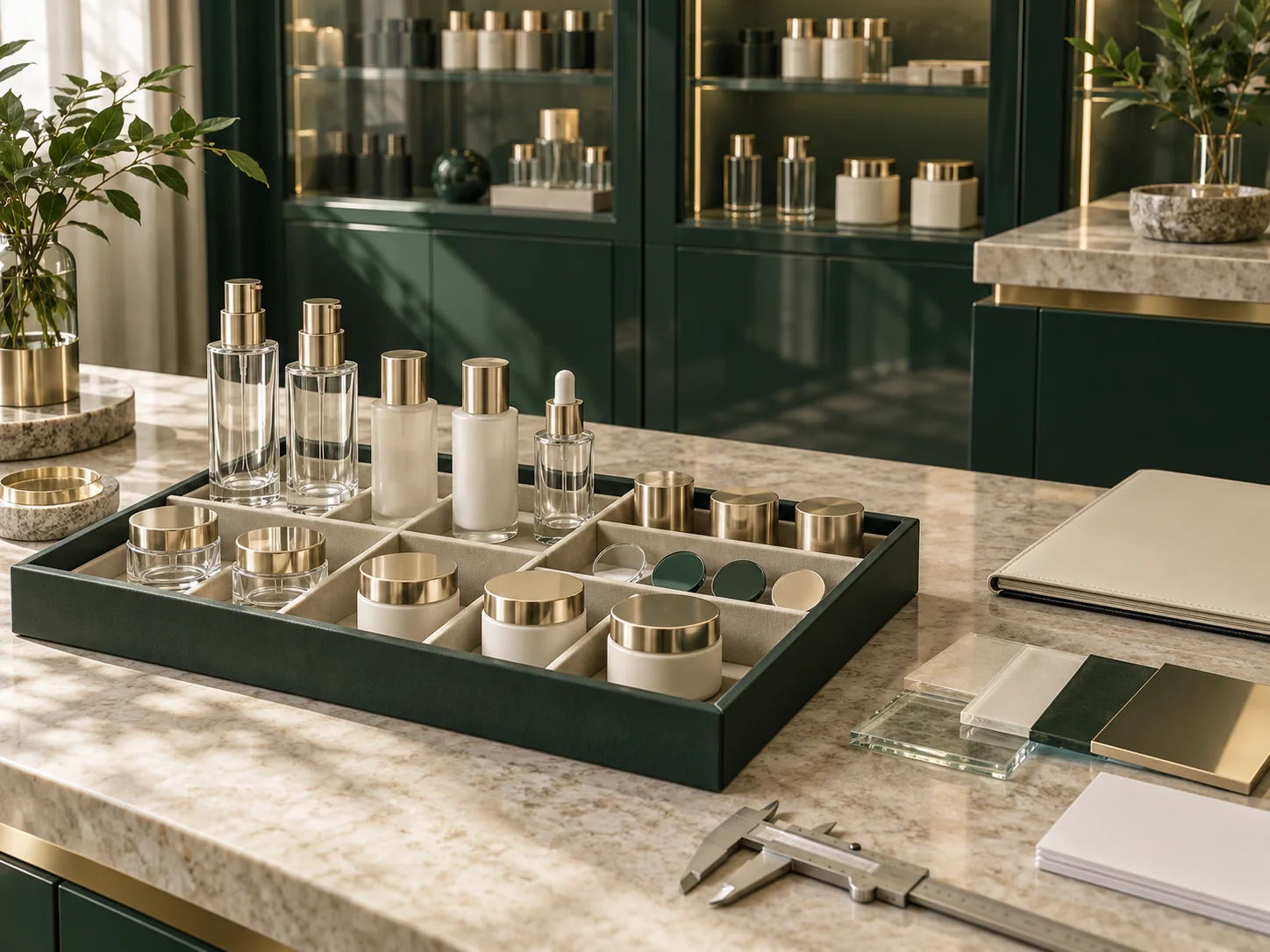
Review engagement, sealing surfaces and the selected assembly conditions.
Use your actual product where compatibility or dose performance must be evaluated.
Set references for color, print location and surface appearance.
Review abrasion, separation and support in the intended packing arrangement.
Execution controls
When a sample shows a problem, record the exact component combination and the conditions in which it appeared. Changing several parts at once can hide the cause. Compare controlled sample sets, document the accepted correction and repeat the relevant checks when a material or component changes. This gives your next production order a clear reference for both appearance and function.
Your selection priorities
Cosmetic packaging quality control brings packaging compatibility testing, leakage review, pump output checks, decoration adhesion and packing evaluation into a defined approval route. The required checks depend on the actual container, closure, formula or contents, finish, delivery route and agreed quality standard.
The aim is not to use a generic test list. It is to make the relevant risks visible before commercial production and to record the selected components, sample conditions, packing configuration and decision owner.
When a sample changes, keep the original and revised component references together. Describe the observation, the conditions in which it appeared and the feature being changed. Compare the revised assembly under the agreed checks before replacing the production reference. That record helps your team see what was resolved and what still needs review.
People behind your packaging
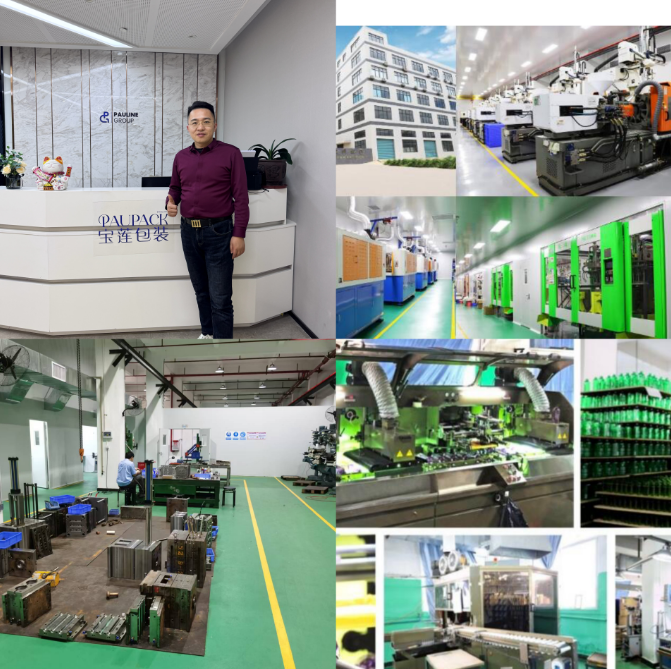
Since 2013, PauPack has combined manufacturing and trade services for packaging projects. Investment in four factories supports our work across bottle development, production and complete packaging coordination.
Explore our history ↗
Customer feedback
“Their attention to detail, from material selection to final finishing, ensures our products always stand out on shelves.”
Claud** Wagn** · Watsons
Published in PauPack’s customer feedback
Packaging questions
Start with the real use case: formula or contents, filling method, component interface, storage, handling, decoration, packing and destination. The review should identify where appearance, fit, leakage, dispensing, transport or documentation risks need a written criterion or agreed check.
Treat the container, neck finish, cap, pump, sprayer, dropper, liner, dip tube or insert as an assembled system. Confirm the intended component combination and any project-relevant fit, output, seal or locking expectation before relying on a sample result.
The reference should state the acceptable material and color direction, surface effect, decoration placement, assembly standard and any known limitations. It should be specific enough for inspection teams to distinguish an approved variation from a nonconforming production result.
Packaging quality does not end at the container. Define protective packing, orientation, separation, carton conditions and delivery route early because contact, abrasion, vibration and stacking can change the appearance or performance seen by the receiving team.
Changes to material, bottle geometry, neck finish, closure, product-contact parts, decoration or packing can affect the approved result. Review the significance with the product and filling teams. Keep the change, sample decision and resulting revision with the order rather than relying on a verbal approval. Quality System →
CONTINUE YOUR PROJECT
 CONNECTED PROJECT STEP
PauPack solutions connect product selection, custom development, decoration, component matching, quality coordination and commercial delivery.
 CONNECTED PROJECT STEP
Turn your references and product requirements into a design, sample and production brief.
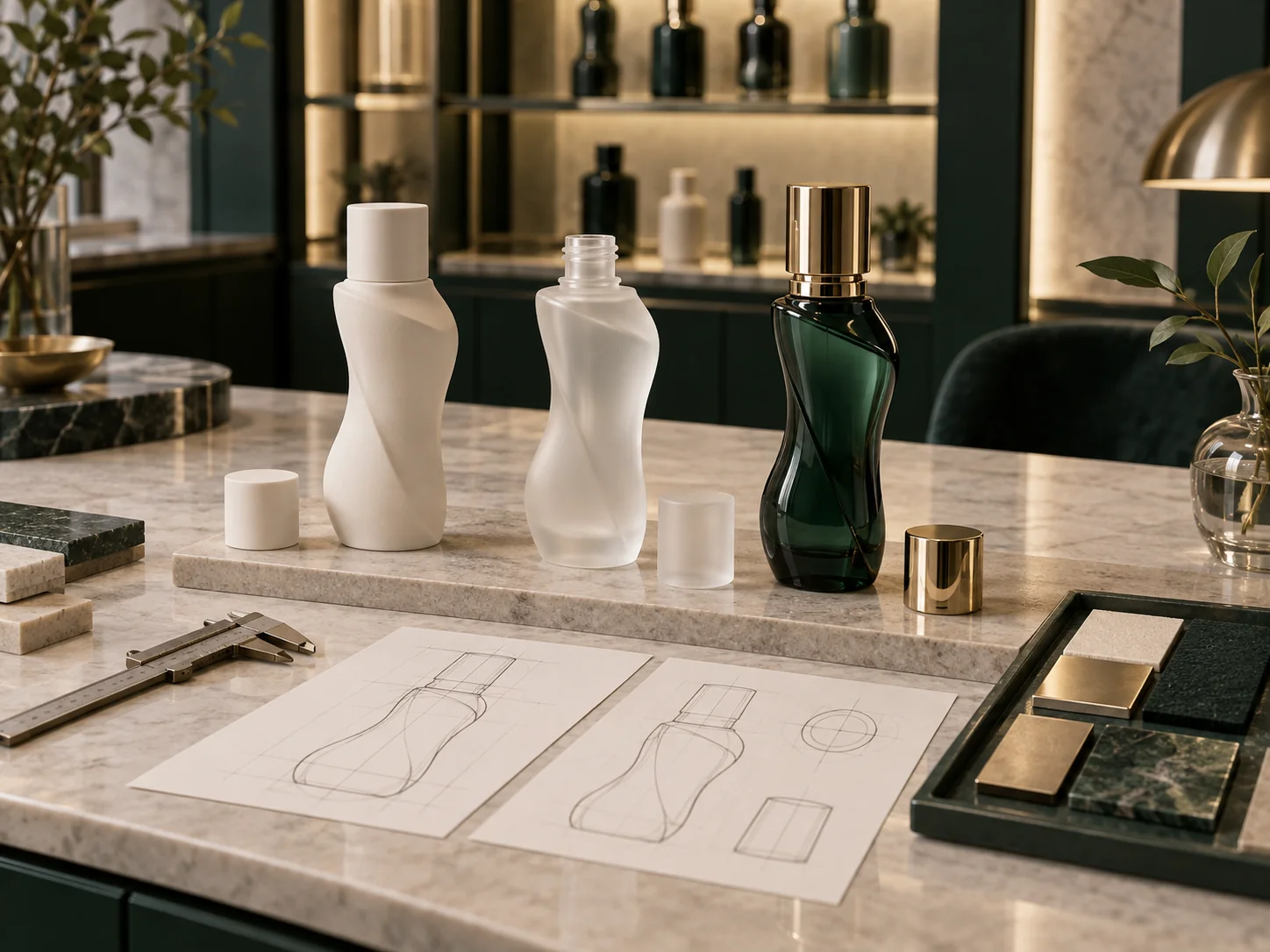
CONNECTED PROJECT STEPReview the shape, wall sections, neck interface and decoration area before finalizing the design.
PACKAGING GUIDESUse the related guidance before confirming the next selection or sample.
READ THE GUIDEIdentify the information and approvals needed before production release.
YOUR NEXT STEP
Share the product use, target size, material direction, estimated quantity and launch needs. Choose the route that matches the information you have today.
For a new form, custom tooling, decoration or a coordinated packaging system.
CHECK A REFERENCEFor a bottle, pump, cap or assembly that needs a fit and performance review.
COMPARE OPTIONSFor a selected product family and an initial commercial discussion.