Format & capacity
Choose a format that fits the product use, shelf presentation, label area, fill volume and pack-out assumptions for medical, supplement and child-resistant packaging systems.
Packaging Collections
This collection connects pages for regulated, wellness and dosage-led packaging projects so your team can compare the relevant packaging route without starting from a disconnected product list.
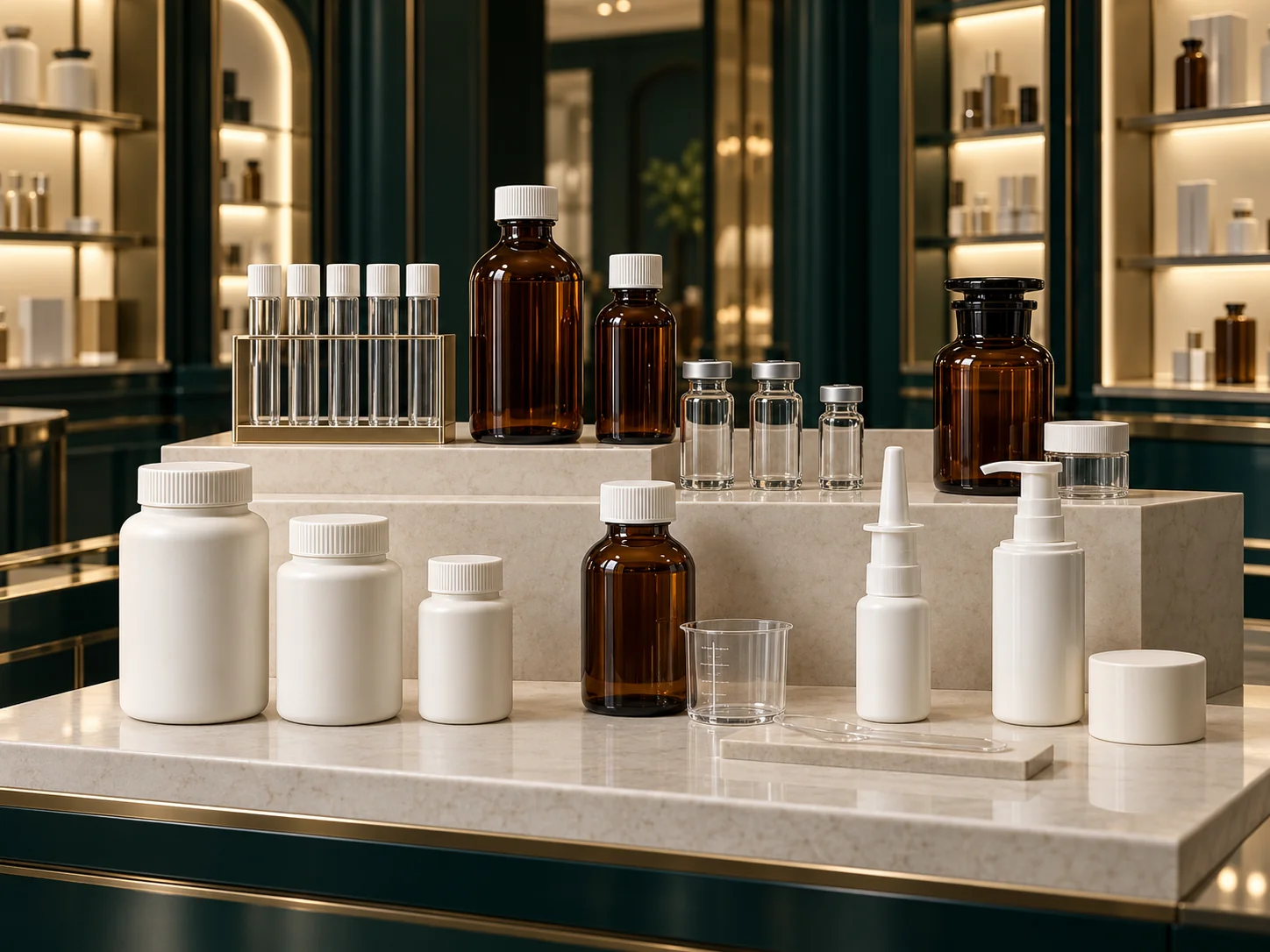
Product subcategories
Choose a collection card below to move from a broad requirement to a defined container, component, material or development route.
Quick answer
Medical, supplement and child-resistant packaging needs a project-specific discussion of product use, opening and dosing function, light or moisture considerations, component route, documentation, quality checks and final market requirements. Do not treat a material or closure claim as universal without reviewing the selected system.
Stock versus custom
Use an available format when speed, lower development complexity and early commercial clarity are the priority. Review available capacity, material, closure, decoration and MOQ assumptions for the exact model.
Review stock and low-MOQ optionsUse a feasibility and tooling route when the shape, component integration, visual character or product-family logic cannot be achieved with the available range. Align engineering, sampling and approval gates early.
Review custom mold developmentComplete packaging systems
For a premium launch, a bottle or jar is only one part of the sourcing decision. PauPack connects the main container with the neck finish, cap, pump, sprayer, dropper, color, decoration, label, outer pack, sample criteria and production planning so teams are not comparing incomplete quotations.
Industry applications
Choose your project route
Define a packaging system that supports launch, differentiation and line extension.
Explore routeCoordinate components, filling, approval gates and repeat supply.
Explore routeCompare available models, customization scope and commercial route.
Explore routeMove from a visual direction to a feasible, production-ready package.
Explore routeCustom development process
Sustainable packaging
Recycled content, refill, lightweight or material-reduction options need to be evaluated with appearance, component compatibility, availability, customer expectation and supportable claim language. The most credible option is the route that can be approved and repeated for the actual product program.
Quality and risk control
Record the relevant appearance reference, material and component scope, fit or dispensing checks, decoration criteria, protective packing, inspection needs and project documentation before production release. Requirements should be confirmed for the selected product and market, not assumed from a generic description.
Review quality and risk controlPackaging questions
Agree the project-relevant dimensional, visual, fit, seal, dispensing, packing and labeling criteria. The specification should identify the selected component combination and any sample or test conditions so the quality plan can be applied consistently.
Documentation depends on your material, product use and destination market. Ask for the available scope, issuing party and dates for the selected route, then have the appropriate responsible team determine what is needed for the finished marketed product.
The highest-minimum component, controlled color or decoration process, child-resistant closure and protective packing can all change the commercial threshold. A clear quotation separates those assumptions so you can compare a standard route with a more specialized system.
No. Review the specific bottle-and-closure combination and the evidence required for the intended product and market. Neck engagement, materials and opening behavior belong to the same assessment. A cap description or test report for another assembly does not establish the status of the proposed pack.
Include the product category, destination market, bottle and closure references, fill volume and the requirements set by your responsible product team. Ask which documentation is available for the exact assembly. Keep child resistance, tamper evidence and dispensing needs distinct in the specification.
Project inquiry
Share the product use, quantity, target market, material direction, component need, decoration reference and delivery target. PauPack can help define the next selection, sample or custom-development step.