Amigurumi may sit beside plush toys in a store, but the buying checks are different. The first amigurumi wholesale sample might win the room, then disappoint once the yarn pills or three supposedly identical faces are placed side by side. Retail buyers want the warmth of a handmade character without turning every delivery into a surprise.
The useful question is not simply, “Is it cute?” It is whether the design, materials, workmanship, packaging, and reorder plan fit the store that will sell it. This guide looks at those decisions from the buyer's side, including the details that are easy to miss during a quick sample review.
Start with the customer, not the character
The same crochet rabbit could appear in a museum shop, a children's range, or beside the till in a lifestyle store. Its job changes in each location. Before choosing the smile or yarn color, picture the shelf, the person reaching for it, and the price label beside it.
Gift and lifestyle stores
On a crowded gift shelf, the character has only a moment to make sense. Shoppers should recognize the flower, animal, ornament, bag charm, or desk companion without studying it. Keep the pack quiet, then use a small hangtag or card to explain the story the figure cannot tell alone.
Children's ranges
Age positioning changes the buying conversation. Small eyes, buttons, bells, key rings, and decorative parts may be acceptable in one market position and inappropriate in another. Buyers should agree on intended age, warnings, materials, and testing needs before artwork is printed. The U.S. Consumer Product Safety Commission provides a useful starting point for toy safety responsibilities, while the final plan should be confirmed for the actual destination market.
Promotional and message-led gifts
A crochet figure attached to a message card can carry a campaign, celebration, or brand story. In this channel, the printed piece is part of the product, not an afterthought. Check copy approval, logo use, card thickness, attachment method, and whether the figure still looks presentable after shipping.
What to inspect in an amigurumi wholesale sample
Put the sample on the table, then turn it over. Look beneath the polished front view. A good review should cover how the piece is built, how the details are attached, and how much variation the buyer is willing to accept.
Shape and proportion
Compare the head angle, limb length, body shape, ear position, and facial spacing against the approved reference. Small changes can alter the character completely. Ask how the supplier records measurements and placement points so that production teams are not working from memory.
Yarn and surface feel
Yarn decides more than color. It changes the hand feel, the clarity of each stitch, and whether the body keeps its shape. Give the sample a modest abuse test: rub it, handle it with clean damp fingers, and place a dark figure on pale fabric. Then ask how the same shade will be matched six months later.
Stitching and filling
You should not see white filling peeking between stitches. At the same time, an animal meant to feel soft should not arrive as hard as a ball. Press the head, body, and limbs with your fingers; lumps and empty patches are easier to notice by touch than in a photo.
Attached details
Do a second inspection just for the small details. Give the eyes, nose, bow, loop, label, key ring, and card a careful tug from more than one angle. A loose end, hard glue spot, sharp edge, or turning key ring may be invisible when the figure is facing forward. Record the attachment method that passed the review.
Handmade character does not mean uncontrolled variation
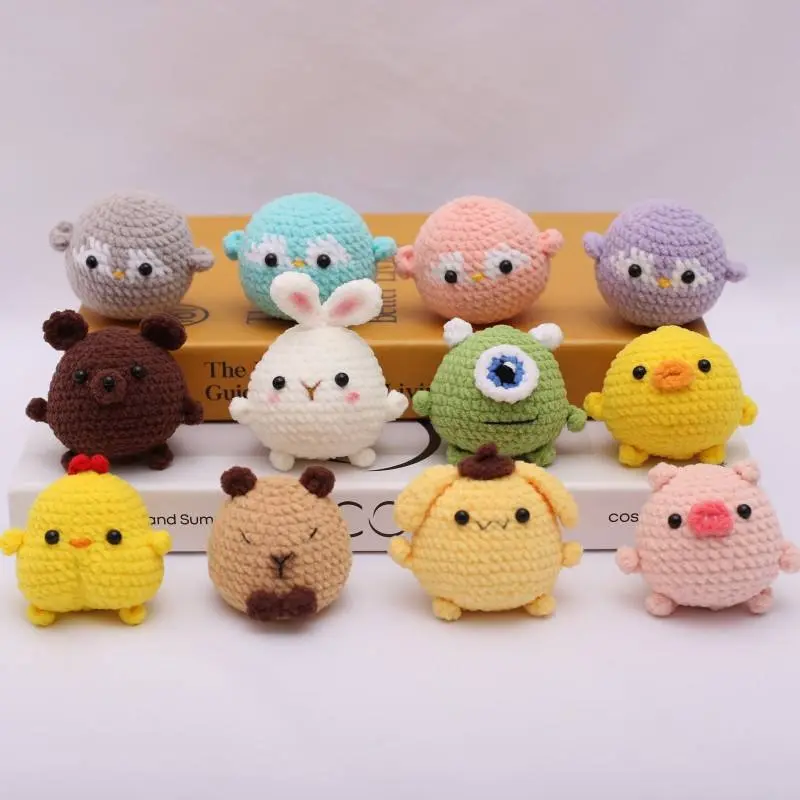
Customers may enjoy the tiny differences that give crochet pieces personality. They will not enjoy receiving one rabbit with a tilted face and another that is two centimeters shorter. Write down where handmade charm ends and a failed item begins.
The reference sample needs company. Add a one-page record of the height, a few critical measurements, yarn shades, stitch style, filling feel, face position, accessory placement, labels, and pack. Photos are useful in the meeting room; a short numbered sheet is usually easier beside the packing line.
Choose between standard designs and custom development
Standard designs can shorten sampling and make a small market test easier. Custom work gives the range its own voice, but it also opens a longer list of decisions: artwork, yarn, pattern, accessories, rights, packaging, and the amount of variation the buyer can accept.
Before paying for private-label development, settle ownership of the pattern and artwork. Ask whether close versions may be offered elsewhere and what happens if a special component disappears. A licensed character should not reach sampling on a verbal promise; written permission belongs in place first.
Useful customization choices
- Character shape, size, expression, and color palette
- Yarn material, surface texture, and filling level
- Embroidered, crocheted, or attached facial details
- Key rings, bag-charm loops, message cards, and hangtags
- Retail boxes, paper bands, display trays, and barcode labels
- Coordinated collections for seasons, themes, or store campaigns
Packaging should protect the shape and explain the product
A soft figure still needs protection. Limbs can bend, message cards can crease, light yarn can pick up dust, and loose hangtags can scratch nearby items. Test the actual pack in a shipping carton rather than approving it only as a flat artwork file.
Gift-led products benefit from a clear finished view and a tidy story. The package or hangtag can state materials, intended age, care guidance, importer details, warnings, and barcode information where required. Keep the front simple enough that the character remains the reason to buy.
Plan the collection and reorder at the same time
One character rarely builds a strong retail story on its own. Buyers often achieve a better display with a small family that shares a size, palette, theme, or packaging system. The range can still include different price points through keychains, desk figures, ornaments, and larger gift pieces.
Before approving the first order, ask which yarns and accessories are likely to remain available. Record the shades and parts that matter most. If the design depends on a novelty button that will vanish next month, call the item seasonal or approve the replacement now.
Questions to ask an amigurumi supplier
- How is the approved character shape documented for production?
- Which components come from the crochet team, a machine process, or an outside partner?
- How are yarn shade, finished size, filling, and facial placement checked?
- What age position and destination market are assumed in the quotation?
- Which testing, warnings, labels, and traceability records may be needed?
- Can the same yarn and accessories be sourced for a repeat order?
- How are custom patterns, artwork, and licensed characters handled?
- What packaging protects the product without hiding its appeal?
How Onehourcrafts supports crochet product programs
Onehourcrafts presents finished crochet products, DIY kits, tools, accessories, private-label packaging, and retail display options on its website. Its About page says the company has more than 38 years of manufacturing experience and BSCI-audited operations. Buyers can review the company's amigurumi manufacturing page when preparing a brief.
The sample process tells the buyer more than a polished catalog. Look for a team that can take a sketch apart, name the choices that change cost or timing, and put the agreed details back together in records production workers can actually use.
Frequently asked questions
What is the difference between amigurumi and ordinary plush toys?
Amigurumi shows the crochet or knitted stitches on its surface; that texture is part of the character. Most ordinary plush toys begin with pieces of fabric that are cut and sewn. Buyers therefore inspect different joins, surfaces, shapes, and tolerances.
Can amigurumi products be customized for private labels?
Yes. Buyers commonly customize the character, size, yarn colors, facial details, accessories, hangtags, message cards, packaging, and display format. The achievable scope depends on the design, quantity, schedule, and compliance plan.
What should a buyer include in an amigurumi quote request?
Send the intended market, customer, size, reference images, quantity, colors, accessories, packaging direction, branding needs, age position, desired date, and any testing questions. State which details are fixed and where the supplier may suggest alternatives.
How can buyers reduce variation between pieces?
Approve a reference sample, record key measurements and placement points, define acceptable tolerances, and inspect production against those records. Variation cannot be removed completely from handmade work, but it can be managed.
Are small crochet keychains suitable for wholesale gift ranges?
They can be a useful entry price and display well near checkouts or seasonal collections. Review attachment strength, small parts, finished size, packaging, warnings, and whether the design remains recognizable at the smaller scale.
Build the product around the reorder
The best amigurumi wholesale program is not the one with the most complicated character. It is the one that customers understand, store teams can present, and the supplier can reproduce. Set the audience, reference sample, acceptable variation, packaging, and reorder rules before the first production run.
To discuss an animal figure, message-card gift, keychain, ornament, or private-label collection, send Onehourcrafts the product idea, destination market, quantity, packaging direction, and launch window.