Refillable Fragrance Bottle: Cycles and Wear | PauPack
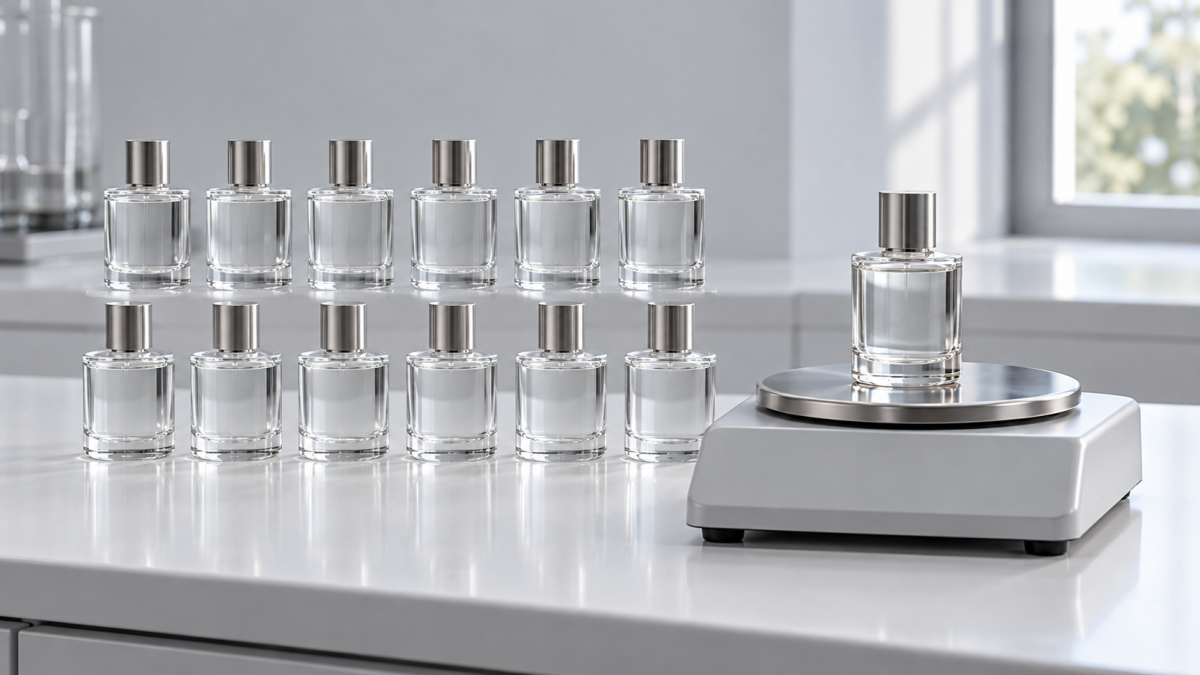
PauPack tests a refillable fragrance bottle across ten fill cycles, covering interface wear, gasket set, decoration abrasion and the faults that reach support queues.
Read the articlePauPack packaging guidance
Use these guides to turn a product idea into a clearer materials, components, quality and commercial brief. Each article links to the relevant product collection, capability or solution page.
Latest from PauPack
PauPack tests a refillable fragrance bottle across ten fill cycles, covering interface wear, gasket set, decoration abrasion and the faults that reach support queues.
Read the article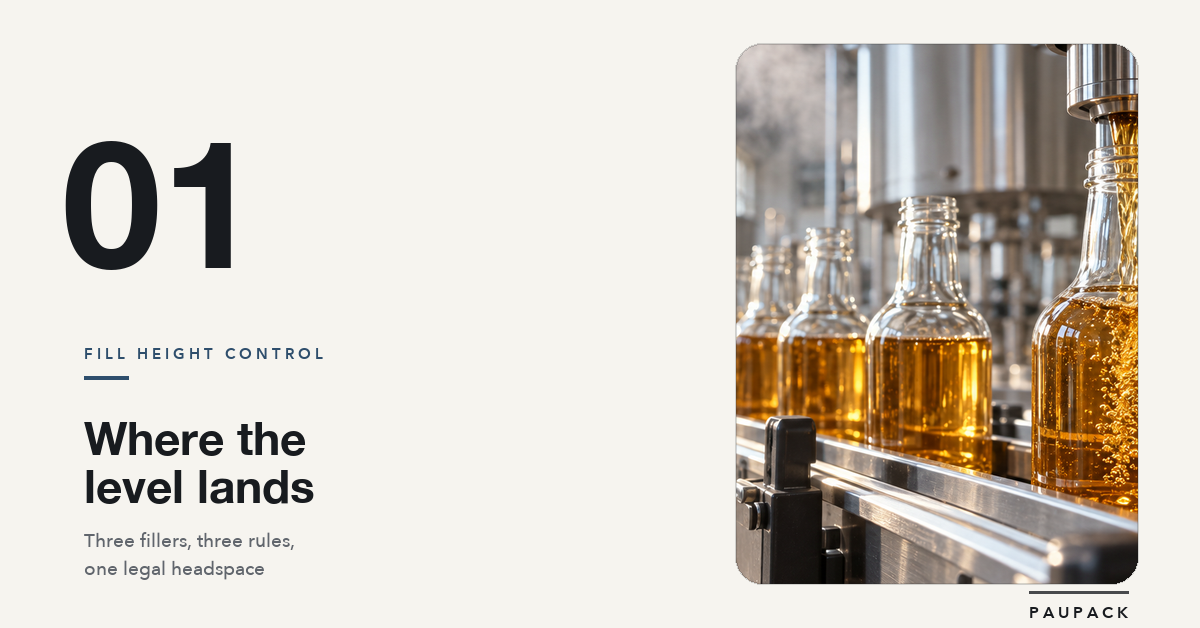
PauPack sets beverage bottle fill height by line type, with the headspace targets, measuring methods and one-week trial behind a repeatable filling specification.
Read the article
PauPack sets out the weigh-loss protocol behind perfume bottle evaporation loss, with closure baselines, temperature multipliers and the six-week panel run before launch.
Read the article
PauPack breaks PLA bottle compostability into the four streams a pack really meets, and sets the wall thickness, heat limit and label wording behind a defensible claim.
Read the article
PauPack compares cobalt blue glass UV protection with amber and clear glass band by band, and sets out the sample-room light test that decides the colour for your oil.
Read the article
PauPack builds a kombucha bottle pressure test from carbonation volume, warm storage pressure, headspace and closure choice, with the 40 C hold that decides release.
Read the article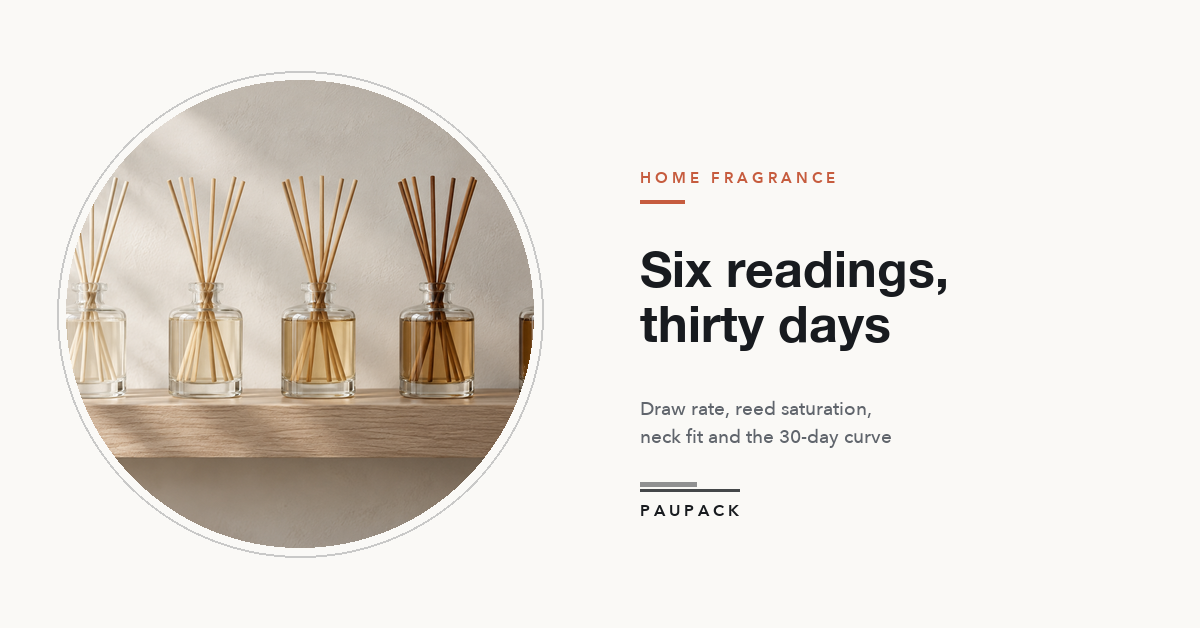
PauPack sets out a reed diffuser wick draw test in six measurements, from 24-hour draw rate and reed saturation to tilt sealing and the thirty-day evaporation curve.
Read the article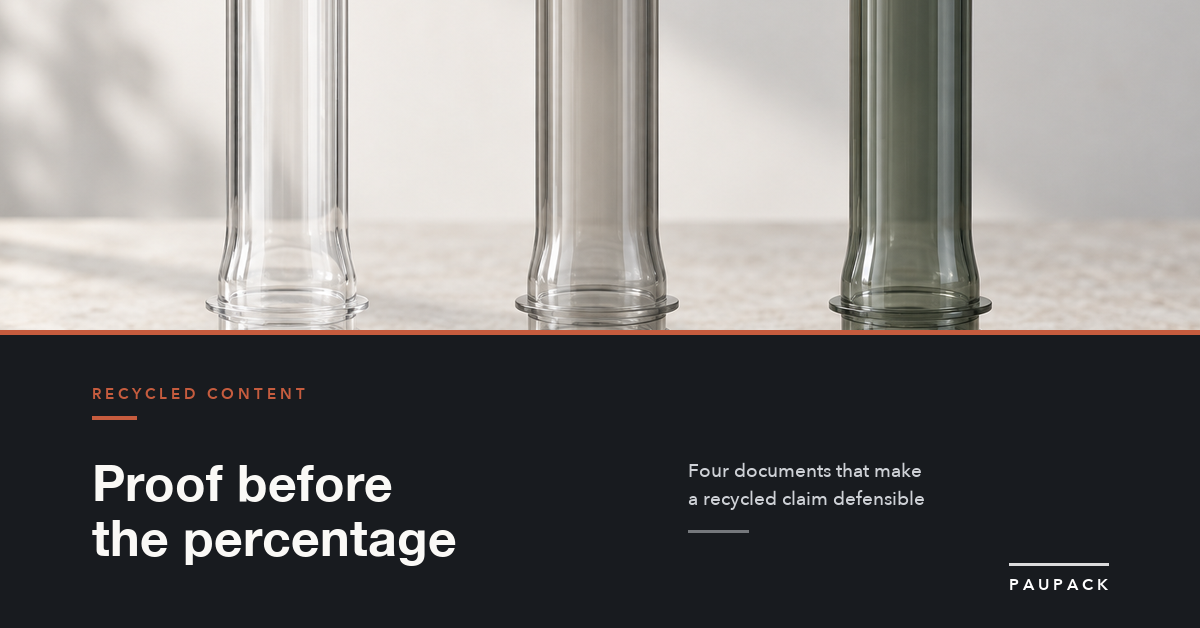
PauPack walks through PCR content verification: mass balance versus segregation, the four documents behind a claim, and how to audit a supplier in one afternoon.
Read the article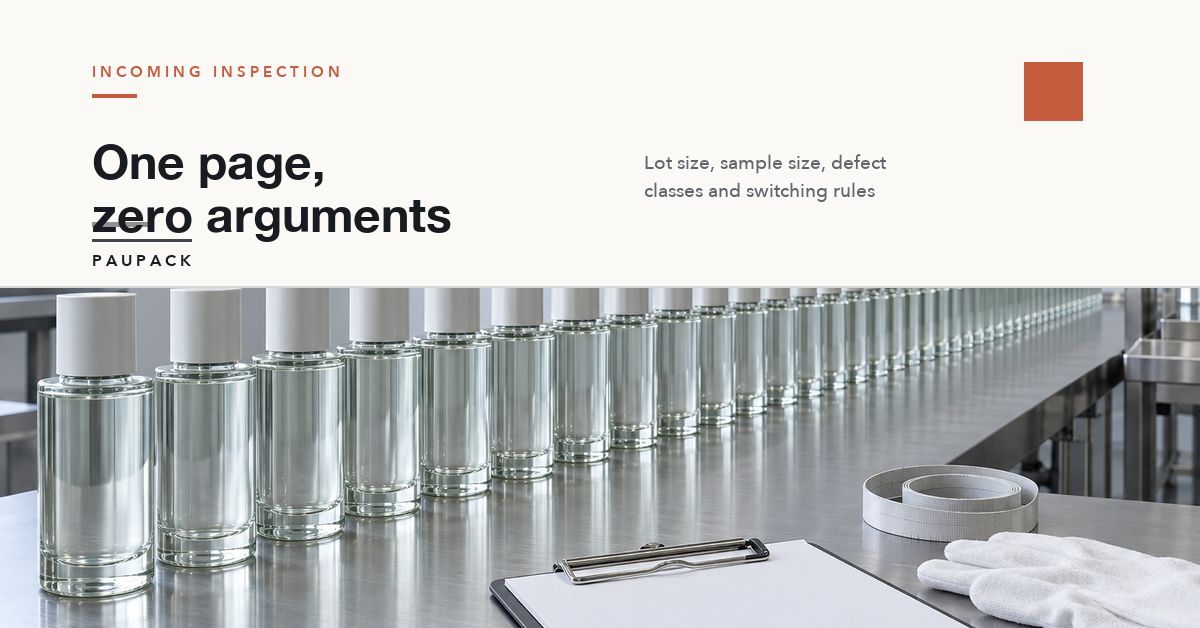
PauPack explains how to build a packaging AQL sampling plan: lot definition, code letters, defect classes, switching rules and the functional tests to run alongside.
Read the article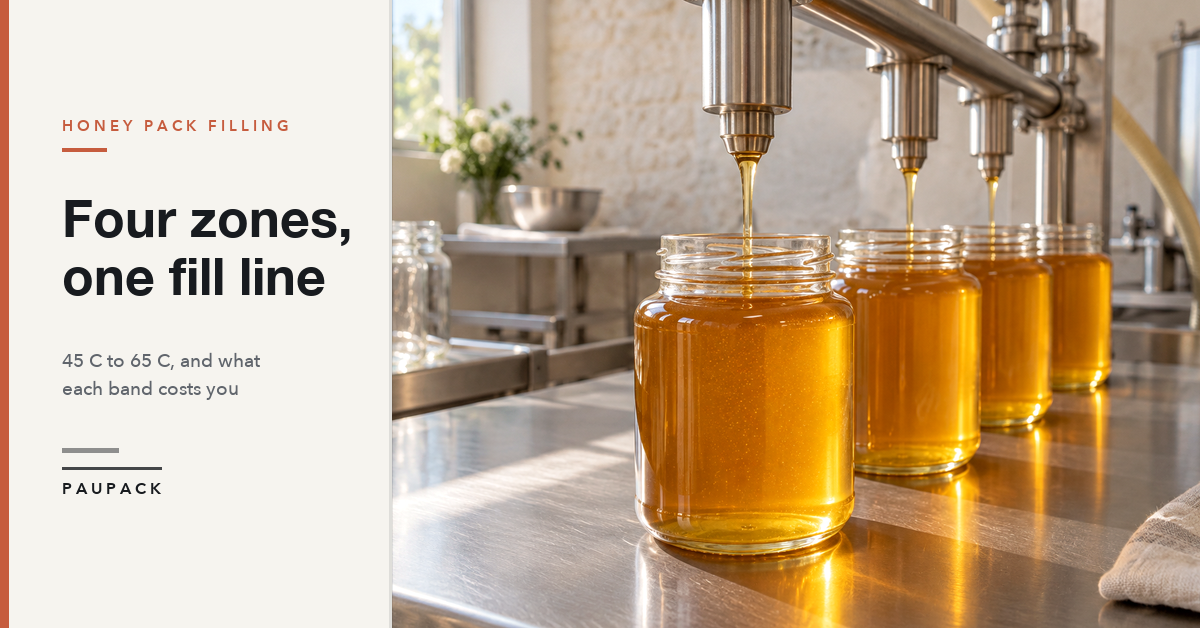
PauPack maps honey jar filling temperature across four zones, from aroma-safe 50 C fills to the vacuum and crystallisation problems that start above 60 C.
Read the article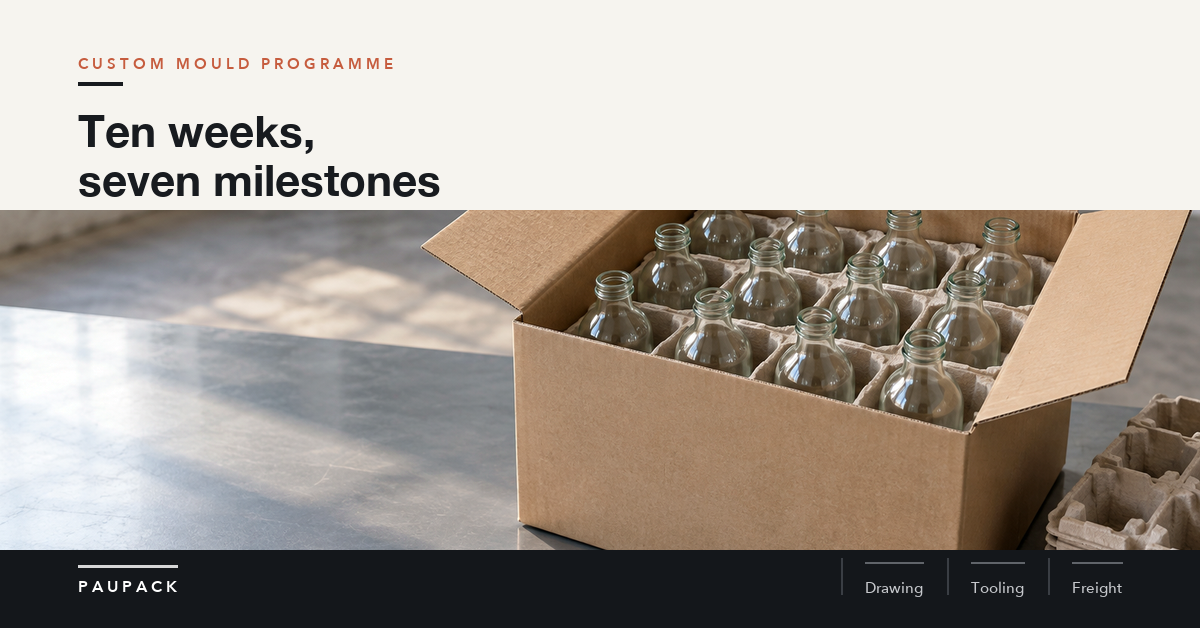
PauPack maps custom bottle delivery week by week, from drawing approval and tooling to freight, and names the milestone owners and the usual delays.
Read the article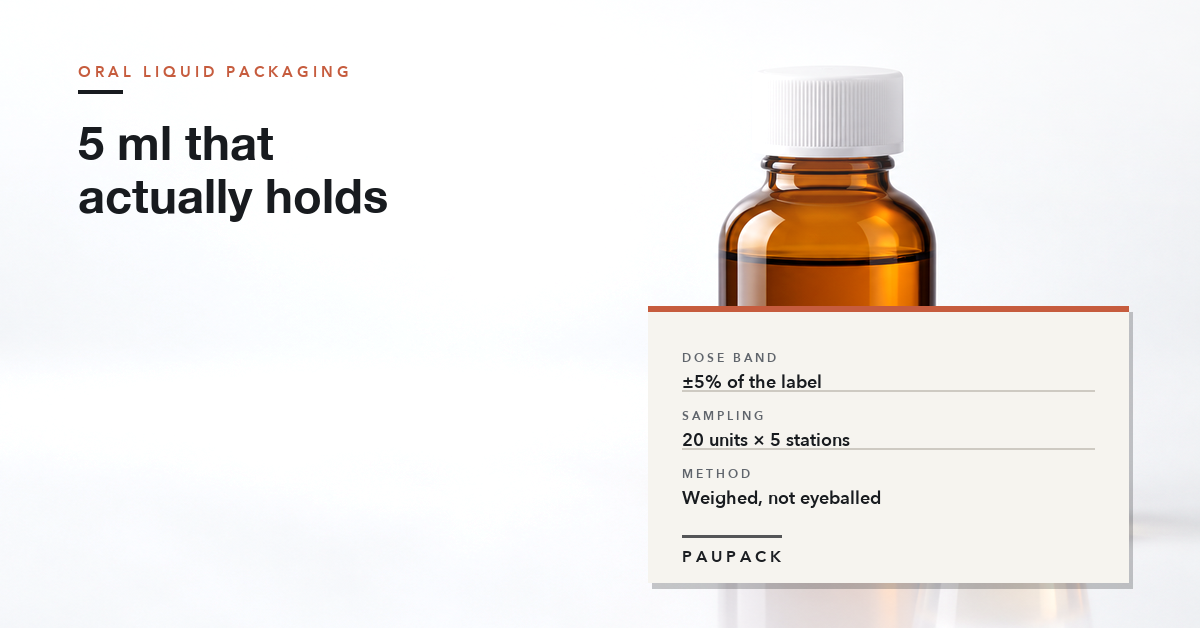
PauPack breaks syrup bottle dosing accuracy into four error sources, shows a worked weighing trial across five fill stations and sets the acceptance band.
Read the articlePackaging guides
Find practical comparisons and sample checks to help you choose, develop and order your packaging.
Packaging Development
Sustainable Packaging
Components & Quality
Fragrance Packaging

Packaging Systems
Need a project-specific answer?
Use the relevant collection for a broader selection view, or send a brief when the container, component, decoration and delivery requirements are already known.
Use these articles to prepare for a packaging decision, whether you are comparing an existing bottle with a new mold or matching a pump to a selected container. Each guide connects to the relevant products, capabilities and project tools. Once you have narrowed the question, bring your product details to PauPack so we can discuss how the guidance applies to your actual pack.
If you are choosing packaging for a new collection, begin with the stock-versus-custom guide. It helps distinguish a new silhouette from changes that can be achieved through decoration and coordinated components. The complete packaging checklist then brings the bottle, dispenser, paper pack and approvals into one view. Together, these guides give your team a useful basis for discussing a launch with PauPack.
When a bottle or pump has already been selected, the next concern may be how the parts work together. Start with the component-matching guide, then use the linked capability page to discuss your actual references. For fragrance projects, the dedicated perfume guide connects the bottle interface with spray experience, cap proportions and decoration. Keep the product and filling requirements with your sample feedback.
A sustainability direction needs to fit the product and the way the package will be used. The material guide introduces PCR, refill and recycled-glass routes without assuming that one is right for every project. Compare the selected parts, appearance and available evidence, then explore the linked material pages. Bring the current pack and the objective you want to achieve to PauPack for a more focused discussion.
Packaging questions
Start with the stock-versus-custom guide if the design route is undecided, or the complete packaging checklist if you need bottles, components and boxes together. For a specific problem, use the material, fragrance or closure guides. Bring the resulting choices into your brief so the quotation can address a defined pack. Complete Packaging System Checklist →
YOUR NEXT STEP
Share the product use, target size, material direction, estimated quantity and launch needs. Choose the route that matches the information you have today.
For a new form, custom tooling, decoration or a coordinated packaging system.
CHECK A REFERENCEFor a bottle, pump, cap or assembly that needs a fit and performance review.
COMPARE OPTIONSFor a selected product family and an initial commercial discussion.