Use this guide to make the next packaging decision with confidence. It explains the options, the details to compare and how to turn an initial idea into a useful discussion with PauPack.
What is the right packaging selection route?
Custom cosmetic bottle selection is the process of matching a skincare or beauty product with the right container, dispensing component, finish, sample route and commercial plan. It is broader than choosing a bottle silhouette because the full pack must work for the product, brand and production process.
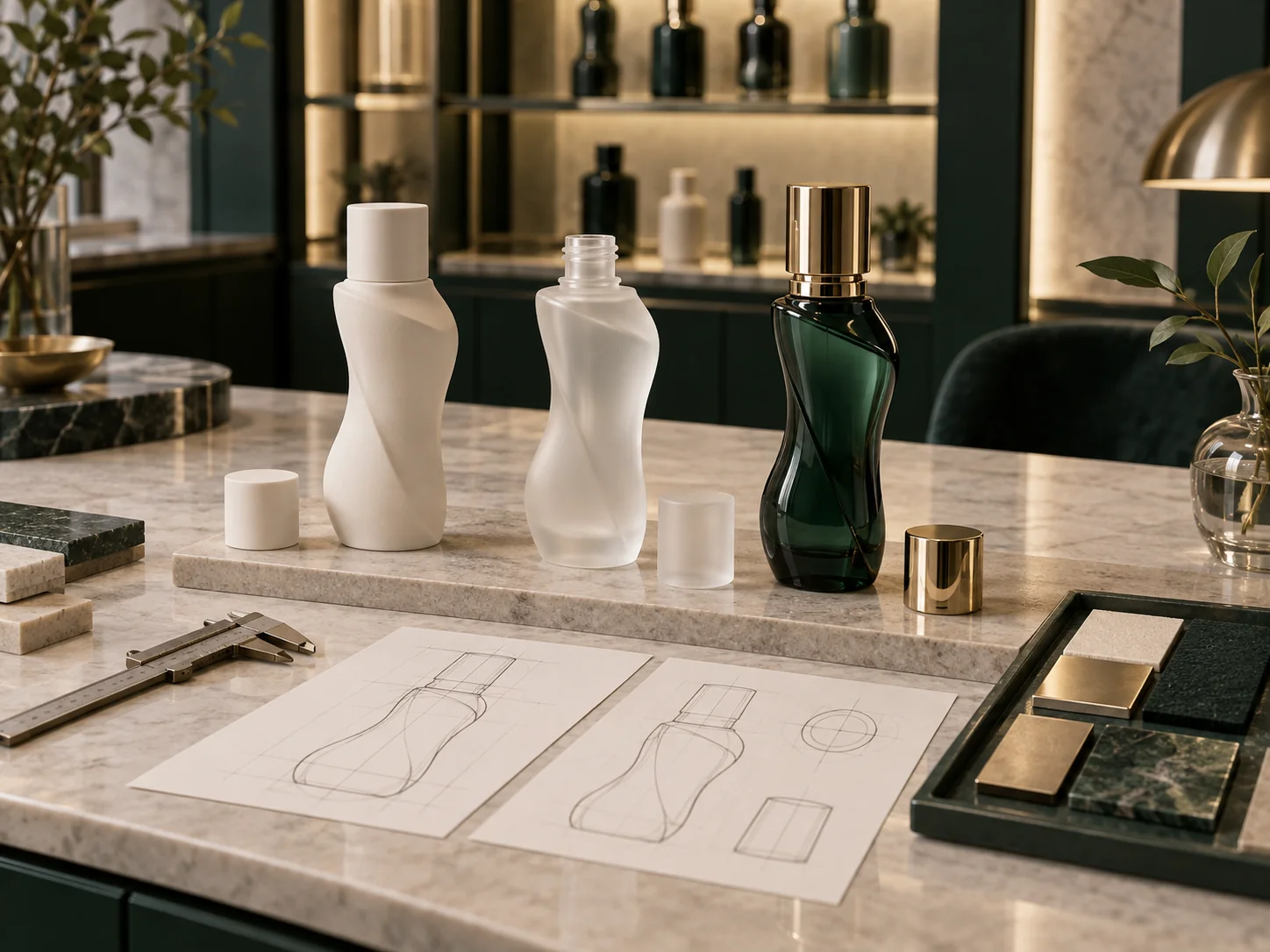
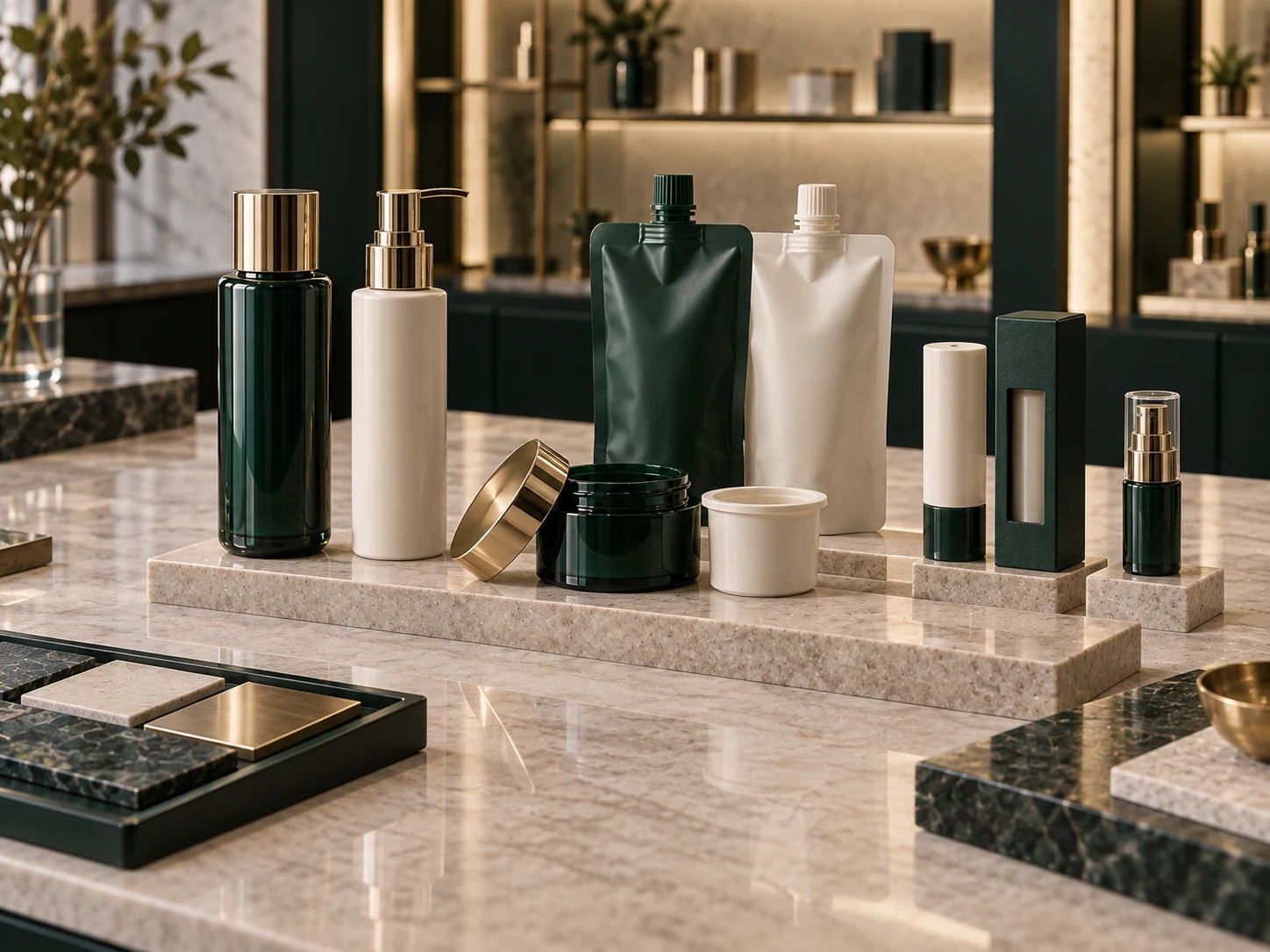
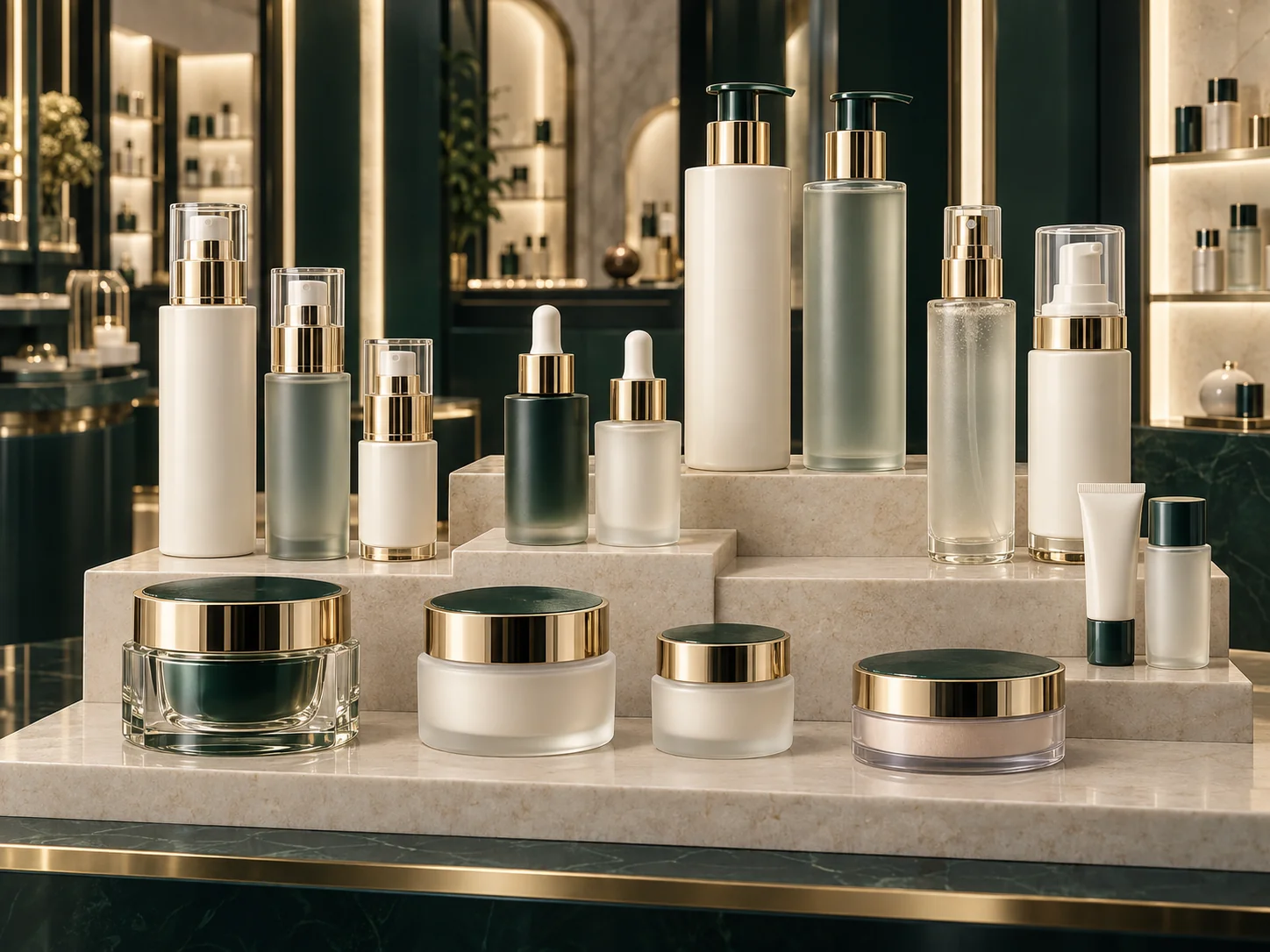 AI packaging concept for selection discussion; not a production or test record.
Your packaging checklist before the first supplier conversation
Use this checklist to make the first quotation comparable.
- Product type, capacity and intended user action
- Formula or contents sensitivity and target market
- Bottle, jar, pump, airless or dropper component route
- Color, decoration, cap and secondary-pack reference
- Opening quantity, launch milestone and required arrival date
Start with use, not the bottle silhouette
A premium cosmetic pack can look refined in a render yet fail the commercial brief if the output, neck finish or filling route is wrong. Put the formula or product category first: a serum, treatment, cream, toner and body product all create different expectations for capacity, dispensing, hygiene, visibility and component matching. Record the intended fill volume, target user action and target retail channel before the design team selects a shape.
Match the bottle, closure and finish as one system
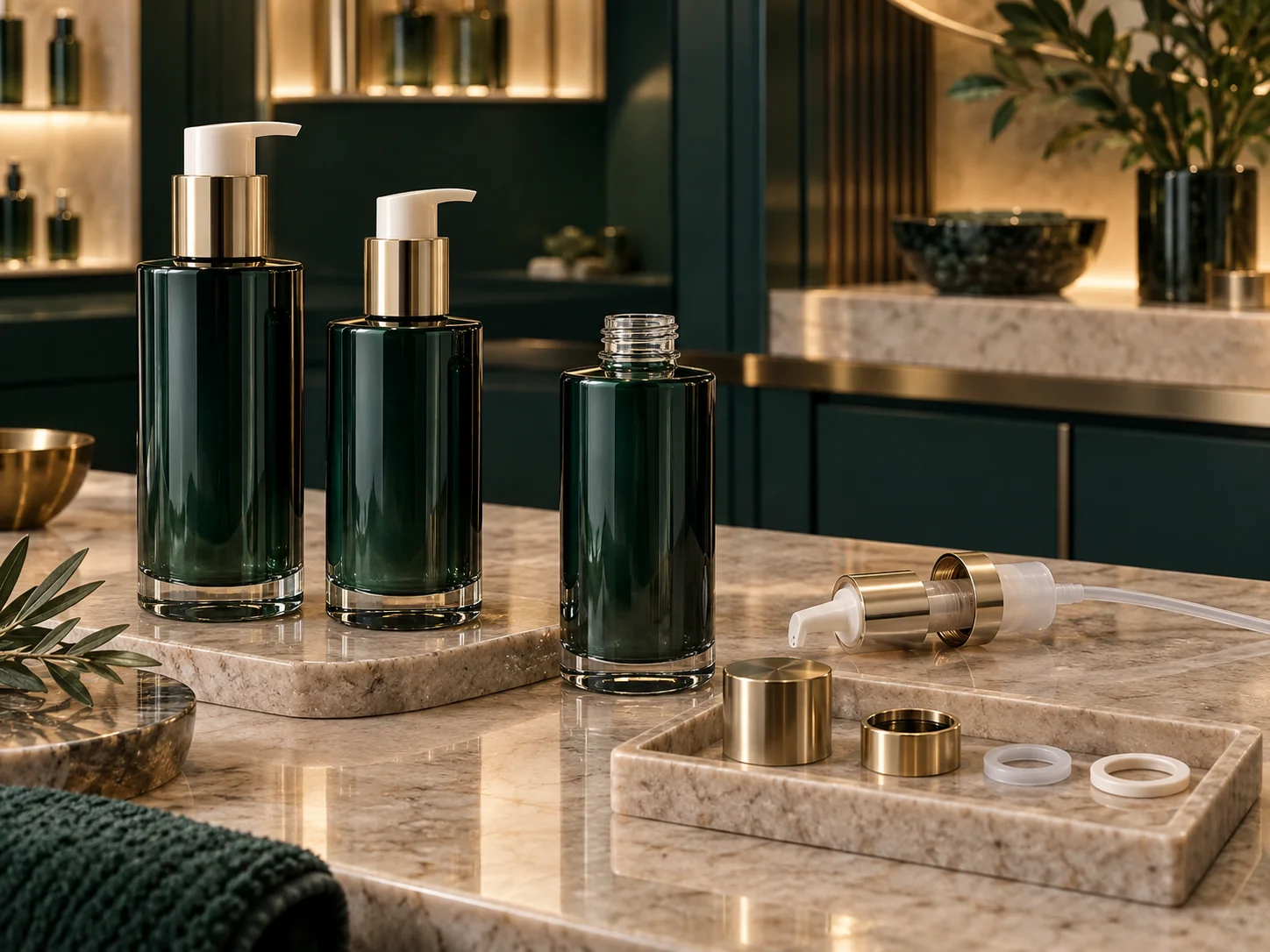
The bottle, pump, dropper, cap, collar, decoration and outer carton should be reviewed as an assembled presentation. Ask which component controls dose, whether a dip tube or pipette needs a defined length, how the product will be filled and how the selected finish will behave around seams, shoulders and label zones. A sample should prove the complete system, not only the empty bottle.
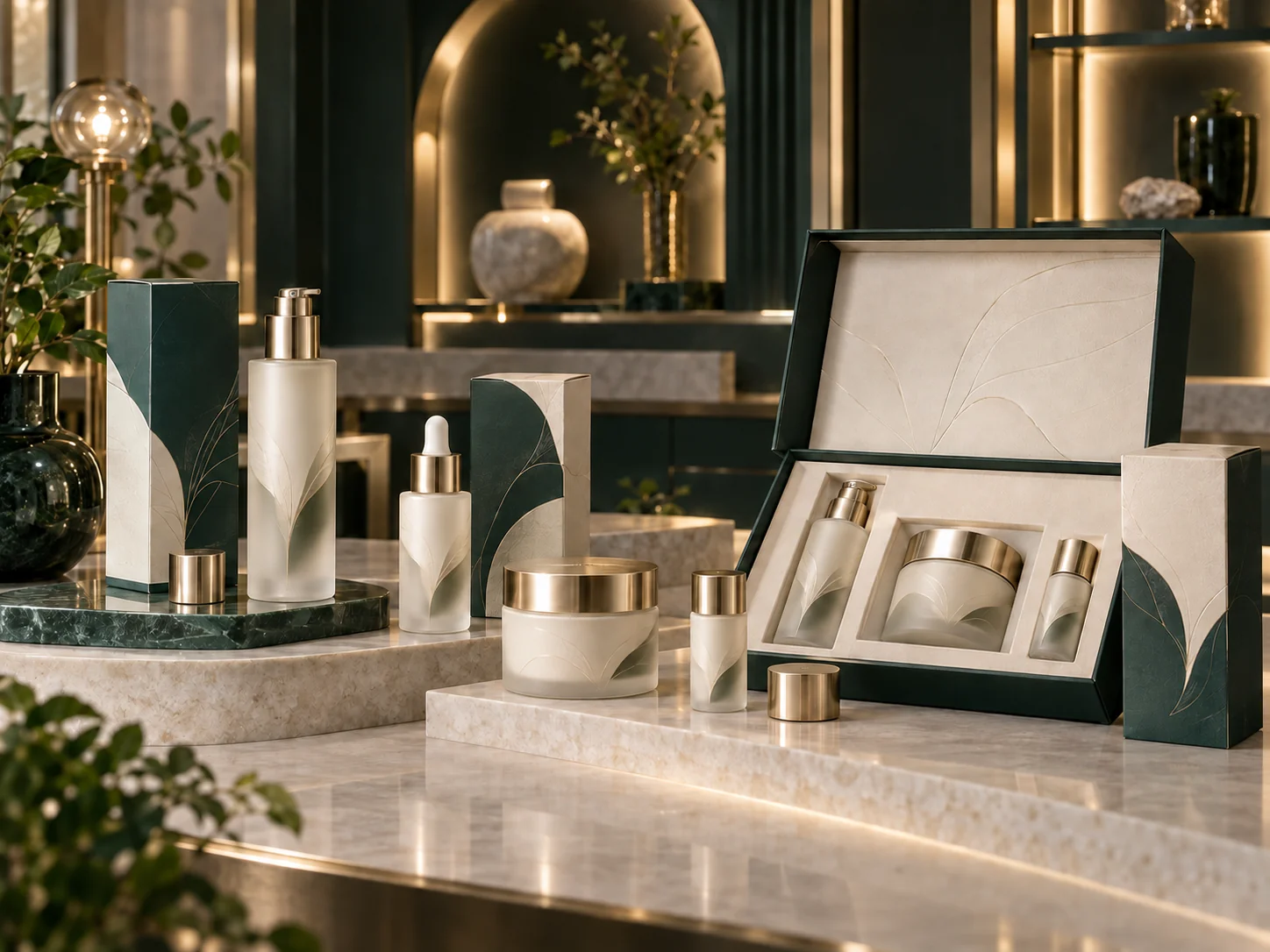 AI packaging concept for selection discussion; not a production or test record.
Compare the realistic routes before committing.
| Decision point | Your priorities | Project control |
|---|---|---|
| Existing platform | Use a proven bottle, jar or airless format. | Review available capacities, component fit and MOQ. |
| Decorated platform | Keep the core format; differentiate color, print or cap. | Approve a realistic finish and packing reference. |
| Custom development | Create a new form or component architecture. | Confirm feasibility, tooling, samples and release gates. |
Move from research to a production-ready brief.
- 01Freeze the product and capacity brief.
- 02Review stock and custom routes with the selected component.
- 03Approve the assembled appearance and function sample.
- 04Record the production and packing reference.
Choose stock, decorated or custom with the launch plan in view
An existing format can speed up feasibility and sampling when its proportions and components fit the brand. Decoration can add differentiation without creating a new mold. Custom tooling is useful when the silhouette, component arrangement or line-extension logic cannot be achieved with available models. The quotation should show the MOQ driver, decoration process, sampling gate and estimated production route for each option.
Packaging FAQ
Questions to resolve before requesting a quote.
Which information makes the first quotation more useful?
Send the product use, capacity, material direction, component need, estimated quantity, visual reference, target market and requested arrival date. A sample, drawing or mood board helps the team compare practical routes.
Can PauPack review stock, decorated and custom options in one discussion?
Yes. The request should make clear which features are essential, which can be achieved through an existing platform and which may require custom development. Each option should state the component scope, sample gate, MOQ and timing assumptions.
What should be approved before commercial production?
Confirm the selected material, component combination, appearance reference, packing route, relevant quality criteria and the agreed commercial scope. The exact test and documentation requirements depend on the product and destination market.
Apply this guide to a real packaging project
Use the related pages below to move from research into a product selection, system discussion or project briefing route. Final compatibility, documentation, quality, MOQ and timing requirements are confirmed for the chosen model and market.