
PET
Compare the selected grade, bottle construction, clarity and dispensing interface.
Resources
Compare PET, PETG and glass against your formula, desired appearance and selected dispenser. Use representative bottles with the same intended capacity and finish so your choice reflects the product and complete pack, rather than material names alone.

Your packaging choices
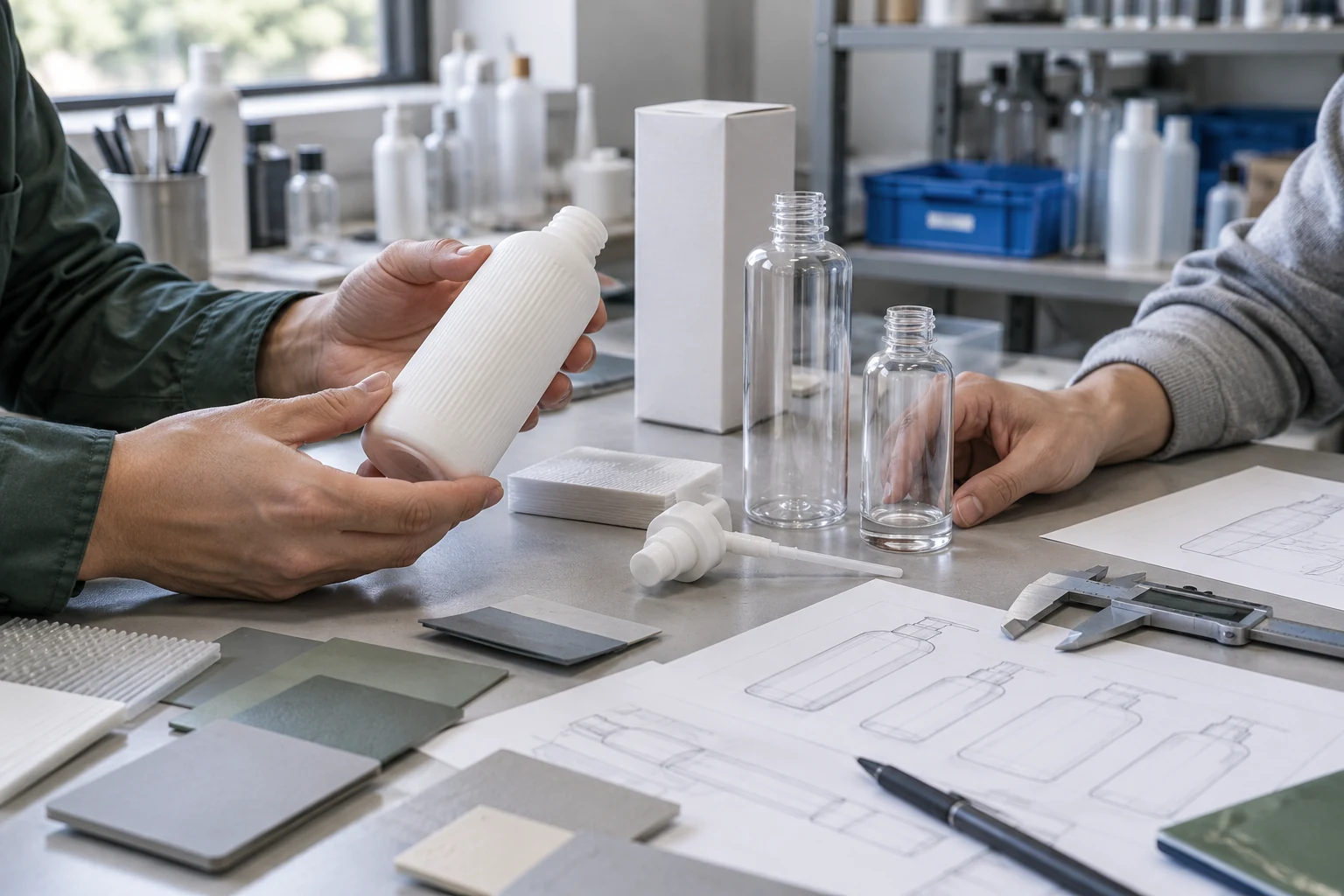
Compare the selected grade, bottle construction, clarity and dispensing interface.
Review the proposed container geometry, finish and formula-contact requirements.
Assess the profile, weight, closure and protective packing together.
Use consistent viewing conditions and the same product requirements for all shortlisted options.
Execution controls
Your sample review should connect the selected components with the current product and production requirements. Keep the material, drawing and artwork versions identifiable, then record the decision each sample supports. If a component changes, revisit the checks that depend on it before the next order is released.
A material comparison becomes useful when the bottles hold the same product volume and use the dispenser you need. Compare the filled weight, proportions, grip, transparency and available decoration on those actual samples. Keep the formula and filling conditions in the review; a photograph cannot establish product compatibility.
A switch between PET, PETG and glass can also change the neck interface, closure, liner and assembly. Identify the exact bottle and pump or cap before approving the combination. If a familiar dispenser is important to your range, start with that requirement and check suitable containers around it.
Review the finished unit inside its proposed box and transport packing. Compare the surface after handling, the protection needed around projecting components and the presentation beside other sizes in your collection. This connects the material decision with the way your product reaches and is used by your customer.
Record the material route, bottle reference, closure and finish with the approved sample. If you are considering recycled content, ask for information supporting the selected material and intended claim. Environmental descriptions should relate to the actual pack and its destination, rather than a broad assumption about a material name.
Your selection priorities
PET vs PETG vs glass packaging is a practical comparison for premium skincare teams because each route affects appearance, weight, rigidity, decoration, closure fit, freight and commercial supply conditions. The best material is the one that supports the formula, user experience, visual target and selected packaging system.
Use a sample and component review to test the actual bottle, jar, pump, cap or dropper route. Material names alone cannot confirm compatibility, premium appearance or the final project outcome.

People behind your packaging
Since 2013, PauPack has combined manufacturing and trade services for packaging projects. Investment in four factories supports our work across bottle development, production and complete packaging coordination.
Explore our history ↗
Customer feedback
“Their attention to detail, from material selection to final finishing, ensures our products always stand out on shelves.”
Claud** Wagn** · Watsons
Published in PauPack’s customer feedback
Packaging questions
Appearance is one part of the decision. Review your formula, filling conditions, required dispenser, filled weight and distribution route on representative samples. Keep the material and component references with the sample so the final combination is clear.
Check the exact interface on each bottle. Nominal neck diameter alone does not confirm the sealing surfaces, engagement or dip-tube length. Review the assembled container and dispenser before treating a pump as interchangeable.
Include the proposed bottles, matching closures and representative decoration at the intended fill volume. Compare the finished packs together, including any insert or shipping protection. Use consistent viewing and handling conditions.
An existing format can be reviewed for color, print, labels and matching components. Confirm what is feasible on the selected construction, including the quantity and sampling route. A new shape or changed interface may need a separate development review.
Review the exact resin, bottle construction, neck and closure with the formula and filling method. Compare clarity and finish on physical samples rather than assuming PET and PETG are interchangeable. Keep the selected material description visible in the quotation and approval record.
Yes. Proportion, consistent surface finish, a well-matched cap and coordinated decoration can create a refined result. Compare the whole assembly with its paper pack. Choose the construction around the product requirements before adding weight or a complex finish for appearance alone.
CONTINUE YOUR PROJECT
 CONTINUE READING
Explore related guides and practical project tools.
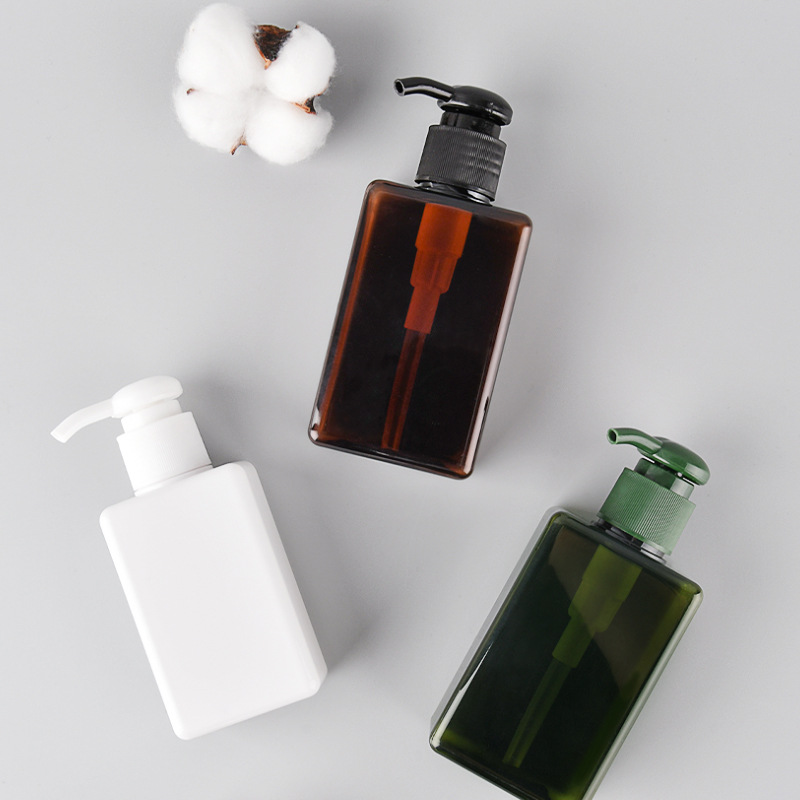 APPLY THE GUIDANCE
Select bottles and dispensing systems for shampoos, conditioners, scalp care, body care and professional-use formats.
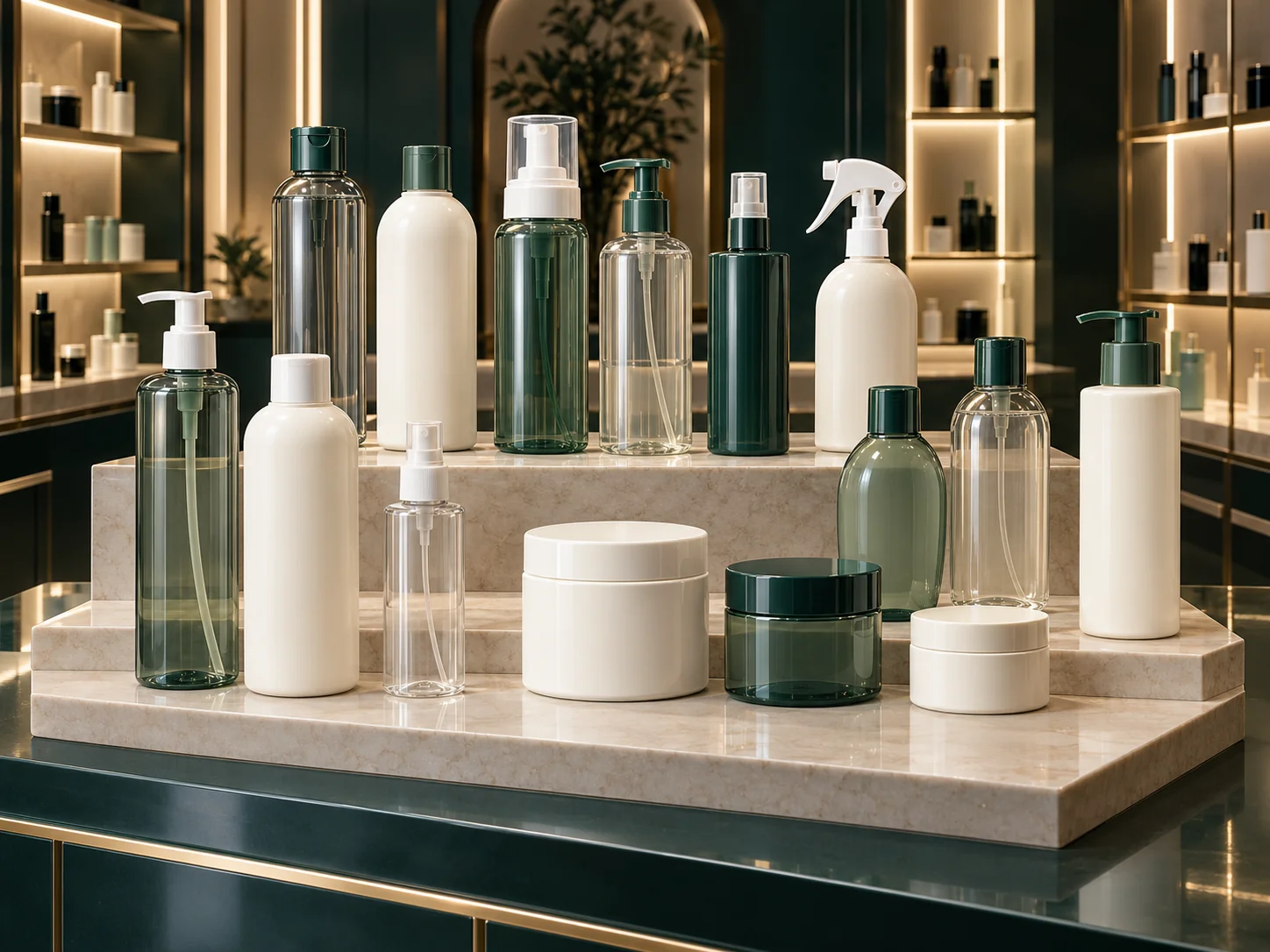 APPLY THE GUIDANCE
Personal Care Packaging manufacturer and supplier for custom bottles, jars, closures, decoration and complete packaging systems.
APPLY THE GUIDANCECompare bottle and jar formats alongside resin, closure and dispensing requirements.
YOUR NEXT STEP
Compare your material options
For a new form, custom tooling, decoration or a coordinated packaging system.
CHECK A REFERENCEFor a bottle, pump, cap or assembly that needs a fit and performance review.
COMPARE OPTIONSFor a selected product family and an initial commercial discussion.