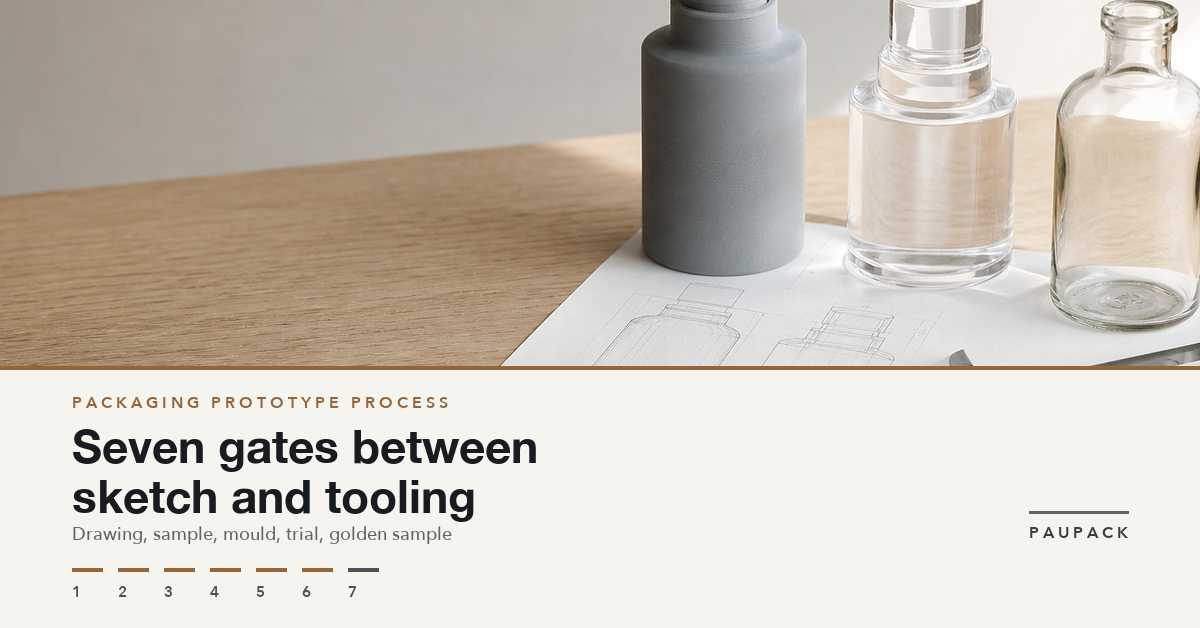


A bottle prototype sample is a decision tool, not a miniature promise of mass production. PauPack uses six approval steps to separate geometry learning, component fit, decoration intent and production assumptions before a buyer releases tooling or a sample revision.
Step 1: Label What the Prototype Can Prove
Record its version, material, process, scale and purpose. State what it cannot represent, such as production glass color, final weight, surface quality or full tolerances. PauPack's design service keeps the sample connected to the current brief and drawing.
Step 2: Check the Silhouette and Handling
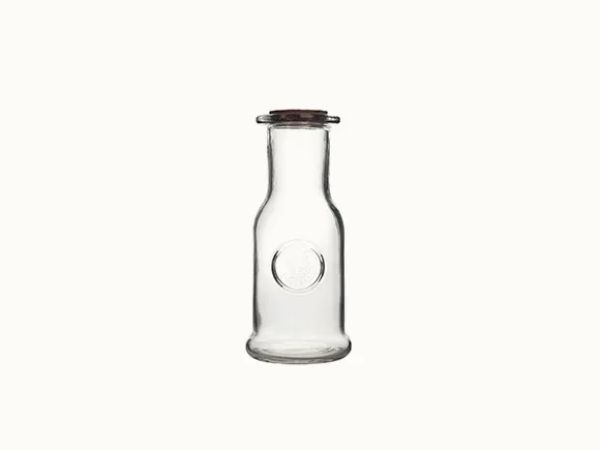
Review overall proportions, grip, balance, label panel and how the form sits beside related SKUs. Mark decisions on a controlled drawing rather than editing from memory. Separate visual preferences from measurable dimensions.
Step 3: Review Critical Interfaces
Identify neck finish, closure route, pump or sprayer, base, shoulders and equipment contact areas. A visual model may not prove functional fit. Use production-intent components and later engineering samples for decisions that depend on tolerances or sealing.
| Prototype question | Decision | Next evidence |
|---|---|---|
| Does the form express the brief? | Geometry direction | Revised drawing |
| Are interfaces defined? | Component route | Engineering sample |
| Can decoration fit? | Artwork zones | Decorated trial |
Step 4: Map Decoration Zones
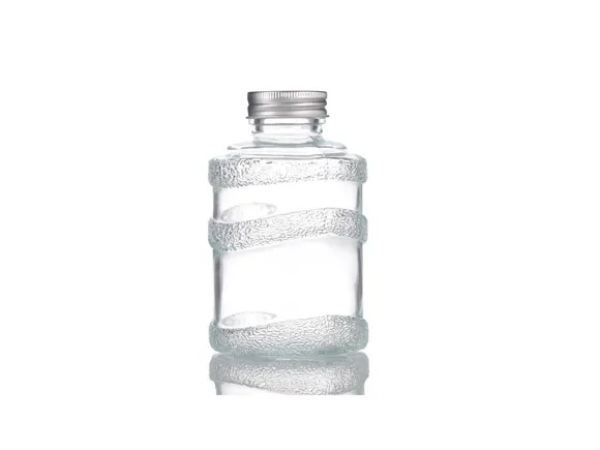
On the bottle prototype sample, mark printing, labels, coating transitions, seams and protected areas. PauPack uses the model to expose curvature and registration challenges, then links approved artwork to a physical decoration trial through its quality process.
Step 5: Convert Comments Into Decisions
Create a numbered review log with owner, due date and disposition. Use precise instructions such as dimension changes or artwork shifts. PauPack's manufacturing overview helps buyers understand which decisions affect tooling, sampling and later process controls.
Step 6: Release the Next Evidence Gate
Sign off the approved geometry version and list unresolved risks. Decide whether the next gate is a revised model, tooling drawing, engineering sample or decorated production-intent trial. Send PauPack the brief, dimensions, components, volume, quantity and destination through project services.
The value of a bottle prototype sample is the quality of the decisions it records. Keep it with drawings, comments, photographs, the product catalog references and PauPack's custom glass production guide used during development.
Frequently Asked Questions
Does a prototype prove production quality?
No. Its process and purpose determine what decisions it can support.
Can it approve closure fit?
Only when the sample and components are suitable for that specific functional decision.
What should every review comment include?
Use a numbered issue, precise change, owner, due date and final disposition.
What comes after prototype approval?
Choose the next evidence gate, such as tooling drawings or production-intent samples.