

Most airless pump benefits are real, and the industry describes them badly. A brand is told the format protects actives, extends shelf life and delivers a cleaner dose, then discovers at the fill trial that its cream will not prime, or that the claim about preservative-free formulation was never achievable in the first place.
What follows is an audit rather than a sales page. Seven airless pump benefits claims that appear in nearly every brief are examined one at a time, each with the part that holds and the part that is only true under conditions nobody wrote down. PauPack runs this audit with brands before a bottle is chosen, because the answers decide the format rather than the other way round.
What an Airless Pack Actually Does
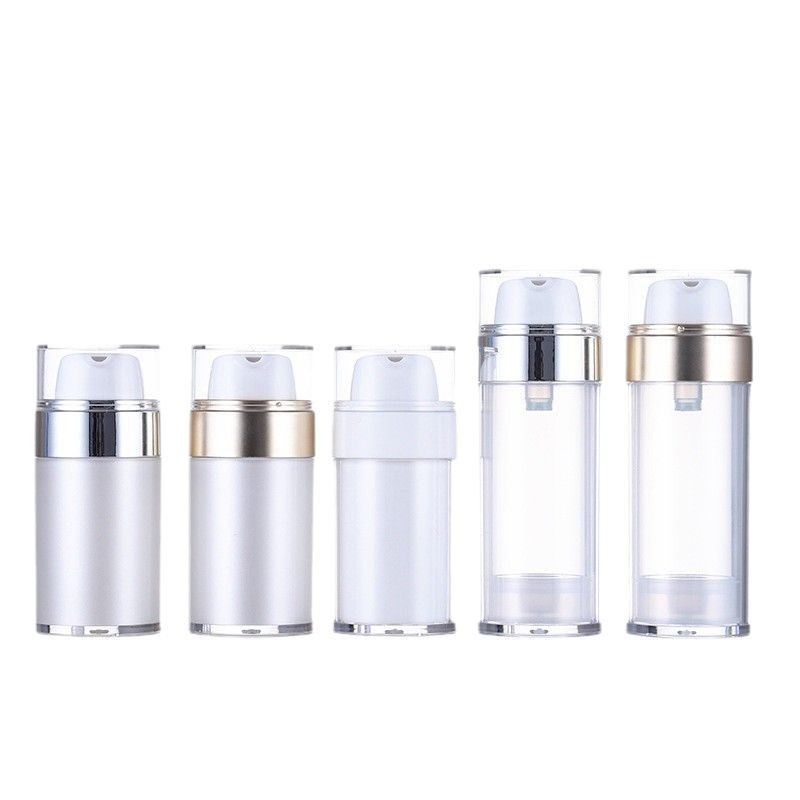
An airless bottle keeps the formula away from air by design. A piston rises as product leaves, the pump draws from the bottom, and no air enters to replace what was dispensed. Compare that with a jar, where every use exposes the entire surface to oxygen and to whatever is on the user's fingers.
Three consequences follow, and they explain nearly every airless pump benefits claim in the list below: less oxidation, less contamination opportunity and more complete evacuation of the pack. Everything else is a consequence of those three, a marketing extension of them, or a claim that depends on your formula rather than on the container.
How to Read an Airless Claim List
Airless claims arrive in three flavours. The first describes physics and holds reliably. The second describes what usually happens when the pack is well matched to the formula and holds conditionally. The third describes what could happen in the best case and gets repeated as though it were guaranteed.
PauPack sorts claims this way in the first technical meeting, because the sorting changes the brief. A physics claim can be specified on the drawing; a conditional claim needs a filled trial; a best-case claim needs someone to decide whether the marketing is worth the risk.
Claim 1 — Airless Protects Sensitive Actives
Holds, with a caveat. Reducing oxygen contact slows oxidation, which matters for retinoids, vitamin C derivatives, peptides, probiotics and delicate botanical oils. The caveat is that oxygen is only one degradation route. Heat, light and pH drift all continue inside an airless bottle.
So an airless pack buys time rather than immunity. A formula that is unstable on its own will still drift, just more slowly. The measurable version of these airless pump benefits is a side-by-side accelerated study comparing jar and airless formats with the real formula.
Claim 2 — Airless Means No Preservative Is Needed
Usually overstated. Airless format limits two contamination routes: air ingress and finger contact. It does not seal the product from the filling environment, from the pump engine, or from a user who dispenses onto an unwashed hand and touches the nozzle.
The honest version of these airless pump benefits is that preservation can often be reduced rather than removed. Whether it can be reduced in your formula depends on water activity, pH and the preservative system, and the decision belongs to the formulator with challenge-test data rather than to the packaging brief.
Claim 3 — Airless Dispenses Everything You Paid For
Holds when the pump matches the formula. A piston-follow design leaves far less residual product than a rigid bottle with a dip tube, which means the last week of use is not a fight with the packaging. For a premium serum, that difference is visible to the customer.
The measurable form of this airless pump benefits claim is residual volume at end of life, and it has to be measured rather than assumed. Viscosity, pump engine and user behaviour all shift the figure, which is why PauPack measures the residual on a filled trial with the customer's own formula instead of quoting a catalogue figure.
Claim 4 — Airless Works for Every Formula
False as stated. Airless pumps are specified within a viscosity band, and formulas outside it behave badly: thin liquids may drip or dispense unpredictably, and heavy creams may fail to prime or may come out in inconsistent doses.
This is the airless pump benefits claim most often promised and most often disproved, because the failure only shows up when filled product meets a real pump. Send the viscosity and the target dose before the pump is chosen, not after the sample arrives, and PauPack will confirm whether the engine can move the formula at all.
Claim 5 — Airless Is the Sustainable Choice
Conditionally true. The case rests on material reduction and on dose accuracy rather than on the word airless. A pack that dispenses the full fill reduces wasted product, which is a genuine environmental gain; a pack that cannot be separated for recycling offsets part of it. Not every airless pump benefits claim survives that test.
The pump engine is the awkward component: spring, piston and seal are multi-material, and many municipal systems do not handle that mixture. If sustainability is the driver, ask what the pump contains and how the pack is disassembled, and read the PauPack sustainability notes before the format is fixed.
Claim 6 — Airless Bottles Can Be Refilled
Only if the pack was designed for it. Refill programmes need a body that survives cleaning, a pump that can be reused safely and an inspection step for returned units. A standard pump engine is built for one filling, and reusing one risks contamination and a drifting dose.
Where a refillable airless system is the goal, say so at the beginning. It changes the materials, the pump choice and the closure, and PauPack designs it from the pump outward rather than treating it as a label on the carton. This is one airless pump benefits claim that cannot be added later.
Claim 7 — Airless Costs More, So It Must Return More
True in cost, conditional in return. The pump engine, tighter moulding tolerances and slower filling all push unit cost above an equivalent jar or a simple lotion bottle. The return comes from shelf life, dose behaviour and premium positioning, and each of those has to be worth something in your category.
Airless earns its price on a serum sold at a premium and loses on a body lotion sold on volume. That is the commercial half of the airless pump benefits question, and it is better answered before the packaging brief than after the first quote.
| Claim | Verdict | What to verify |
|---|---|---|
| Protects sensitive actives | Holds with a caveat | Accelerated study against the current pack |
| Removes the need for preservatives | Usually overstated | Challenge test with the reduced system |
| Dispenses the full fill | Holds when matched | Residual volume in a filled trial |
| Works for any formula | False as stated | Viscosity against the pump band |
| Always the greener option | Conditional | Pump materials and separation |
| Can be refilled | Only if designed for it | Cleaning and reuse specification |
| Justifies a higher price | Commercial decision | Category price and shelf-life value |
Viscosity, Dose and the Pump Engine
The pump engine decides most of what the customer will experience. It sets how much product leaves per stroke, how the first uses feel while the chamber primes, and whether the last third of the bottle dispenses as evenly as the first.
Two specifications matter more than the rest. The viscosity band tells you whether the formula will move through the engine at all, and the dose per stroke tells you whether the pack can deliver your labelled usage. Those two figures decide whether the airless pump benefits promised in the brief ever reach the customer. PauPack asks for both in writing, along with the fill volume, because a dose that changes over the life of the bottle is a complaint waiting to happen.
Where Airless Packs Fail in the Field
| What the customer reports | Likely cause | What closes it |
|---|---|---|
| Nothing comes out at first | Formula outside the viscosity band | Re-match the pump engine |
| Dose gets smaller near the end | Air drawn in at the piston seal | Seal check and filling method |
| Product leaks around the collar | Over-filling or a damaged gasket | Fill volume and torque control |
| Pump breaks mid-use | Formula incompatible with the spring | Compatibility data on the wetted parts |
None of these are bottle failures. Every one is a matching failure between formula, pump and filling, which is why an airless project should start with the product rather than the container.
What PauPack Asks Before Recommending Airless
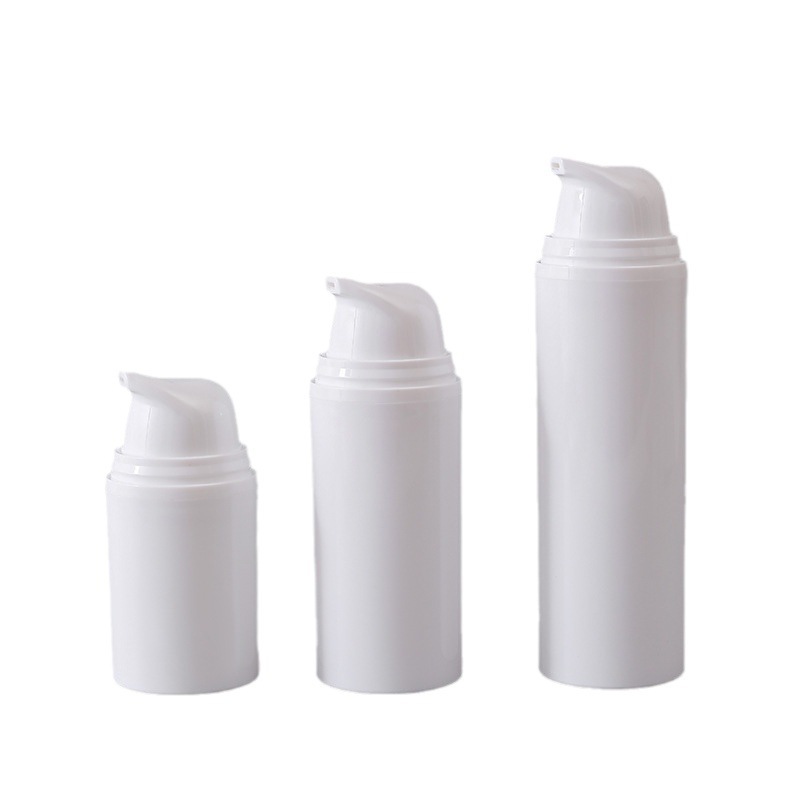
Five questions, in this order: formula viscosity, target dose per stroke, fill volume, market and filling method. With those answers PauPack can narrow the range to two or three engines instead of sending a catalogue.
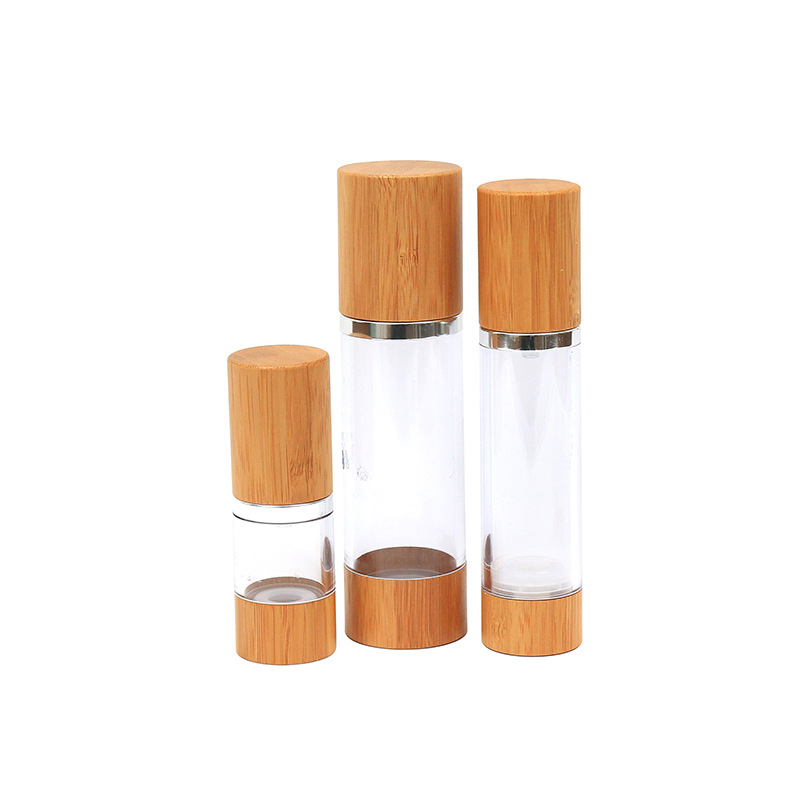
From there the project follows the normal path. Buyers can review the airless bottle series and the airless bottle for skincare to see the formats, then look at how decoration and finishing are handled through the design service.
The comparison that matters most is usually against the pack you already ship. Buyers weighing airless against a lotion bottle or a glass cream jar should read the notes on jar compatibility testing and the 30 g versus 50 g sample review, which cover the same matching discipline in a different format.
On the regulatory side, the FDA guidance on cosmetic labelling explains how claims are governed once they reach the pack, and the USP reference on container materials is useful background for the wetted components inside the pump.
If the formula is still being decided, that is the right time to talk. Send the viscosity, dose, fill volume, market and filling method and PauPack will answer with the engines that fit, the ones that do not, and the filler work each option implies. An airless pump benefits claim that cannot be demonstrated on a filled pack is a marketing line, and PauPack will say so before the artwork is finished.
Questions Buyers Ask About Airless Pump Benefits
What is the main benefit of an airless pump bottle?
The formula stays in contact with less air and less of the container surface over its life. That changes how a sensitive active ages, how much of the product can be dispensed and how predictable the dose is at the end of the pack.
Do airless bottles really need no preservatives?
No. Airless packaging limits oxygen contact and prevents the user from dipping fingers into the product, which lowers microbial risk, but the formula still needs a preservation strategy. Whether that strategy can be lighter than in a jar is a formulation decision with its own testing.
Which ingredients benefit most from airless packaging?
Retinoids, vitamin C derivatives, peptides, probiotics and oil blends with delicate aroma profiles are the usual candidates, because oxidation or contamination changes them measurably. If the formula does not degrade in a jar, an airless pack adds cost without adding benefit.
Can an airless pack take a thick cream?
It depends on the pump engine, not on the bottle shape. Airless pumps are specified within a viscosity band, and a cream outside that band either will not prime or will dispense unevenly. Share the viscosity and the target dose before choosing a pump.
How much product is left in the bottle at the end?
A well-matched airless pump leaves very little, because the piston follows the product down instead of letting it cling to the walls. The residual figure still has to be measured on the filled pack, since it depends on formula, pump and how the user finishes the bottle.
Are airless bottles recyclable?
The glass or plastic body is the easy part. The pump engine, the spring and the piston are multi-material parts, which is where recyclability gets complicated. Ask what the pump contains and how the pack is separated, rather than assuming the format is automatically the greener one.
Can an airless bottle be refilled?
Some designs allow the body to be refilled and the pump to be reused, but only where the pump is engineered for it. A standard airless engine is not built for repeated cleaning, and reusing it risks contamination and a failing dose.
Why is an airless pack more expensive?
Cost sits in the pump engine, the tighter moulding tolerances and the filling equipment. The pack also costs more to fill, because priming and de-aerating take time on the line. That is the premium you pay for the shelf life and dose behaviour.
How should an airless pack be tested before launch?
Run a filled trial through the real temperature history, then measure dose weight at the start, middle and end of the bottle, check residual volume and re-test the formula for oxidation. Photographs of the pack tell you nothing about any of those.
What does PauPack need to quote an airless project?
The formula viscosity, the target dose, the fill volume, the market and the filling method. With those five, PauPack can propose a bottle, a pump engine and a closure as one matched set instead of quoting a container and leaving the rest to chance.