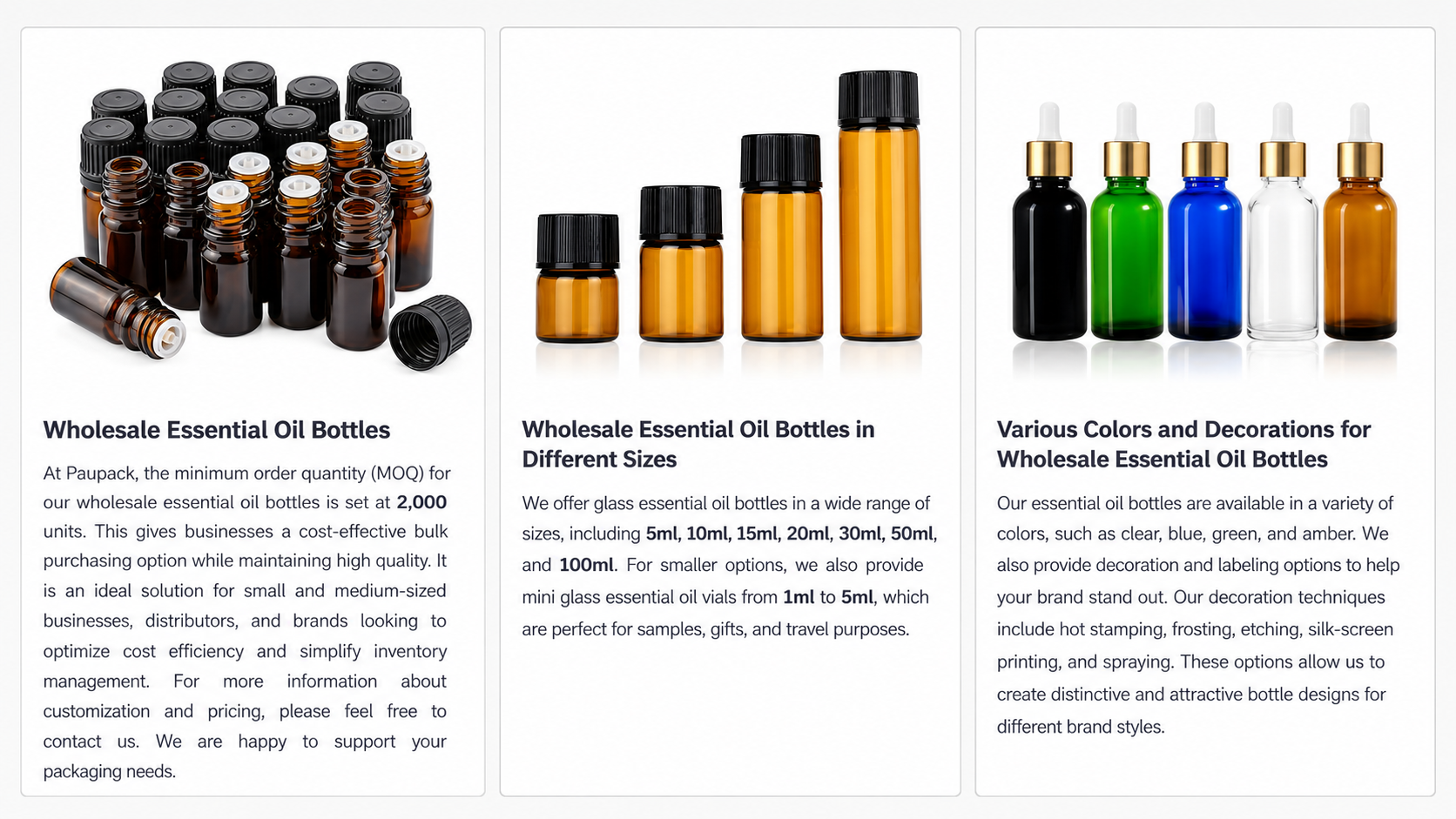


PauPack treats an essential-oil pack as a coordinated dispensing system rather than a bottle-only purchase. Glass color, neck finish, applicator, formula contact, label space and shipping protection must be approved together.
Use this four-layer sourcing blueprint when comparing essential oil bottles wholesale for a growing aromatherapy or private-label range.
Layer One: Portfolio Architecture
Map each oil, blend and channel to a bottle capacity and applicator. A 10ml dropper may suit concentrated formulas, while rollers or reducers can answer different consumer-use patterns. Keep the commercial role of every SKU visible before requesting prices.
PauPack's essential oil bottle collection gives buyers a starting point for capacities, colors and closure routes.
Layer Two: Component Compatibility
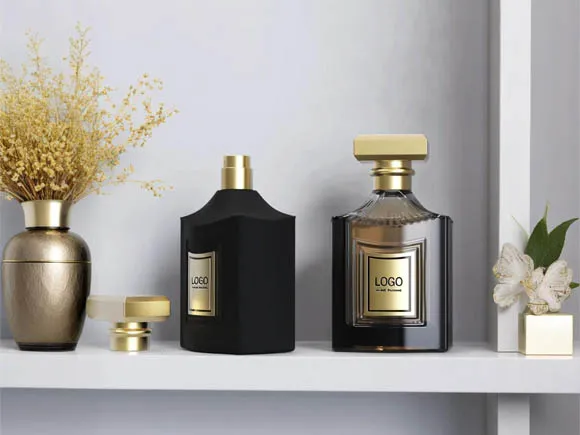
List the bottle, pipette, bulb, collar, reducer, roller, cap and tamper feature as separate controlled items. Confirm neck dimensions and installed fit with production-style samples.
| Interface | Buyer approval |
|---|---|
| Bottle and closure | Finish, seal and application |
| Formula and component | Product-owner compatibility plan |
| Label and glass | Panel, color and adhesion |
| Pack and transit | Divider, carton and orientation |
Layer Three: Formula and Use Review
The product owner should define formula compatibility, storage, dispensing accuracy and consumer-use tests. Evaluate filled samples under realistic handling; avoid assuming one bulb, liner or roller works for every oil.
The bamboo dropper bottle guide explains how decorative collars add another material interface. PauPack also recommends retaining the filled approval sample with its component codes.
Layer Four: Production Evidence
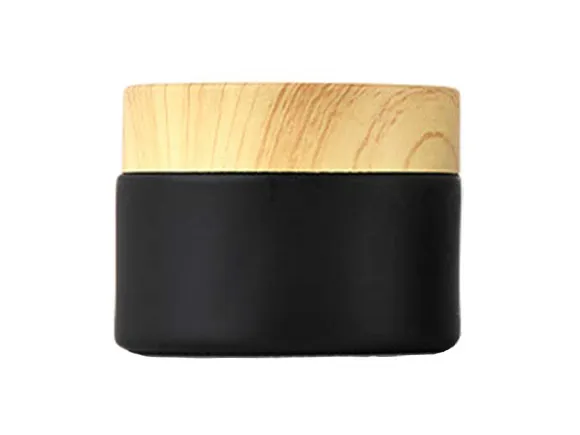
Approve color range, decoration, label position, assembly, leakage checks and packed-carton configuration. Record incoming inspection criteria and the process for supplier changes.
PauPack's quality management, design service and services support specification and release discussions.
Build a Commercial Quote Grid
Request separate quantities and costs for stock glass, custom color, decoration, closures, labels and cartons. This exposes the real minimum order for each SKU instead of hiding component constraints inside one number.
For essential oil bottles wholesale, include capacity, glass color, applicator, formula context, decoration, quantity, filling location, carton and destination. Review the broader product portfolio when the line needs coordinated jars or pumps.
A strong essential oil bottles wholesale program keeps product architecture, interfaces and production evidence connected. PauPack helps buyers turn those decisions into a repeatable sourcing file.
Frequently Asked Questions
Which bottle color is best for essential oils?
The product owner should select color based on formula, storage, shelf-life and brand requirements rather than appearance alone.
Should droppers and reducers be quoted separately?
Yes. Separate component pricing and minimums make substitutions, assembly and reorders easier to control.
Why test filled essential-oil samples?
Filled samples reveal formula-contact, dispensing, leakage, label and storage issues that empty-component checks may miss.
What should be retained after approval?
Keep drawings, component codes, filled samples, artwork, inspection criteria and a complete packed reference.