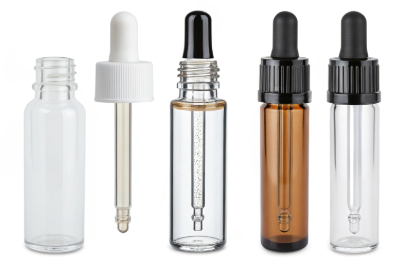



An orifice reducer looks like a small plastic insert. In practice it decides how quickly an essential oil, tincture or facial oil leaves the bottle, how heavy the drop is and whether the closure still seals after a hundred openings. Buyers who treat the orifice reducer as a free accessory usually meet the problem later, at the filling line or in the first complaint report.
PauPack treats it as a specified component with three measurable numbers: flow rate, drop size and insertion force. This guide is for brands that already have a bottle and cap but have not defined the insert. It covers what the reducer controls, how viscosity changes the opening you need, what to measure on samples and which documents belong in the file before a bulk order.
What an Orifice Reducer Actually Controls
The insert sits inside the bottle neck and narrows the opening. That simple change carries four jobs at once. An orifice reducer limits how fast liquid leaves when the bottle is inverted, it creates a reproducible drop point for dose counting, it keeps the neck and thread cleaner between uses, and it provides a seat that the cap plug or liner presses against when the bottle is closed.
When one of those jobs fails, the symptom rarely looks like an insert problem. A heavy drop is blamed on the formula. A wet thread is blamed on the cap. A loose insert after several weeks is blamed on handling. PauPack writes the insert into the specification so the cause stays visible.
Read the Reducer as Five Working Surfaces
Before choosing dimensions, look at the part as five surfaces with different duties. The outer wall holds the insert in the neck. The seating flange or shoulder stops it at the intended depth. The orifice controls flow. The inner land shapes the drop. The upper face receives the closure plug or liner.
Each surface can be measured and each one can be approved or rejected. A generic description such as standard dropper insert hides those differences: two parts with the same outside diameter can differ in flange thickness, bore taper and land width.
Number One: Flow Rate Must Match the Viscosity
Flow rate is the time a defined volume needs to leave the bottle in a defined position. It is not a property of the insert alone. Viscosity, surface tension, temperature, bottle rigidity and the way the user tilts the bottle all take part. Two brands can use the same opening and report completely different dosing behaviour because their products sit at different viscosities.
A practical brief describes the product first and the opening second. State whether the liquid is a light carrier oil, a blended serum, a glycerin-rich tincture or a thin aromatic. Then define the flow behaviour the user should experience.
| Product behaviour | Typical buyer need | Opening direction | What to confirm on samples |
|---|---|---|---|
| Thin, fast-moving oil | Control without a slow, frustrating pour | Narrower opening with a defined land | Flow time and neck cleanliness after ten pours |
| Medium body blend | Steady drop-by-drop release | Standard opening, tightly toleranced | Drop mass consistency across three bottles |
| Thick or cold-sensitive product | Reliable release without squeezing | Wider opening or a shorter land | Flow time at the lowest expected storage temperature |
| Alcohol-rich tincture | Fast release with no dribble | Opening matched to low viscosity | Seal, odour and thread condition after repeated opening |
PauPack asks for the flow result rather than a single millimetre figure, because the buyer's acceptance rule should describe what the user experiences. Once that result is written down, PauPack can select the orifice reducer that produces it and lock the part by code.
Number Two: Drop Size Belongs to the Formula
Drop size is often quoted as if it were printed on the mould. It is not. Drop mass depends on the orifice diameter, the wetting behaviour of the liquid on the plastic, the land around the opening, the pouring angle and the speed at which the bottle is turned. A supplier can give a reference value, but only the finished combination shows the true number.
For a brand that prints dosing guidance on the label, this matters commercially. If the artwork says thirty drops and the approved pack delivers a different amount, the instruction is wrong even when the bottle functions perfectly. PauPack recommends measuring drop mass against the production formula before the orifice reducer is frozen, then writing the label guidance to the measured result or loosening the wording.
Number Three: Insertion and Retention Force Decide Assembly and Use
An insert has to go in, stay in and come out only when someone intends to remove it. Those three requirements pull in different directions, so they belong in one specification. A part that inserts easily may also back out under vibration; a part that grips hard may split a thin neck or sit proud and lift the cap off its sealing position.
| Check | Failure it prevents | How to observe it | Owner |
|---|---|---|---|
| Insertion and full seating | Partially seated insert, cracked bore, lifted cap | Assemble on the intended equipment and record seating depth | Filling and packaging engineering |
| Retention after handling | Insert rising during transport or repeated use | Mark position, pack and shake, then re-measure | Quality and logistics |
| Removal by the user | Access problems when refilling is allowed | Ask a reviewer to remove it without tools, then replace it | Product and human factors |
| Seal with the closed cap | Thread leakage, odour escape, product loss | Fill, close to setting, invert and store on its side | Formula and quality teams |
Neck Finish and Closure Pairing Come First
An orifice reducer only works in a neck made for it. Record the neck finish, inner bore, rim thickness, thread form and the vertical space available under the cap. Then check that the insert seats below the rim instead of standing proud of it, because a raised insert pushes the closure upward and removes the sealing pressure the cap was designed to apply.
This is where a buyer can save a full production run. Comparing the bottle drawing, the cap drawing and the insert drawing before tooling or bulk release exposes an incompatible stack while it is still a document problem. PauPack keeps the three drawings in one file with the seated assembly height marked on it.
Choose LDPE, HDPE or PP Around the Product
Low-density polyethylene is soft and forgiving, which helps with seating and with sealing against a plug. High-density polyethylene holds its shape better and resists distortion, which suits tighter tolerances and repeated handling. Polypropylene is stiffer and offers a cleaner, more rigid appearance, but it tolerates less interference during insertion.
Material choice is not only mechanical. The orifice reducer stays in contact with the product for months, so the formula owner should confirm suitability for the specific oil, alcohol content, contact time and destination market. PauPack supplies component identity and supplier documentation; the brand remains the owner of the suitability decision.
A Bench Afternoon Beats a Catalogue Guess
Three numbers can be established in one session with filled bottles, a balance, a timer and a marker. Fill representative units, assemble the insert and cap to the written setting, then measure flow time, drop mass and seating depth. Repeat on three bottles from the same lot so one lucky sample does not become the specification.
Leakage Usually Starts at the Thread, Not the Orifice
When a bottle leaks, the obvious suspect is the small hole. In practice most leakage travels between the neck and the closure, or past the plug that should seal against the insert. Test in the orientations the product will actually meet: upright in a carton, on its side in a drawer, inverted in a travel bag and after a temperature change.
Record the route the liquid took. A damp thread points to closure torque, liner choice or a raised insert. Liquid above the orifice reducer but a dry thread points to overfilling or splash during use. Liquid around the seating flange points to an interference problem. Each route leads to a different fix.
What the Filling Line Needs From the Insert
Automatic inserting equipment needs a part that feeds consistently, seats at a repeatable depth and tolerates normal line variation. Ask for the parts to be supplied clean, oriented and separated so a jam does not become a rejected batch. Then confirm that the equipment setting used during the sample run is the setting written into the work instruction. PauPack recommends running this check with the same orifice reducer lot that will be quoted for bulk.
Reducer, Dropper or Spray: Decide by the Dose
An orifice reducer suits a user who pours or counts drops directly from the bottle. A dropper assembly suits measured transfer into a second container or onto the skin. A spray or mist option suits surface application. The three formats imply different necks and closures, so switching later is rarely only an insert change.
Make the dose the deciding question. If the brand cannot describe how much product a typical use consumes, the packaging format is being chosen before the user need is understood. PauPack can compare the options inside the essential oil bottles and dropper bottle range before the neck is fixed.
Evidence to Request Before Bulk Production
Ask for the insert drawing with tolerances, the material declaration and supplier identity, a sample of the exact part, and a trial record that names the bottle, cap, formula and settings used. Where the product is a medicine or a tincture sold under pharmaceutical rules, the closure belongs to a container-closure system rather than to a bottle alone, and the FDA guidance on container-closure systems places the suitability decision with the product owner.
Where access restrictions apply, the closure choice becomes a regulatory question as well. The Poison Prevention Packaging Act explains how special packaging requirements are triggered for specified household substances. A reducer is part of the assembly, but it does not decide compliance, and storage expectations still follow the definitions in USP <659> Packaging and Storage Requirements where those rules apply.
How PauPack Builds the Reducer Specification
Send the bottle and cap codes, the formula, the dose the user needs, the filling route, target markets and order pattern. PauPack then maps those inputs to available insert options, coordinates matched samples and keeps the approved orifice reducer tied to the bottle and closure it was tested with.
The commercial file stays short on purpose: part code, opening, material, seating depth, flow time, drop mass, paired closure and the change triggers that reopen the review. That record makes a repeat order a comparison instead of a negotiation. Buyers can review the accessory supply programme, the quality management process and the packaging services behind the development route, or compare quantities first in our essential oil bottle MOQ guide and our notes on amber glass dropper bottles.
Reorders: What Invalidates an Approved Reducer
An approved orifice reducer belongs to a defined system. Reopen the review when the bottle, neck finish, insert material, supplier, mould, opening size, cap, liner, plug, formula, viscosity, filling temperature, inserting equipment or packed route changes outside that boundary. A substitution of a few tenths of a millimetre is not automatically harmless when it changes seating depth.
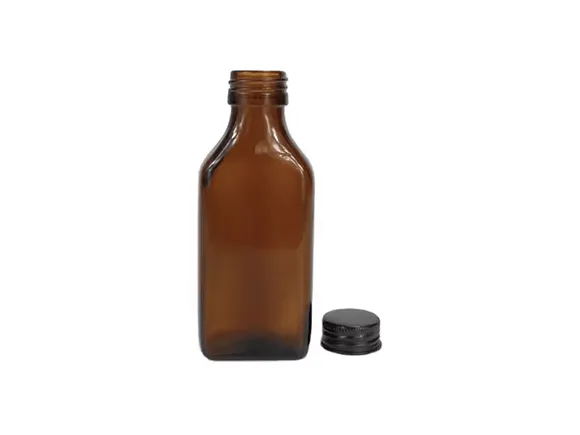
Start the Next Bottle Project With the Insert
The orifice reducer is a cheap part carrying expensive consequences. Defining flow rate, drop size and insertion force before bulk turns a vague accessory into an approved component, and it gives the filling line, the quality team and the customer service desk the same reference. PauPack can build that specification, match it to the closure system and hold the record for the next reorder. When the bottle, cap and formula are ready, send the project brief with the dose and the flow behaviour your user expects.
Answers to the Questions That Stall Reducer Approvals
What is an orifice reducer used for?
It narrows the bottle opening so a liquid leaves in a controlled way. On essential oil, tincture and facial oil bottles it slows the pour, supports drop counting, keeps the neck clean and gives the cap plug a seat to seal against.
How do I choose the opening size?
Start from the viscosity of the finished product and the dose the user needs, then confirm on filled samples. A thin oil and a thick blend will not behave the same way through an identical opening.
Does the reducer change the drop size?
Yes. Opening diameter, land geometry, material softness and the way the bottle is tilted all influence drop mass, so drop size should be confirmed with the real formula rather than estimated from a drawing.
Will a standard reducer fit my bottle?
Fit depends on the neck finish, inner bore, rim thickness and the height available under the cap. Two bottles described with the same nominal neck size can still differ enough to change insertion depth and seal position.
Which plastic should be used for oil contact?
LDPE, HDPE and PP are all common, and each behaves differently in softness, memory and appearance. The formula owner should confirm suitability for the specific product, contact time and market before bulk.
How do I test for leakage?
Fill the production-intent bottle, assemble the insert and cap to the specified setting, then check inverted, on its side and after handling. Record where the liquid appears, because most leakage travels through the thread rather than the orifice.
What insertion force should a buyer specify?
Specify it so the insert fully seats during assembly without cracking the bore or loosening later. Confirm it with the actual inserting equipment and record the seating depth that the approved sample achieved.
Can a reducer be used with a child-resistant cap?
It can be part of the assembly, but it is not a substitute for compliance work. Whether a product needs special packaging is a regulatory decision, and the closure must be evaluated as part of a complete tested system.
What should the sample report include?
Record the insert code and lot, material, opening size, seating depth, flow time, measured drop mass, leakage result, the paired bottle and cap, and the formula or surrogate used for the trial.
What changes require a new review?
Reopen the approval when the bottle, neck finish, insert material or supplier, opening size, cap, liner, plug, formula, filling temperature or filling equipment changes outside the approved boundary.