

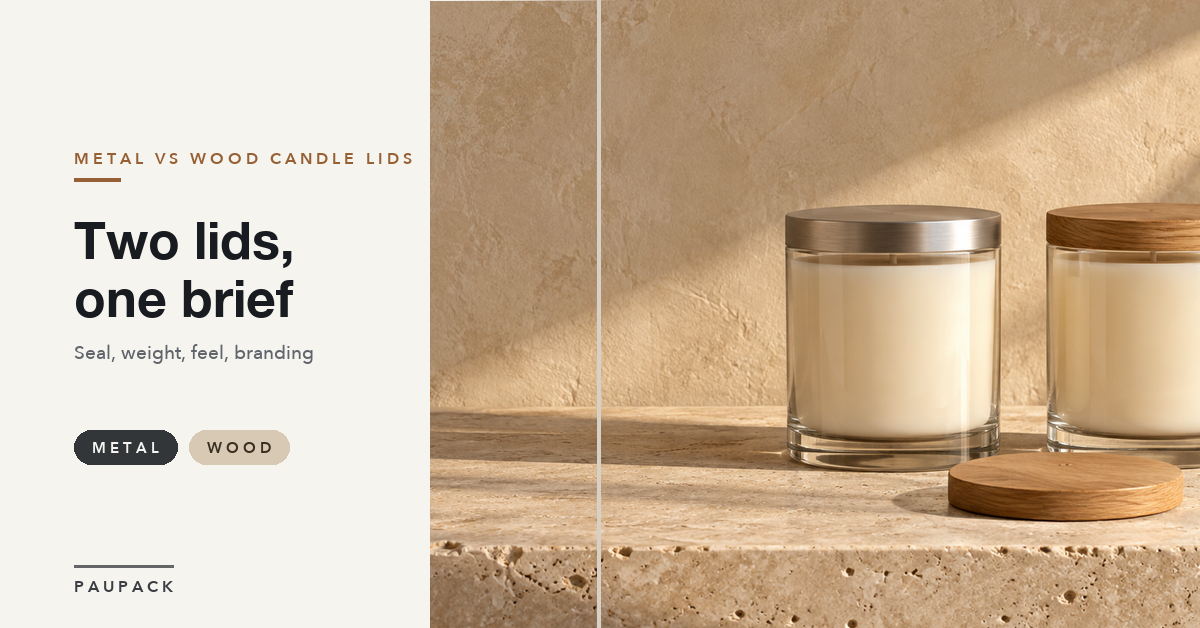
The choice between metal vs wood candle lids is usually made in the last week of a project, when the vessel is already approved and the wax has been tested. It should be made earlier, because it changes the seal, the transit plan and the unboxing moment that the whole brand promise rests on.
PauPack supplies candle vessels, lids and closures for candle and home-fragrance brands, and we see both materials perform well. The failures are rarely about the material itself; they are about a lid chosen for a photograph and then asked to do an engineering job. This page compares metal vs wood candle lids across eight criteria and shows where each one should be allowed to win.
Why the Metal vs Wood Candle Lids Question Arrives Late
Because the vessel is the visible hero of a candle pack and the lid is treated as trim. In practice the lid determines three things the vessel cannot: how the wax behaves during transport, how strongly the cold throw reads on a shelf, and what the customer hears when they open the box.
Moving the decision earlier costs nothing and saves a sample round. A lid chosen at artwork stage can be specified with the vessel's neck, its clearance and its liner, rather than retrofitted once the glass is already in production.
What Each Material Actually Does
Metal is a manufactured part: rolled, stamped or drawn to a repeatable shape, with a surface that takes lacquer, plating and print. Wood is a machined part: cut from a species with natural grain, moisture content and variation between pieces.
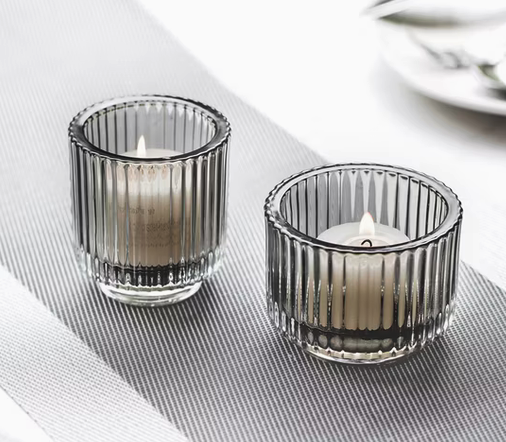
Everything that follows is a consequence of that difference. Metal repeats; wood behaves. A brand that needs twenty thousand identical lids at a fixed tolerance is asking a different question from a brand creating a limited gift set of two thousand.
Fit and Tolerance: Where Metal Wins
A metal lid can be held to a tight band because the material and the tooling both repeat. That means a consistent pop when it releases, a consistent seat on the vessel and a closure that behaves the same way in the warehouse and in a bathroom.
PauPack writes the two specifications differently. Wood needs a wider band by design. Grain direction, moisture content and the finishing oil all shift the final dimension by a small but real amount, and a specification written like a metal one will reject perfectly good wooden lids. PauPack writes the wood band separately and marks it on the drawing, because a metal vs wood candle lids comparison written as one tolerance rejects good wooden parts.
Feel and Silence: Where Wood Wins
Wood absorbs sound where metal rings, and PauPack treats that as a specification rather than a mood. On a gift candle the difference is the moment the box is opened, and that moment is what a premium price is partly buying. A wooden lid also warms to the hand rather than taking on the room temperature of the metal.
Wood is also the easier surface to engrave, which lets a brand put its mark on the lid face rather than on a label. That is why gift and seasonal candle ranges tend to arrive with wooden lids even when the core line ships with metal, and it is the criterion where wood wins the metal vs wood candle lids argument outright.
Heat, Soot and the Inside of the Lid
Neither lid is exposed to flame during a burn, because it is off. The variable is what happens when the customer closes the candle early, while the wax and the headspace are still warm.
| Behaviour | Metal lid | Wood lid |
|---|---|---|
| Surface after closing warm | Holds heat, condensate forms on the inside | Warms slowly, absorbs then slowly releases moisture |
| Effect on fragrance | Condensate can leave a residue on the inner face | Timber can take on the scent over time |
| Cleaning by the customer | Wiped easily | Should not be soaked or scrubbed |
| Long-term appearance | Keeps its finish if undamaged | Develops patina, which some brands want and others do not |
The practical answer for both materials is the same instruction on the care card: let the candle cool before the lid goes back on. A sentence on the insert prevents most of the complaints that arrive as a lid problem.
Scoring the Two Options Against a Real Brief
Rather than arguing in the abstract, score the brief. This weighting is the one PauPack uses when a candle brand brings a range plan rather than a single pack.
| Criterion | Weight | Metal | Wood |
|---|---|---|---|
| Seal consistency | High | Strong | Adequate with a liner |
| Shelf impression | High | Clean and technical | Warm and tactile |
| Unit cost at volume | Medium | Lower | Higher |
| Branding surface | Medium | Print, lacquer, emboss | Laser, burn, inlay, label |
| Batch repeatability | Medium | High | Requires a written band |
| Sustainability story | Low to medium | Recyclable | Renewable but needs a sourcing claim |
Score the same brief with two different weightings and the material choice usually flips without any new information. That is the honest way to settle metal vs wood candle lids: decide what the range is optimising for first.
When a Hybrid Is the Right Answer
The most common way brands settle metal vs wood candle lids is not a choice at all. A brand ships a metal lid on the core line and a wooden lid on the gift set, using the same vessel so the wax and the wick stay unchanged.
That route needs one extra check: both lids have to seat on the same vessel mouth and survive the same transit plan. Testing the pair together, rather than each lid against a bench sample of the jar, is what keeps the shared vessel genuinely shared.
Cost Per Unit and What Drives It
Cost settles more metal vs wood candle lids decisions than any other criterion, and the pattern is stable enough to plan around.
Metal is cheaper per unit at volume in almost every case we quote, and the reason is process speed rather than material price. Wood adds machining time, drying, sorting and a higher reject rate on visible grain defects.
Wood usually carries a lower tooling entry point, which matters at low volume. A brand making two thousand gift candles may find that the wooden lid is cheaper in total than a metal lid that needs a new die, even though the unit price is higher.
Transit Risk and the Pack Around the Lid
Transit risk rarely separates metal vs wood candle lids on its own. Both materials fail in transit when the insert lets the candle move, not when the lid is weak. Vibration transmits through the vessel to the lid, and the lid is where the mark appears.
PauPack asks for the shipper and the pallet pattern before approving a lid, because a lid that survives a bench drop can still scuff on a full pallet. The same review is what makes a metal vs wood candle lids decision safe to reverse later. Where the two materials are interchangeable, the inner packaging often decides the final choice more than the lid does.
Reorder and Seasonality Risk
PauPack plans reorders differently for each material. Metal reorders predictably from tooling and stock material. Wood is tied to species availability and to drying time, and a species that is easy to buy in spring can be slow in the fourth quarter when every home-fragrance brand is ordering gift sets.
The practical rule is to book wood volumes earlier than metal ones, and to fix the acceptable grain range in the specification. A range that has never been signed off on paper becomes an argument the first time a shipment looks different from the sample.
Testing a Candle Lid Before You Commit
The sequence PauPack recommends takes about three weeks and catches the failures we see most on both materials: fill ten jars at production temperature, close them, hold a set warm for a week, and run one shaker test and one drop test without the outer carton.
Open each unit afterwards and inspect wax disturbance, lid grip and any mark on the lid face. The candle lid sizing and tolerance guide sets out the bands we use, and it is the document to read alongside the test results rather than after them.
What PauPack Asks Before Recommending a Lid
Send PauPack the vessel or its drawing, the wax and wick details, the annual volume, the shipping market, the lid material direction and whether the range is a core line or a gift set. PauPack returns both routes with the tolerance band, the liner recommendation and the tooling each one needs.
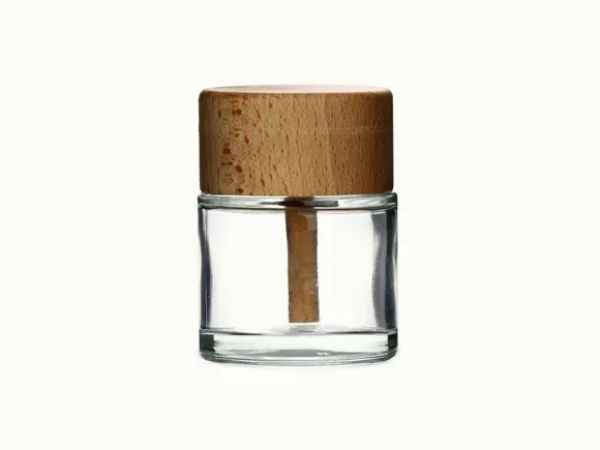
The candle jar range covers the vessels we run most often, and the guide to candle jar types explains where each vessel profile suits a lid better. For the lid face itself, the metal caps for glass jars and the wooden cap option show what each material can carry in print, lacquer or laser work.
One safety note before the launch date is fixed. Candle safety wording is regulated in most markets, and the CPSC publishes guidance in its candle safety pages, with the statutory background summarised under CPSC statutes and regulations. The care instruction printed on the insert is part of the pack, and it should be drafted while the lid is still being chosen. From there, the custom candle jar branding notes and the inquiry form are the fastest way to get a paired quotation for both materials.
Metal vs Wood Candle Lids: Buyer Questions
Which is better, metal or wood candle lids?
Neither wins outright. Metal holds a tighter seal and a flatter seat, which suits a wax that releases fragrance slowly, and that is the criterion where it leads. Wood wins on feel, warmth and the sound of the closure, which is why it dominates gift and home-fragrance ranges. PauPack recommends on the brief rather than on the material.
Do wood candle lids seal well enough for shipping?
They seal well enough to ship when the fit is engineered rather than guessed. A wooden lid needs a defined clearance, a stable moisture content and a liner or gasket where the wax will slosh. Untreated wood that gains moisture in transit is where grip and fit both change.
Does a metal lid affect fragrance throw?
A tight metal lid reduces the headspace exchange, so the cold throw when the candle is unlit is usually lower and the first burn evaluates the scent rather than the shelf. Brands that rely on strong cold throw sometimes prefer a looser tolerance or a wooden lid.
How hot does a metal candle lid get?
The lid is off while the candle burns, so the risk is not heat on the lid but heat reflected back onto the vessel when the lid is replaced too early. Metal holds surface heat longer than wood, which is why both should carry an instruction about waiting before closing.
Is wood more expensive than metal for candle lids?
Usually yes at the unit level, and the gap widens with size. Wood is a machined part with moisture behaviour and grain variation, while a metal lid is stamped or rolled at speed. The premium buys the shelf impression and the unboxing sound, not durability.
Can a wooden lid carry a brand mark?
It can carry laser engraving, a branded burn, a printed label or an inlaid disc. PauPack advises brands to test the mark against the intended wood species, because a burn that reads sharply on ash can blur on a soft oiled grain.
What tolerance should a candle lid hold?
Agree the band against the vessel mouth rather than against the lid alone. A lid measured on its own tells you nothing about how it seats on a specific jar, so the number belongs on the pair. The candle lid sizing breakdown shows how we set that band.
Do I need a liner under the lid?
Add one when the wax moves, when the pack ships in a warm season or when the fragrance is volatile. A thin PE or EVA liner under metal is common; under wood a gasket or a coated disc protects both the wax and the timber edge.
Which lid reorders more predictably?
Metal, because the material is consistent and the tooling sets the shape. Wood follows the species, the moisture content and the grain, so batch variation is normal and the specification has to allow for it. Both work, but the inspection plan differs.
How should a brand test a candle lid before ordering?
Fill ten jars at production temperature, close them, hold them warm for a week, then run a shaker and a drop without the shipper. Open each one and inspect wax disturbance, lid grip and any mark on the timber. That short sequence catches most failures.