

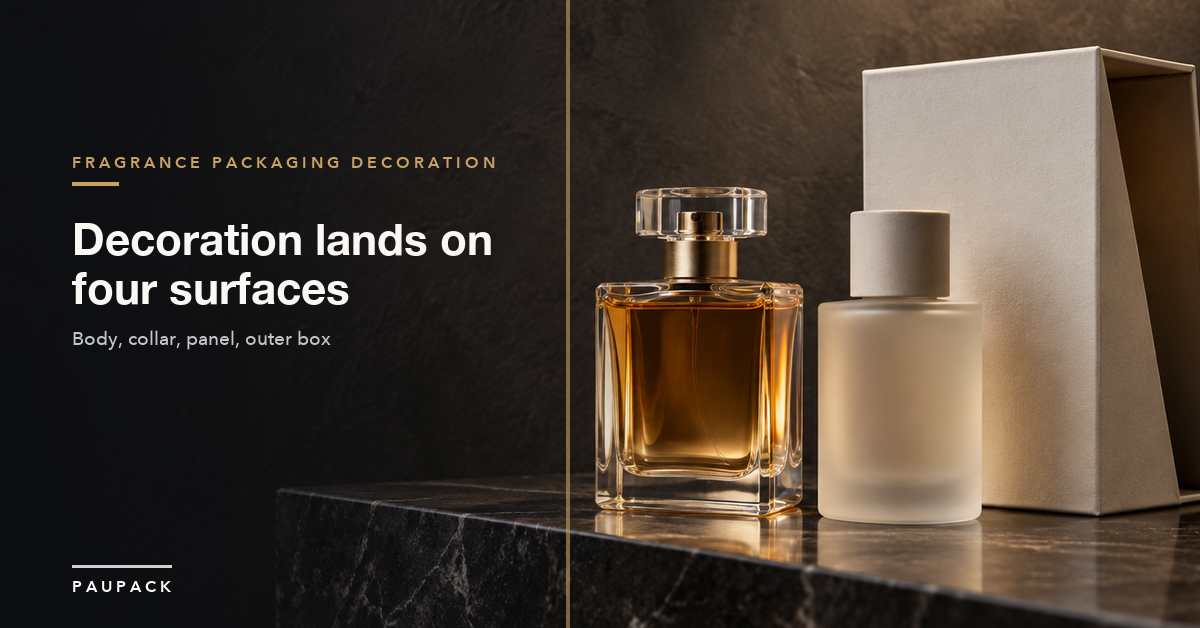
A fragrance bottle is judged twice: once in the hand and once on the shelf, and decoration is the only part of the pack that answers both. It is also the part most often specified last, when the mould is fixed and the launch date is already circulating.
PauPack builds glass bottles, closures and cartons for fragrance and home scent brands, so we see decoration briefs arrive from three directions: a mood board from marketing, a cost target from the buyer and a filling line that has one opinion only. This page treats fragrance packaging decoration as four separate surfaces and shows which decisions belong on each one, in the order we would settle them.
Why Fragrance Packaging Decoration Carries the Second Order
The first order is bought on trust and a sample. The second order is bought on consistency, and fragrance packaging decoration that drifts between batches is the fastest way to make a brand look careless. Print registration, gloss level and glass colour all have to repeat, and none of them repeat by accident.
That is why PauPack treats decoration as a specification rather than a finish. Every element gets a reference, a tolerance and a photograph taken under agreed light, so the next production run of fragrance packaging decoration is measured against a record instead of against somebody's memory of a good sample.
The Four Surfaces a Fragrance Bottle Offers
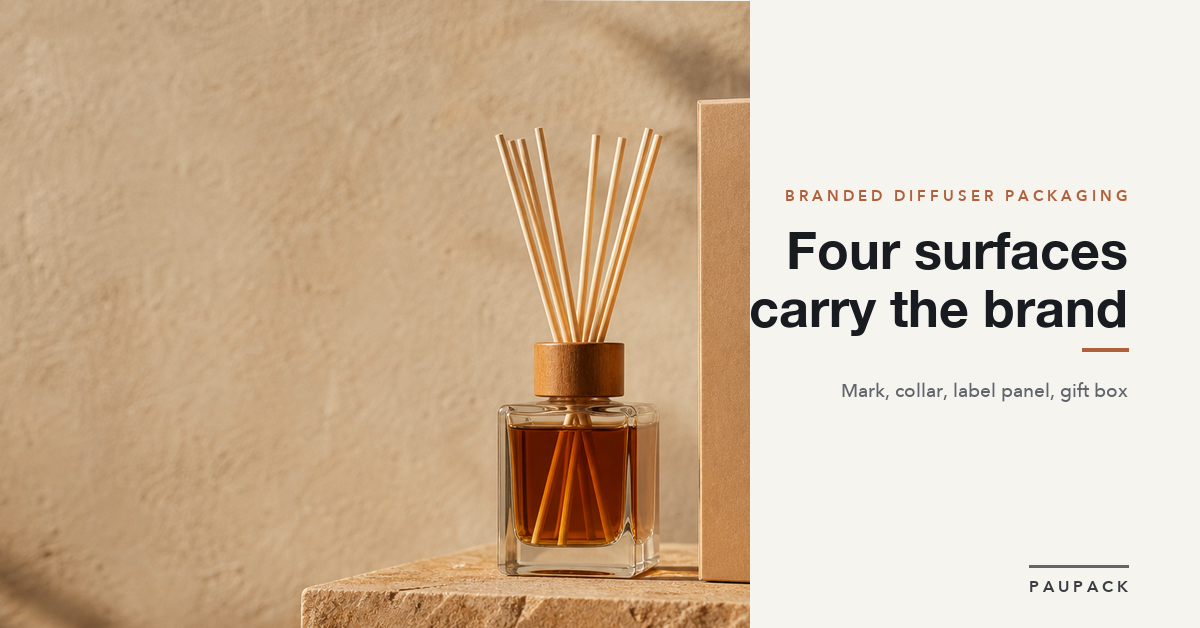
Decoration decisions collapse into four surfaces: the glass body, the closure and collar, the label panel, and the outer carton. Each favours different techniques, and each fails differently when the brief moves after approval.
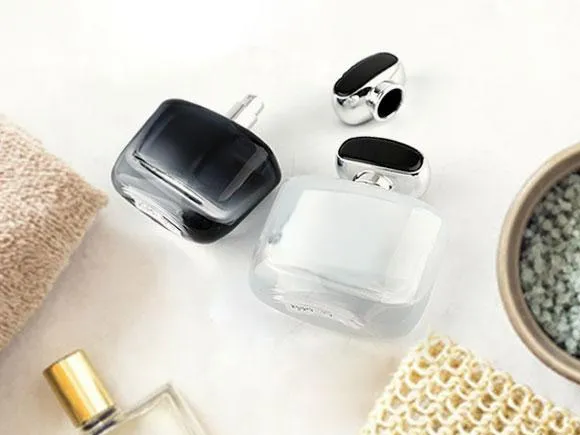
A brief that names the surfaces can be quoted in days. A brief that names only a colour usually returns to the brand with three questions, and each round costs a week of the launch window.
Surface One: The Bottle Body
The body carries the most fragrance packaging decoration options because it is the largest continuous glass area in the pack. Spray coating, organic frosting, kiln-fired print, UV screen print, hot stamp and acid etching all apply here, and most fragrance packaging decoration briefs are decided on this surface alone.
Two constraints govern the choice: wall thickness and shoulder curvature. A thin-walled bottle distorts under a heavy coating, and a strongly curved shoulder stretches artwork so that a mark drawn square on a flat proof arrives visibly bowed. PauPack checks artwork on the actual shape rather than on a die-line.
Surface Two: The Closure and Collar
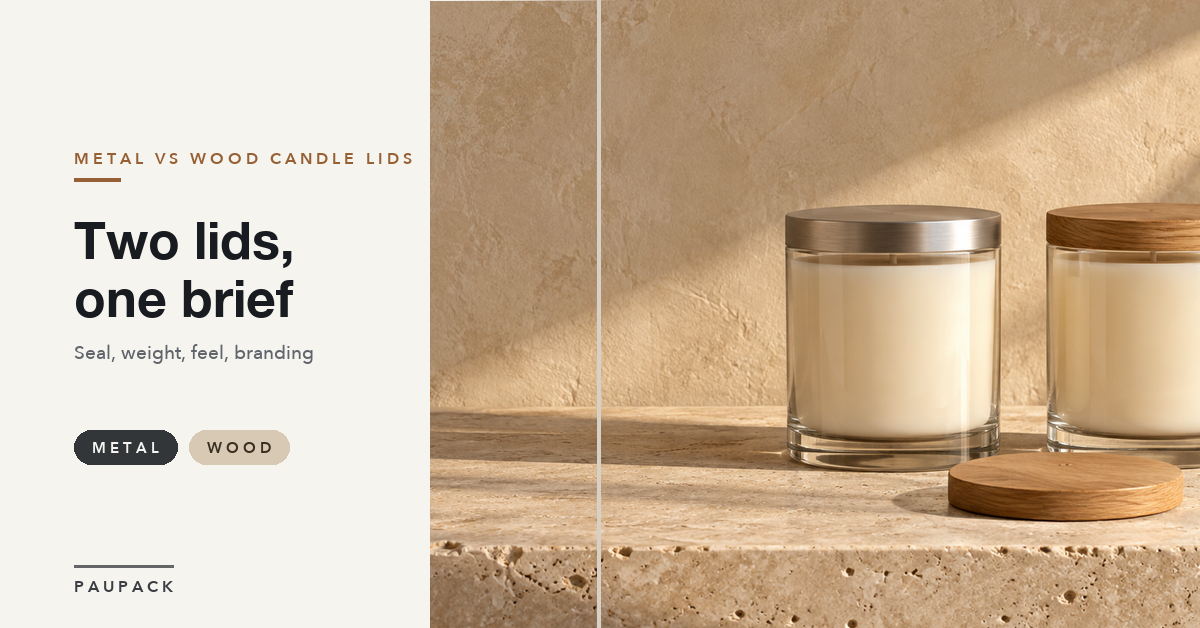
On heavy fragrance bottles the neck and collar carry more brand weight than the body, because that is where the hand goes first. Collars accept anodising, plating, lacquer, hot stamp and a moulded or engraved mark, so a single fragrance packaging decoration look can be carried by the collar while the body stays plain.
Decorated closures add a second supplier to the critical path, so the closure has to be specified together with the glass neck finish. A collar designed against a 15 mm crimp will not seat on a 13 mm one, and the mismatch is discovered on the filling line rather than in the sample room.
Surface Three: The Label Panel
A flat panel is the least expensive decoration surface, and on fragrance bottles it is deliberately short. Where a panel exists, a pressure-sensitive label or a wet-glue paper label gives the brand a changeable surface for limited editions and regional artwork without retooling.
The trade-off is alcohol exposure. A label on the shoulder or near the neck eventually meets drips, and adhesive that survives a warehouse in winter can lift in a bathroom in summer. PauPack tests panels with the product rather than with water, because fragrance alcohol finds edges that water never reaches.
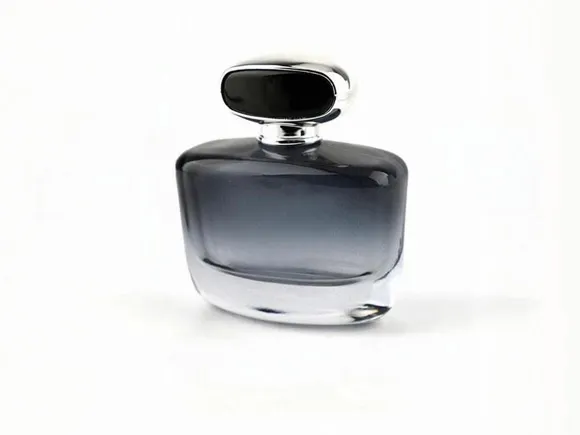
Surface Four: The Outer Carton
The carton absorbs fragrance packaging decoration techniques that glass cannot hold: foil blocking, blind emboss, spot UV, textured board and soft-touch lamination. It is also the cheapest surface to change, which makes it the natural home for seasonal and gift variants of one fragrance packaging decoration language.
Cartons usually carry the compliance text, so the panel that looks most decorative is often the one with the least room. Settle the mandatory copy before the artwork is drawn, because a line of regulated text added at the end rearranges everything around it.
Reading Decoration Against the Glass Colour
Colour is the variable that surprises brands most. The same white ink reads cool on flint glass, warm on amber and muddy where the bottle has a colour gradient, and an opaque coating behaves differently again over clear glass that will be filled with liquid.
The honest test is a filled sample under shop light rather than an empty bottle on a light table. PauPack fills a decorated sample with the intended product colour before sign-off, because the liquid behind the glass is part of the decoration as far as the customer is concerned.
What Each Method Costs at Volume
Decoration cost is driven by the number of passes, the number of rejects and the amount of handling between them. This table compares the routes we quote most often on glass fragrance work.
| Route | Where it sits | Volume logic | Watch out for |
|---|---|---|---|
| Spray coating | Lowest-cost body finish | Runs well on stock glass | Edge rub and colour drift between batches |
| Organic frosting | Mid-cost | Low tooling, stock shapes | Fingerprints and uneven depth on curves |
| Screen print | Per colour pass | Cheaper per unit as volume rises | Each colour is a separate screen and a separate risk |
| Hot stamp | Premium mark | Best on flat or gentle curves | Foil adhesion on coated surfaces |
| Acid etching | Highest tooling | Earns its cost on a long-life bottle | Needs shape approval before tooling |
The pattern is consistent: the more passes a bottle needs, the more it matters that the shape is final. Moving a print window after a mould change means a new screen, and that cost lands in a week the launch plan did not budget for.
Where Decoration Meets the Fill Line
Decoration changes dimensions, quietly. A coating adds thickness on the neck, a sleeve adds a step at the shoulder, and a collar with a fresh lacquer can change the torque needed to seat a pump. Any of these can arrive as a filling problem that looks like a glass problem.
PauPack measures decorated and undecorated parts against the same fixture before the run, and the accessories team quotes liner, pump and collar against that decorated drawing rather than the bare one, so the accessories supply list and the bottle specification never drift apart.
Registration and Tolerance: The Detail Buyers Miss
Registration is the distance a printed element is allowed to move from its intended position. On a straight-walled cylindrical bottle the band is narrow and repeatable; on a curved rectangular shoulder it widens, and the supplier who promises the same figure on both is promising something the process cannot deliver.
Write the band into the purchase order next to the artwork revision number. When a decoration is rejected, the argument is almost never about quality in the abstract, it is about which revision and which tolerance the two sides agreed to.
Sampling a Decoration Before Tooling
A decoration sample has one job: to expose the failure that would be expensive later. Our sample plan for decorated glass fragrance bottles runs in the order below.
| Stage | What is produced | What it settles | Typical lead time |
|---|---|---|---|
| Artwork on shape | Proof wrapped onto the real profile | Distortion and panel fit | Two to three days |
| Decorated stock sample | One bottle, one pass set | Colour against glass and liquid | Two to three weeks |
| Filled sample | Decorated bottle with product | How the finish reads in use | One week after fill |
| Transit check | Cartoned set after simulated transport | Rub, scuff and print damage | One to two weeks |
| Pre-production run | Small decorated lot on the final line | Repeatability before the mass run | Depends on volume |
Skipping the filled sample is the mistake we see most often. It is the only stage that shows whether a metallic finish reflects the room or the beige serum behind it.
Fragrance Packaging Decoration for Refill Programs
Refillable fragrance packs change the decoration brief, because the bottle is expected to survive being opened, cleaned and refilled more than once. Coating that fails at the neck thread will be seen by the customer within the first refill, and no marketing claim will repair that impression.
PauPack recommends a harder mark for refill programs, such as etching or a kiln-fired print on the shoulder, and keeps decorative paper off the wear areas. The glass bottle coating and perfume finish notes carry the failure cases we test for.
Compliance and Claims on a Decorated Bottle
Decoration is where marketing language physically meets regulation. The panel that carries the fragrance name usually carries the net quantity, the ingredient reference and the country of origin as well, and rules differ by market. The FDA cosmetics labelling guide sets out how a cosmetic label is expected to be arranged in the United States, and the cosmetics laws and regulations section explains which products fall under those expectations at all.
Where the pack crosses into a drug or a pesticide claim, the decoration brief changes category and the label has to be rebuilt. Raising that early is cheaper than reprinting a foil-blocked carton that has already been approved by a design agency.
What PauPack Needs to Quote a Decoration
Send the shape or drawing, the annual volume, the finish direction against the four surfaces, the market and the artwork. PauPack returns a decoration route per surface, the pass count, the sample plan and the tooling that has to exist before print is ordered.
The glass perfume bottle range covers the shapes most fragrance brands start from, and the in-house design service takes artwork from a rough direction to a wrapped proof. When the collar is the focal point, the caps for perfume bottles page shows what can be printed, lacquered or moulded into the part itself.
One note before quoting: line up the surfaces with the production plan. A finish that needs a second pass across the glass body costs real time when it is sequenced badly, which is why the fragrance bottle supplier brief asks for the surface list before the price. Send the sketch and the volume through the inquiry form and PauPack will come back with the four-surface quotation.
Fragrance Packaging Decoration Questions Buyers Send Us
What counts as fragrance packaging decoration?
Anything applied to the bottle, its closure, its label panel or its carton after the glass is made: spray coating, screen print, hot stamp, etching, frosting, sleeve, label and box print. PauPack counts all four surfaces as decoration, because a buyer sees one finished object rather than four separate purchases.
Which decoration survives perfume alcohol best?
Print cured onto the glass or a decorated closure collar outlasts anything applied to a paper panel. Alcohol attacks ink edges and adhesive, so a sleeve or a label on the shoulder of a fragrance bottle can lift within months. Keep wet-contact areas to kiln-fired or UV-cured print.
Is frosting or etching better for a small brand?
Frosting is cheaper at low volume because it can run on stock glass, while etching gives a sharper, more permanent mark. Etching cost sits in the tooling and the acid line, so it earns its place on a core bottle that will be ordered repeatedly rather than on a test batch.
How much does fragrance packaging decoration add per unit?
It depends on the number of passes rather than the technique. One screen-print colour on a stock bottle is a small addition, while spray plus print plus hot stamp plus a shaped insert multiplies handling. PauPack quotes decoration per pass so the brand can see which pass is worth removing.
Do I need new tooling for a decorated bottle?
Only if the shape changes. Decoration on a stock mould needs a screen, a plate or a pad rather than a mould, which is why a first launch can carry a distinct look at low volume. A new bottle shape is where the mould cost appears, and it is quoted separately.
What tolerance should a buyer expect on print registration?
Agree the band in writing before sampling. A print that sits within a millimetre on a straight-walled bottle can wander several times that on a curved shoulder, and the number a supplier quotes without seeing the shape is a guess rather than a commitment.
Can decoration hide a glass defect?
It can disguise small seeds and faint colour variation, and that is a legitimate reason to decorate. What it cannot do is hold a dimensional fault, so PauPack inspects the glass first and treats decoration as a design layer rather than as a repair.
How long does a decorated sample take?
Allow two to three weeks for a decorated sample on stock glass, including one artwork revision. A new mould plus decoration runs longer, because the glass sample has to be approved before print is applied, and reprinting after a shape change wastes the first screen.
Should the cap be decorated or left plain?
Leave it plain if the closure is a stock part and the brand mark already appears on the bottle. Decorate it when the collar is the strongest visual element, which is common on heavy glass fragrance bottles where the shoulder is short and the neck carries the eye.
What does PauPack need to quote a decoration?
The bottle shape or drawing, the target volume, the colour and finish direction, the surfaces to be decorated, and the market. With those five points PauPack can return a decoration route, a sample plan and the per-pass cost instead of a catalogue page.