

Swing top kombucha bottles rarely fail in the lab. They fail on a shelf in a warm shop, three weeks after bottling. By then the batch has been conditioned, chilled, shipped and displayed, and the person reporting the problem is describing a symptom rather than a component. That is where most supplier conversations start, and it is also where most of them go wrong.
The sections below are organised the way complaints actually arrive: eight reports, each one traced back to a cause and a change that closes it. It is a fault clinic rather than a buying guide, and it assumes you already have bottles in hand.
Why a Complaint Desk Beats a Feature List
A specification list tells you what was ordered. A complaint history tells you what matters. Buyers evaluating swing top kombucha bottles usually compare weight, capacity and price, and then discover which of those three predicted nothing about the failures they get.
Every report below follows the same three moves: what the customer observed, what is usually true underneath, and which decision prevents it next time. PauPack uses that structure in technical reviews because it keeps the conversation on causes rather than on blame.
How Carbonation and Closure Force Interact
Carbonation is stored pressure, and the closure is the only thing holding it. A swing top works by pulling a stopper down onto a gasket with a wire bail, so sealing depends on three clearances being right at the same time: how far the bail travels, how much the gasket compresses, and how square the stopper sits on the neck.
When one of those is off, the pack still looks correct. It just leaks a little, then leaks more as the drink warms and the pressure rises. That is why the first two complaints on this list sound identical to a customer and have different causes.
Complaint 1 — "The Batch Arrived Flat"
Flat drink with intact closures usually points to gas that escaped during conditioning rather than during storage. The gasket was not compressed evenly, or the fill level was too high and pushed liquid through the seal, or conditioning ran at a temperature that generated more pressure than the closure could hold.
Check the fill level first, because it is the cheapest thing to verify and the most common error. Then check gasket compression on a sample of bottles from the same filling session. Swing top kombucha bottles with a correctly set fill level and an evenly compressed gasket hold pressure; bottles filled to the shoulder do not.
Complaint 2 — "There Is Liquid on the Outside of the Case"
Weeping is different from a burst. Liquid appears on the outside, in small amounts, usually after a temperature change, and the closure still looks closed. The path is nearly always the seal: a scratched gasket face, a gasket that has hardened, or a neck lip with a small moulding defect that lets liquid creep through under pressure.
Compare the affected pallet position with the rest of the shipment. When failures cluster on one side, transport handling is the better suspect; when they are spread randomly, look at the gasket lot and the filling head. That positional pattern is the first thing PauPack asks for, because swing top kombucha bottles fail in clusters far more often than they fail at random.
| Report | Most likely cause | What resolves it |
|---|---|---|
| Flat drink, closure intact | Fill level or gasket compression | Lower the fill line, verify gasket seating |
| Liquid on the case | Seal path through the gasket face or neck lip | Gasket lot check and neck lip inspection |
| Rusted wire bail | Plating wear plus condensate in a chilled case | Finish specification and carton drying |
| Stopper releases early | Bail travel out of specification | Closure inspection against the drawing |
| Chipped neck at capping | Crown damage during closure fitting | Line setup and capping head check |
Complaint 3 — "The Cap Is Rusted After Two Weeks"
Wire and cap plating fail where moisture sits, and moisture sits wherever condensate collects: under the bail, inside the ring, and along the bottom edge of the cap. A chilled case with frequent temperature cycling is the hardest environment a swing top will meet.
The specification lever is the finish: plating thickness, a lacquer or a coated wire. The process lever is drying before cartoning. Changing one without the other usually moves the rust rather than removing it, which is why swing top kombucha bottles in chilled distribution need both decisions recorded.
Complaint 4 — "The Stopper Came Off During Conditioning"
A stopper that releases while the drink is still building pressure is a bail geometry problem. Either the wire travel is short of the drawing, or the bail was bent during handling, or the bottle neck is slightly oversized so the closure never reaches its designed tension.
Measure the neck before replacing the closure. If the neck is in specification and the bail is not, replacing closures is a small fix. If the neck is out, no closure change will hold, and the answer is a tooling conversation rather than a parts order.
Complaint 5 — "The Neck Chipped at the Crown"
Chipping at the crown during closure fitting is a line problem more often than a glass problem. The bottle is guided into the capping head at speed, and small misalignment, worn guides or excessive downward force all concentrate stress at the top of the neck.
Check the capping head, the guide rails and the torque or force setting before rejecting the glass. Where bottles chip on the same head position every time, the head is the variable. PauPack asks for the position pattern in every chip complaint because it separates the two causes in one question.
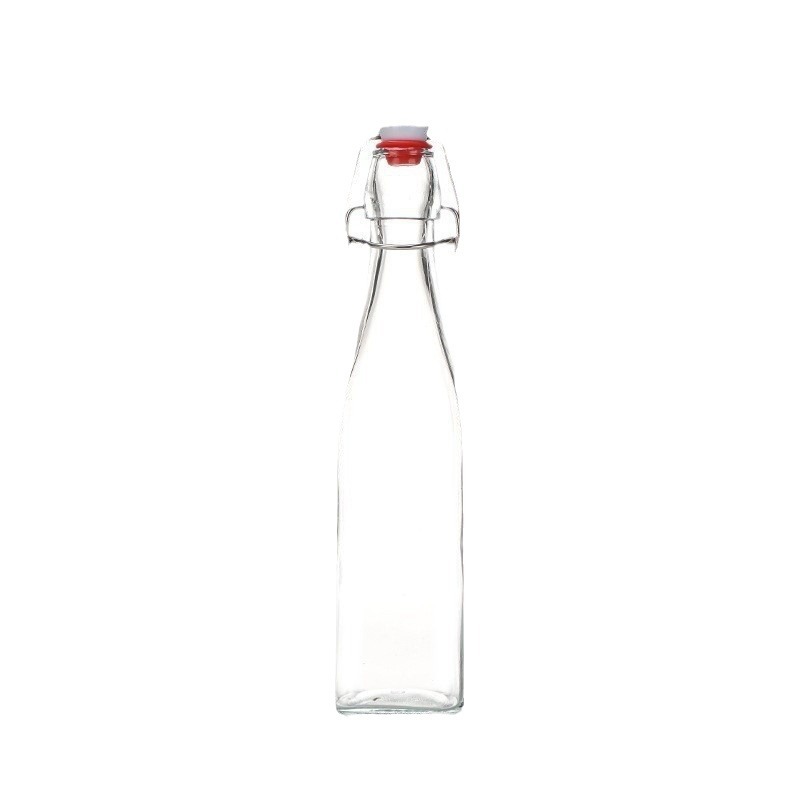
Complaint 6 — "They Will Not Hold Pressure the Second Time"
Refill programmes fail on the gasket rather than on the glass. The bottle survives washing and refilling; the gasket takes a compression set, hardens and stops sealing at the same closure tension it managed on the first fill.
A refillable range built on swing top kombucha bottles needs a defined gasket replacement interval and an inspection step for returned bottles. Without both, the second life of the bottle is where a brand's leak reputation is decided.
Complaint 7 — "The Gasket Smells of Rubber"
Odour complaints are sensory complaints, and they matter most in a drink with a delicate flavour profile. Gaskets and closures sit against an acidic liquid for weeks, and a material that was selected on price can contribute an off-note even when it seals correctly.
Ask for the material reference and run a short storage trial with the real product before committing. For drinks, that trial is faster and more useful than a generic material certificate, and it belongs in the file alongside the pressure data.
Complaint 8 — "The Label Will Not Stay On"
Condensation is the enemy of a chilled beverage label, and a swing top bottle collects water on the shoulder where the label edge sits. Adhesive choice, label stock and the drying step after washing all feed into whether the label lifts.
This one rarely reaches the packaging supplier, and it is still worth recording with the other complaints, because swing top kombucha bottles sold in chilled cases present a wet environment across the whole surface rather than only at the closure.
Reading the Eight Complaints as One Pattern
Six of the eight reports come back to a single question: is the closure sealing the bottle the way the drawing intended. The other two are environment and wear. That ratio is why PauPack reviews the closure drawing with the bottle drawing rather than treating the cap as an accessory.
It also explains why weight comparisons mislead. A heavier bottle does not seal better; a correctly specified neck, bail and gasket do. Buyers who spend their first meeting on closure detail usually spend fewer of their later meetings on complaints, and PauPack would rather answer four specification questions up front than trace eight symptoms across a year of shipments.
The Four Specifications That Prevent Most of These
| Specification | What to write down | Which complaint it prevents |
|---|---|---|
| Neck and crown dimensions | Measured figures with tolerances | Stopper release and chipping |
| Gasket material and hardness | Material reference and compression target | Flat drink, weeping, odour |
| Closure finish | Plating or coating thickness | Rusted wire and cap |
| Fill level and conditioning | Fill height, temperature, days | Flat drink and over-pressure |
None of the four is exotic, and all four are cheap to agree before a purchase order. The cost of leaving them vague shows up later as a complaint that takes three conversations to diagnose.
Testing Before You Commit to a Truckload
Run a filled storage trial rather than a water trial: fill to the intended level, condition at your real temperature, then hold the bottles through a temperature swing and inspect gasket compression, wire condition and pressure at set intervals. Record the dates so the second run can be compared against the first.
PauPack supports that trial with swing top kombucha bottles and closures taken from the production tooling, so the test reflects the pack that will actually ship rather than a hand-picked sample. Buyers who want to see the wider range can start with the swing top glass bottle range and the food and beverage packaging range.
What PauPack Checks on a Swing Top Order
PauPack checks the neck and crown dimensions against the drawing, confirms the gasket material for the drink, records the closure finish, and keeps the fill level and conditioning figures with the project. The quality management process covers how those records travel with the lot, and the bottle manufacturing page describes how the necks are formed and inspected.
Related reading covers the glass side of the same conversation: the glass versus plastic food contact guide and the notes on wholesale glass milk bottles, which describe how beverage packs are specified for chilled distribution.
The published background is worth keeping with the project: the FDA pages on food contact substances and on packaging terms explain the language used in the declarations a buyer should expect.
If a batch has already gone wrong, send the fill level, the conditioning temperature, the days to failure and the pallet pattern. That combination separates a pack fault from a process fault quickly, and PauPack will answer with the cause rather than with a replacement quote.
Questions Buyers Ask About Swing Top Kombucha Bottles
Why do swing top kombucha bottles lose carbonation?
Pressure has to escape somewhere. The usual paths are an under-compressed gasket, a wire bail that is not pulling the stopper square, or a bottle whose neck opening is slightly out of round. Conditioning temperature and yeast activity also matter, so check the pack before blaming the recipe.
What is the correct fill level for kombucha in a swing top bottle?
Leave enough headspace for pressure to build without pushing liquid into the gasket. The exact figure depends on the bottle, the carbonation target and the filling temperature, which is why the fill level belongs on the filling instruction rather than in a general guideline.
How tight should the wire bail be?
Tight enough to compress the gasket evenly and hold the stopper in place, without forcing the bail past its designed travel. A bail that has to be bent to close is a sign that a component, not the operator, is out of specification.
Which gasket material suits an acidic drink?
Acidic drinks at a pH typical of kombucha put sustained demand on the gasket, and food-contact gasket materials differ in how they age in that environment. Ask for the material reference and a compatibility statement rather than choosing on colour.
Why does the wire bail rust?
Wire and cap plating fail first where moisture sits: under the bail, around the ring, and wherever condensate collects in a chilled case. Specification and drying practice both matter, and a plastic-coated wire solves one problem while creating a cleaning problem.
Can swing top kombucha bottles be reused for refills?
They can be reused within limits, because the glass is durable and the closure is replaceable. The gasket is the wear item, and a refill programme only works with a defined gasket replacement interval and a way to inspect returned bottles.
How do I test a batch before ordering a truckload?
Fill to the intended level, condition at your real temperature, then hold the bottles through a temperature swing and check pressure, gasket condition and wire condition at set intervals. A test that runs only at room temperature answers a question nobody asked.
Do I need a pressure-rated bottle?
Yes, for a drink that builds carbonation. Ask what pressure the bottle is designed and inspected for, and whether the closure and gasket are rated for the same figure. A bottle rating and a closure rating that do not match is still an unmatched pack.
What should a specification sheet for these bottles include?
Capacity and fill level, neck and crown dimensions, glass weight, pressure rating, gasket material, wire and cap finish, and the inspection criteria for the closure. PauPack keeps those on one sheet so a reorder is compared against a specification rather than a sample photo.
How does PauPack handle a leak complaint on an existing order?
PauPack asks for the fill level, conditioning temperature, days to the complaint, and whether the failure clusters in one part of the pallet. That pattern usually separates a pack problem from a process problem within one conversation.