

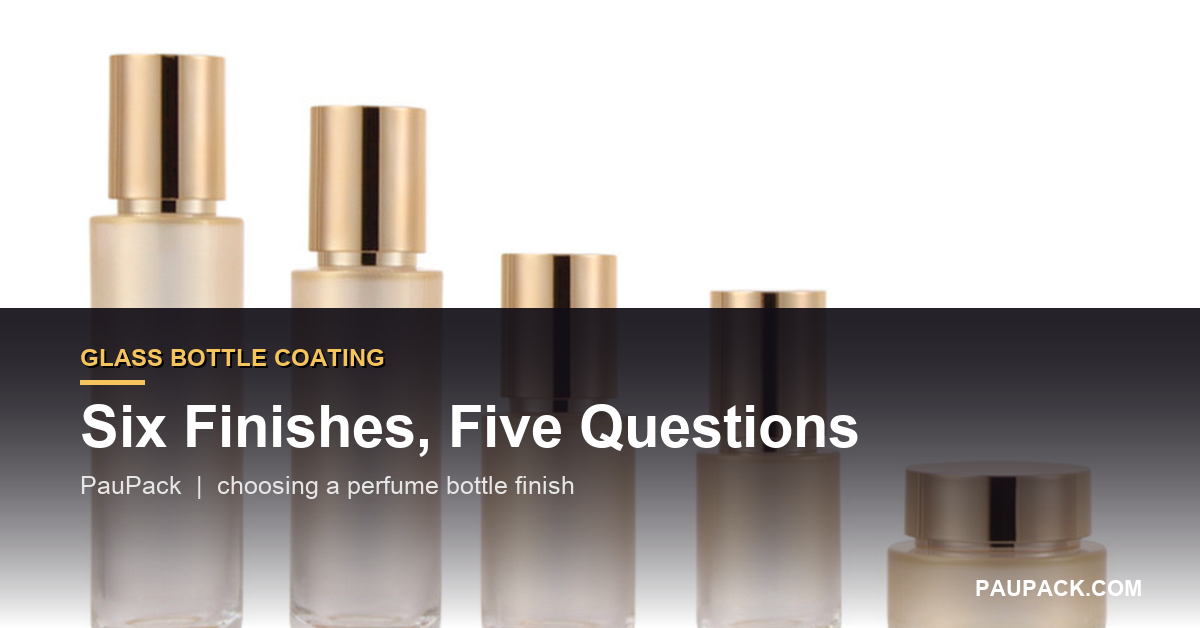
A matte finish approved in April can arrive scuffed in June, and nobody did anything wrong. The sample was handled by four people. The shipping carton held three hundred bottles against each other for six weeks. Glass bottle coating is decided at the sample table and proved on the shelf, which is where most of the surprises live.
Below are the six routes PauPack runs most often on fragrance and cosmetic glass. They are not ranked. Each behaves differently against ethanol, against the filling line and against a long stay in a carton, and the five questions in the next section narrow the list faster than any spec sheet will.
What the Coating Is Really Doing
Three things change at once when a finish goes on: how the glass looks, how it feels in the hand, and how light moves through it. Those three pull against each other more often than buyers expect. The finish that hides fingerprints is rarely the one with the deepest colour, and the finish that shields the juice from light usually takes away your view of the fill level.
Once the bottle leaves the forming line, the glass is settled. Everything after is surface work: preparation, application, cure, inspection. PauPack treats glass bottle coating as those four stages rather than as one attribute, because when a complaint lands, it almost always belongs to one stage and not to the colour decision.
Five Questions That Cut the List Down
How much light does the juice have to survive? A stabilised blend in a lined carton tolerates clear glass. A photosensitive mix of citrus oils may not. What should the surface feel like: cold and glossy, warm and matte, or soft and slightly rubberised? Which areas must stay clear, whether for a fill window, an embossed logo or a sealing land the closure presses against?
Then the order of operations. Stamping over lacquer is routine. Lacquer over stamping is not, and a brief that gets this backwards costs a re-run. Last, how will the bottle travel? Coated bottles rubbing against each other in a bulk carton look older than they are by the time they reach the line.
Answer all five before samples are requested and you will usually settle in one or two rounds. PauPack uses them as the opening page of every decoration brief, mostly because skipping them is what turns a two-week project into a two-month one. Not every glass bottle coating survives all five answers, and finding that out early is cheaper than finding it out at the fill trial.
Spray Lacquer and Soft-Touch Finishes
Lacquer is sprayed and cured, and no other glass bottle coating is as flexible. Colour depth, gloss level and hand feel can be tuned on the same base bottle, which explains why so many launch editions are lacquered rather than ordered in a specific glass colour.
Durability is the price. Thick lacquer chips where bottles knock against each other at the shoulder. Soft-touch surfaces hold finger oil and start to look tired on a tester that gets handled all day; a matte lacquer generally outlasts them in that setting. Film weight and abrasion results belong next to the colour on the approval sheet, otherwise two suppliers quoting "matte black" are quoting different products.
Frosting and Etched Glass
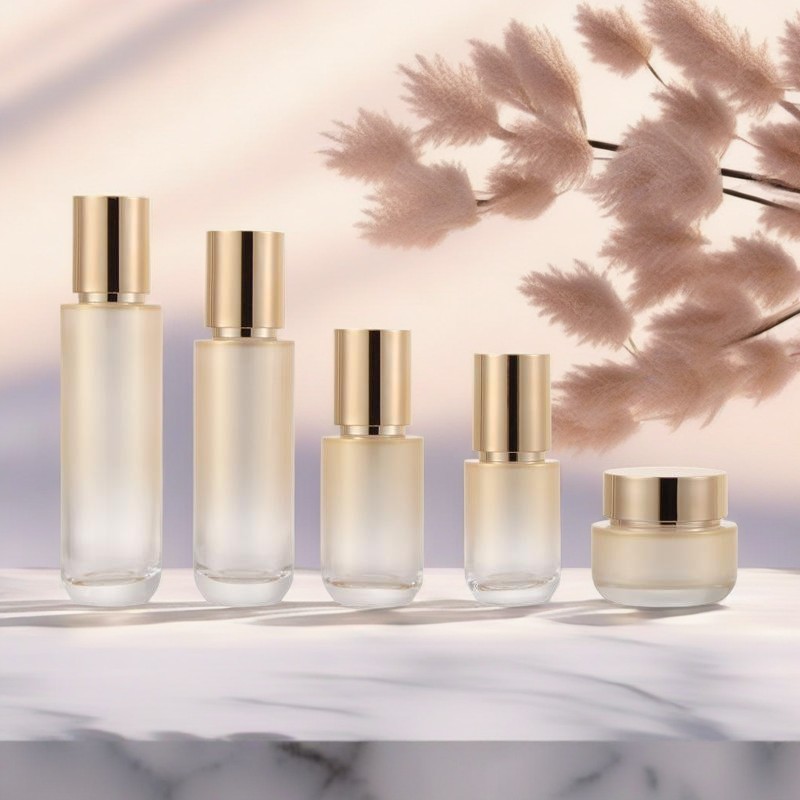
Frosting is a glass bottle coating that changes the surface instead of adding a layer, which is why it reads differently the moment someone picks the bottle up. Acid etching gives an even satin; sandblasting gives something deeper and more directional.
Both take material off. On a heavy flacon that hardly matters. On a thin-walled flask it can change how the shoulder behaves in a drop, so ask for thickness and impact checks on the frosted sample rather than accepting the blank report. Also define which areas stay unfrosted, because a frost that creeps over the fill window or the sealing land is expensive to discover late.
Hot Stamping and Foil
Hot stamping presses foil onto glass or onto a cured glass bottle coating and leaves a metallic mark. Fine detail is its strength, which is why a signature line, a thin rule or a small wordmark so often ends up stamped.
Two limits matter. Foil dislikes sharp curvature, so a heavy stamp across a tight shoulder radius will lift at the edges. Adhesion also depends on what the foil lands on: stamping directly onto glass and stamping onto soft-touch lacquer give very different wear results. Keep the foil reference and the lacquer reference on one approval sheet, because on the bottle they behave as a single system.
| Route | Best at | Main limit | Sample check |
|---|---|---|---|
| Spray lacquer | Colour and gloss control | Chipping where bottles touch | Film weight, abrasion |
| Frost and etch | Hand feel, light diffusion | Takes glass off the wall | Thickness, impact |
| Hot stamping | Fine metallic detail | Edge lift on tight curves | Adhesion, coverage |
| Screen print | Broad colour areas | Needs a proper cure step | Wipe, solvent resistance |
| Vacuum metallising | Mirror look at low weight | Thin layer, scuffs easily | Topcoat, rub test |
| UV topcoat | Gloss protection over print | Extra step, cure risk | Cure verification |
Screen Printing and Ink Choice
Print carries more colour area than anything else on this list and works on curves that foil cannot hold. The ink decides the outcome. A decorative ink is not the same product as a certified food-contact ink, and neither matches a fragrance-grade ink chosen for wipe resistance.
Curing is the step with no room for negotiation. An under-cured print looks identical to a cured one on inspection day. Two weeks later, after ethanol has sat on the shoulder, it smears. Record the cure method and how it was verified, or the next run will approximate it.
Vacuum Metallising
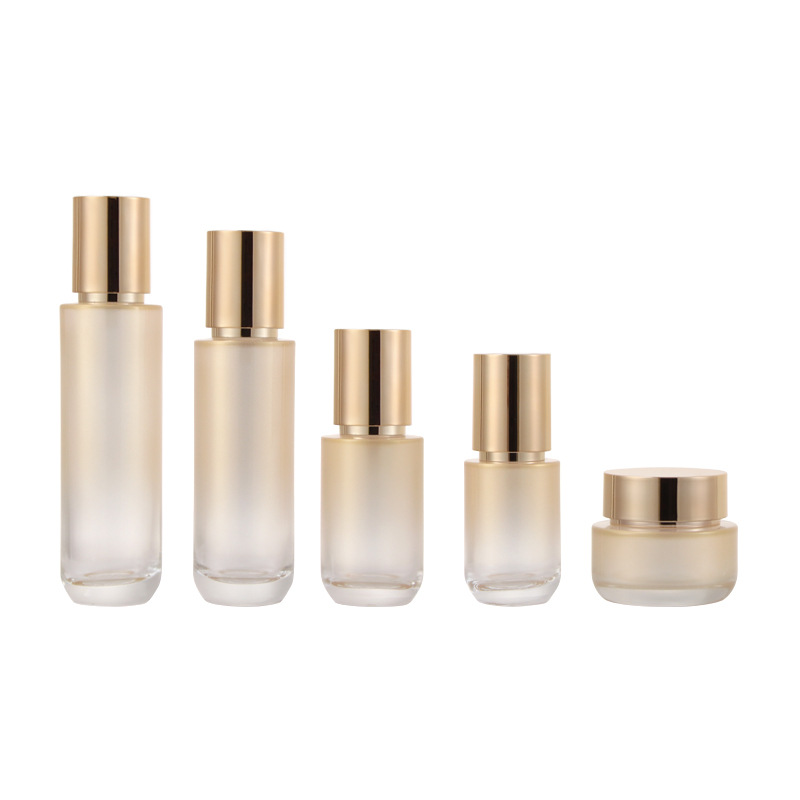
A few microns of metal, deposited in vacuum, gives the mirror look without the weight of a sleeve. It is the glass bottle coating behind most chrome-look glass, and it is also the most fragile one here.
Which is why the topcoat matters more than the metal. A thin lacquer over the metallising gives a bright finish that survives handling. No topcoat gives a sample that photographs beautifully and scuffs in the carton. Ask what sits over the metal, how thick it is, and how it was cured. PauPack records the topcoat specification on the same sheet as the colour, since a metallised bottle without it is only half specified.
UV Lacquer and High-Gloss Topcoat
UV lacquer cures in seconds under light rather than in a heat tunnel, so it suits lines that cannot push a fragile or filled bottle through heat. The result is hard and glossy, protects print well, and can be applied selectively to leave a matte body with a glossy logo.
Shadowing is the risk with this glass bottle coating. Light only cures what it reaches, so recessed areas, tight shoulder curves and the inside of a stamped letter can stay soft. Specify the cure pass and inspect the places the light reaches least, because that is where the complaint will come from.
Where These Finishes Fail After Filling
Decoration problems seldom show up on the sample table. They show up on the line, in the carton, on the shelf. The table below is the pattern PauPack sees across fragrance and cosmetic projects.
| What the buyer sees | Likely cause | What closes it |
|---|---|---|
| Lacquer chipped at the shoulder | Bottle-to-bottle contact in the carton | Cell dividers, revised pack pattern |
| Print smears after a spill | Under-cured ink or wrong ink grade | Cure verification plus a wipe test |
| Foil lifting at the edge | Stamp crossing a tight radius | Move artwork or reduce stamp area |
| Metallising looks dull | Topcoat too thin or unevenly cured | Topcoat thickness and cure record |
Ethanol, the Line and the Interface Between Them
Fragrance is mostly ethanol, and ethanol finds weak points. It does not need to get inside the coating. A splash at the filling head, a drip down the neck, a wet wipe during a line stop. Any of those will dull a lacquer or soften print if nobody wipes it off.
Which is why wipe resistance belongs in the decoration specification instead of a general quality clause. Ask which solvent was used, how long it stayed on the surface, and what counted as a pass. PauPack tests with the ethanol concentration the product actually uses, because 40 percent and 70 percent are not the same test.
Cost, Minimums and Where the Setup Sits
Two glass bottle coating quotes for the same look often describe two different processes. A frosted bottle priced against a lacquered one is not like-for-like. Neither is a stamped logo priced against a printed one, and neither is a metallised finish with a topcoat priced against one without.
Setup charges land in different places depending on the route: screens for print, dies or plates for stamping, rack load and masking for spray and metallising. Ask which part of the price is one-time and which repeats on every order. PauPack itemises the two so a second run can be compared with the first without reopening the whole negotiation.
Approving a Sample You Can Re-Order Against
Approve the decorated glass bottle coating as a physical object, never as an image. One sheet should carry the finish reference, the ink or foil reference, the colour standard, the coverage area, and the clearance around neck and shoulder, and both sides sign it.
Then check the two things samples hide: how the finish behaves after handling, and how it behaves after travel. A short rub test plus a carton simulation covers most of it. PauPack keeps the approved bottle with the project record so a third production run can be measured against an object instead of somebody's recollection of a meeting.
How PauPack Runs a Coating Project
Every PauPack glass bottle coating project starts with the five questions, then moves to a blank sample so the glass geometry is settled before any finish is applied. Only then does the finish trial run, followed by decoration and the assembled sample with the closure fitted and torqued.
The order is deliberate. Changing a finish on a settled bottle is cheap. Changing a neck finish after the decoration has been signed off is not. Buyers who want to see the range can browse the glass perfume bottle range and the car perfume bottle range, then look at how finishes are specified through the PauPack design service.
For the manufacturing picture, the bottle manufacturing page covers forming and annealing, and the quality management page describes how decorated lots are inspected. Moving an existing fragrance pack between suppliers usually raises the same closure question, and the notes on orifice reducer closures cover the fit and clearance side of it.
Labelling sits outside the glass conversation but inside the launch. The FDA guidance on cosmetic labelling is worth reading alongside the requirement that decorated surfaces stay legible. On the glass itself, the USP reference on glass containers shows the kind of inspection language a decoration specification can borrow.
When the direction is clear, send the brief with the bottle size, the intended look and the filling method. PauPack will come back with the routes that survive all three rather than the one that photographs best.
Questions Buyers Ask About Glass Bottle Coating
What is glass bottle coating in simple terms?
It is whatever happens to the surface after the bottle is formed. A sprayed lacquer, an etched or frosted finish, a foil, a printed layer, a metallised film. That layer is what gives the bottle its colour and hand feel, and it sits between the glass and the label.
Can a coated perfume bottle still be recycled?
Sometimes, and the finish decides it. A thin organic lacquer over clear glass gives a recycler more to work with than a heavy metallised or fully opaque layer, because colour and metal complicate sorting. Ask for the finish route, not the colour name.
Which finish shows fingerprints least on a retail shelf?
Frosted and matte surfaces hide them better than high-gloss lacquer. Soft-touch coatings feel more expensive but pick up oil quickly, so they suit gift-boxed launches more than open-shelf testers that get handled all day.
Does coating weaken a glass bottle?
Usually the coating itself does not change strength. The preparation can. Acid frosting and heavy sandblasting remove material, so wall thickness and impact performance need re-checking on the decorated sample rather than carried over from the blank.
How does alcohol-based fragrance react with a coating?
The juice rarely touches the outside of the bottle, so the risk sits at the filling line. Ethanol spilled on a lacquer can soften it or lift print if it sits long enough. Wipe resistance belongs in the specification for that reason.
Is hot stamping or screen printing better for a logo?
Fine metallic detail usually stamps better. Broad colour areas usually print better. Plenty of premium launches use both, with a stamped wordmark sitting over a printed band, and the two processes need to be approved as one system.
What is the minimum order for a custom coating?
The coating run decides it far more than the glass does. Spray, frost and metallising need setup time and often a full rack load. Printing needs screens. Confirm the minimum per finish and per colour before you settle on a palette.
How long does a coating sample take?
Break it into stages instead of asking for one number: blank sample, finish trial, decoration proof, assembled sample. Each stage runs on its own clock, and approval rounds eat more of the calendar than production does.
What should a decoration sample approval record?
The finish reference, the ink or foil reference, the colour match against a physical standard, the coverage area, the position relative to shoulder and neck, plus abrasion and wipe results. A photo alone cannot be re-ordered against.
Why do coated bottles arrive with small defects?
Most coating defects are handling defects rather than formulation defects. Chipped lacquer on the shoulder, scuffed frost, foil lifting at an edge. All three come from bottles touching each other in transit, which makes packaging method part of the decoration spec.