

Custom tooling cost is the price of creating a repeatable production capability, not simply the price of one metal object. Design work, engineering changes, prototype loops, component tools and production validation can all affect the investment.
For buyers estimating custom bottle mold cost, the useful question is: what must be created, approved and maintained before this bottle can be produced consistently?
Build the Cost Waterfall
Separate the project into cost layers.
| Cost layer | What it covers | Buyer decision |
|---|---|---|
| Design definition | Drawings, dimensions and component relationships | Is the brief stable enough to engineer? |
| Engineering review | Manufacturing feasibility and critical dimensions | Which features create risk? |
| Prototype stage | Appearance, fit or pilot samples | What question must each sample answer? |
| Glass tooling | Production mold set and related equipment scope | What is included in the quotation? |
| Component tooling | Custom cap, insert, closure or accessory | Can a stock component be used instead? |
| Decoration setup | Screens, fixtures or finish development | Is artwork stable? |
| Validation | Samples, line trials, inspection and packing | What evidence is required before release? |
This waterfall prevents a low tooling headline from hiding excluded development work.
PauPack's design service and bottle manufacturing pages can support the scope discussion.
Driver 1: Bottle Geometry
Shape affects engineering complexity. Features that may require additional review include strong asymmetry, sharp transitions, unusual base structures, deep relief, narrow decoration areas and component interfaces with limited tolerance.
Do not assume that visually simple means easy to manufacture. Ask the supplier to identify the specific geometry risks in the drawing.
Driver 2: Number of Sizes and Cavities
A bottle family with 30ml, 50ml and 100ml sizes is not one mold. Each size needs its own production solution even when the visual language is shared.
Create a size roadmap:
- Hero capacity for launch
- Secondary capacity after demand validation
- Travel or discovery format
- Future extensions
Launching the hero size first can reduce initial investment and provide evidence before the full family is tooled.
Driver 3: Closure and Accessory Development
A unique bottle may still use a stock pump, sprayer or cap. Conversely, a stock bottle can require an expensive custom cap.
Quote the interfaces separately:
- Bottle neck and finish
- Closure or dispenser
- Collar or decorative shell
- Cap or overcap
- Inner insert
- Carton insert
The total custom bottle mold cost should include only the components that genuinely need new tooling.
Driver 4: Revision Loops
Uncontrolled revisions increase cost and schedule risk. A late change to bottle width can affect capacity, label panel, cap proportion, carton and packing.
Use a change-order record with:
- Revision number
- Requested change
- Reason
- Affected drawing or component
- Cost effect
- Timing effect
- New sample requirement
- Approval owner
PauPack's guide to glass bottle prototyping explains how to assign a clear question to each sample stage.
Driver 5: Decoration and Surface Requirements
Decoration setup is not always part of the glass mold quotation. Separate printing, hot stamping, coating, frosting, color development and fixtures where applicable.
Approve the bottle form before artwork is treated as final. Otherwise, every dimensional revision can reopen decoration work.
Compare Three Budget Scenarios
Scenario A: Stock Bottle Transformation
Use an existing bottle with custom color, printing, cap or carton. This minimizes structural tooling and is useful when the launch needs speed or demand is uncertain.
Scenario B: Custom Glass with Stock Closure
Create a proprietary bottle while retaining an existing pump, sprayer, dropper or cap system. This concentrates investment on the most visible structural element.
Scenario C: Full Custom Component System
Develop bottle, closure and secondary components together. This can create stronger ownership but requires the most disciplined engineering, quantity planning and change control.
Compare the three scenarios using the same forecast, decoration, carton, inspection and delivery assumptions.
Calculate Investment per Planned Unit
Tooling should be evaluated against the realistic product plan, not an optimistic lifetime volume.
Use a simple planning view:
Development investment per planned unit = total approved development investment / conservative planned units
This is not the final accounting treatment. It is a decision tool for comparing stock transformation with custom development.
Also model the effect of delayed SKUs, slow-moving colors and component minimums.
Clarify Ownership and Maintenance
Before approval, document:
- Who owns the tooling
- Where it is stored
- What maintenance is included
- How damage or major repair is handled
- Whether the tool is exclusive
- What happens if the supplier relationship ends
- Which drawings and files the buyer receives
These commercial terms can matter as much as the initial price.
Request a Complete Tooling Quotation
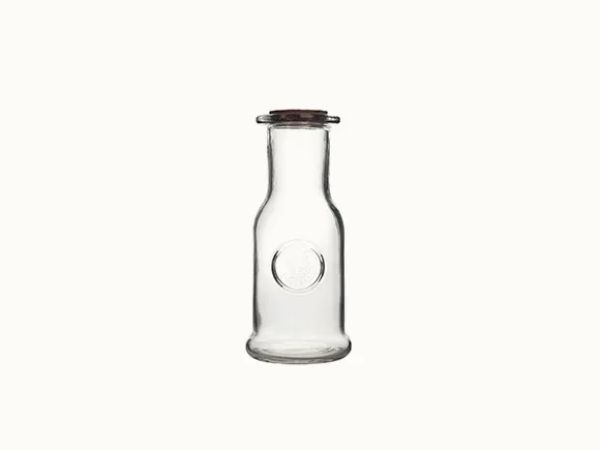
The quotation should identify included and excluded work, payment stages, revision allowance, sample stages, expected production commitment and acceptance criteria.
Connect the project to PauPack's quality management, services and broader product range.
Ask the quotation to state its currency, validity period and the event that triggers each payment stage. This keeps a later comparison from mixing tooling scope with changing commercial assumptions.
Final Decision Framework
Choose custom tooling when structural recognition, long-term volume and component control justify the investment. Choose stock transformation when speed, flexibility or demand uncertainty matters more.
A credible custom bottle mold cost estimate is transparent about geometry, sizes, components, revisions, decoration and validation. The goal is not the lowest line item; it is an approved production system with controlled commercial terms.
Frequently Asked Questions
What is normally included in a custom bottle mold quotation?
It may include engineering, mold development and sample stages, but buyers should request a clear list of inclusions and exclusions.
Does every custom bottle need a custom cap?
No. Many custom bottle projects can use an existing compatible closure or dispenser, reducing component tooling.
Why do design changes increase tooling cost?
Changes can affect drawings, engineering, prototypes, glass tooling, closures, decoration and cartons, especially after approvals have started.
How should a brand compare stock and custom packaging?
Compare development investment, unit cost, MOQ, timing, brand ownership, reorder flexibility and the conservative planned volume.