

A custom bottle concept becomes production-ready through a series of increasingly realistic approvals. A rendering may confirm direction, but it cannot confirm dimensions, component fit, glass distribution, decoration behavior or packing performance.
For packaging buyers, glass bottle prototyping is most useful when every prototype has a defined question. This prevents teams from asking an early appearance model to prove details that can only be evaluated later in pilot or decorated samples.
Use a Six-Step Prototype Staircase
Organize development into six steps. Not every project uses the same physical method at every step, but the approval logic remains useful.
| Step | Primary question | Do not assume it proves |
|---|---|---|
| 1. Design rendering | Is the concept direction correct? | Final scale, feel or manufacturing feasibility |
| 2. Appearance model | Are silhouette and proportions convincing? | Final glass distribution or closure function |
| 3. Dimensional prototype | Do key dimensions and component relationships work? | Production finish consistency |
| 4. Pilot glass sample | Can the glass concept be evaluated physically? | Final decoration or mass-production variation |
| 5. Decorated sample | Do color, artwork and components work together? | Final shipping protection without the carton |
| 6. Golden sample | Is the complete approved reference ready for production control? | Every future unit will be identical without inspection |
Each step should end with a written decision: approve, revise or stop.
Gate 1: Turn the Brand Brief into Measurable Requirements
The design brief should include more than visual references. Define:
- Product type and target fill
- Capacity and headspace expectations
- Maximum or target dimensions
- Closure and dispensing system
- Label or decoration area
- Filling and assembly constraints
- Retail carton and shipping route
- Target quantity and future size family
PauPack's custom bottle design service and bottle manufacturing capabilities provide useful internal-link references when organizing these inputs.
Gate 2: Approve Silhouette Before Surface Detail
An early model should answer whether the bottle feels balanced from front, side and top views. Review grip, base proportion, shoulder transition, neck relationship and closure scale.
Use a physical scale reference during review. A concept shown without hand, carton or neighboring product context can appear different from the real package.
At this stage, record dimensional changes rather than debating final color. A coating cannot correct an uncomfortable grip or a cap that dominates the bottle.
Gate 3: Create a Critical-Dimension Sheet
Not every dimension has equal importance. Mark the dimensions that affect filling, component fit, label application, carton fit and consumer handling.
Examples include:
- Overall height and width
- Base footprint
- Neck finish and closure interface
- Label panel height and width
- Capacity and fill-line reference
- Cap or pump installed height
- Carton clearance
The critical-dimension sheet helps teams focus review comments and prevents decorative changes from hiding a functional mismatch.
Gate 4: Review the Bottle as a Component System
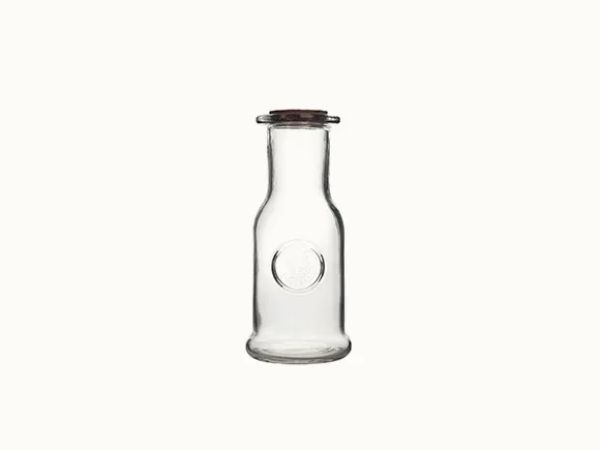
The bottle should be evaluated with its matching closure, pump, sprayer, dropper, lid or cap. A custom glass shape can be technically attractive but commercially weak if the available closure looks undersized, increases height or requires another custom tool.
Use a component matrix:
| Component | Fit question | Brand question |
|---|---|---|
| Closure | Does it assemble and retain correctly? | Does its proportion support the bottle? |
| Dispenser | Is the interface and dosage appropriate? | Does the actuator match the intended experience? |
| Decoration | Is there enough stable area? | Does artwork remain readable? |
| Carton | Is protection and clearance sufficient? | Does the reveal support the brand? |
| Export pack | Are units separated and identified? | Does protection preserve the finish? |
This system review should happen before the decorative sample becomes the main focus.
Gate 5: Treat Color and Decoration as Separate Approvals
Color approval and artwork approval solve different problems. Review them separately before approving the combined decorated sample.
For color, define viewing conditions, reference sample and acceptable variation. For decoration, define position, size, registration, readability and adhesion or durability expectations relevant to handling.
PauPack's products and sustainability pages can support material and range discussions without assuming that every finish has the same environmental profile.
Gate 6: Use the Decorated Sample in Real Process Trials
A decorated sample should enter the real or simulated workflow:
- Fill or assemble the intended product system.
- Apply the closure or dispenser.
- Add labels or secondary components.
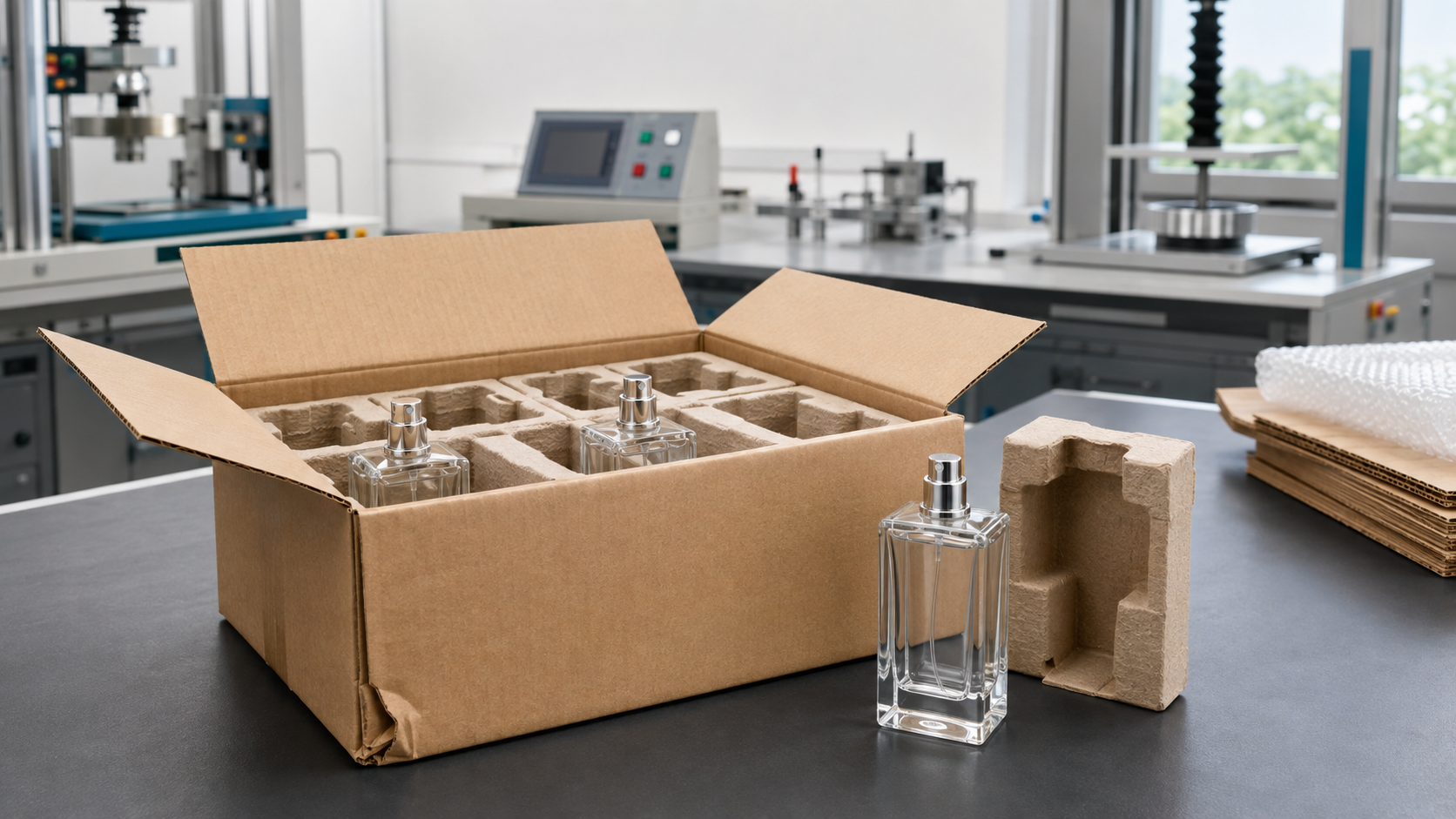
- Pack into the retail carton.
- Place units into the export configuration.
- Inspect after relevant handling and storage trials.
This reveals interference between decoration, assembly, labeling and packing that may not appear during a desk review.
Control Changes with a Prototype Decision Log
Every revision should identify the reason, owner and affected specifications.
Use these fields:
- Revision number and date
- Requested change
- Reason for change
- Drawing or component affected
- Effect on tooling, cost and timing
- New sample required
- Approval owner
- Final decision
Without a decision log, teams can approve one feature while unknowingly reopening another.
Separate Prototype Cost from Production Cost
The cost of glass bottle prototyping is part of development, not the final unit cost. Ask the quotation to separate:
- Design and engineering work
- Appearance or dimensional models
- Mold or tooling development
- Pilot samples
- Decoration samples
- Testing and packing trials
- Bulk production assumptions
This makes it easier to compare suppliers that include different services in one total.
Build the Golden Sample Package
The golden sample is a controlled reference, not only a decorated bottle on a shelf. Store it with:
- Approved drawing and dimensions
- Component list and material references
- Color and decoration standards
- Artwork files and position references
- Functional test records
- Retail and export packing instructions
- Known acceptable variation
- Approval signatures or documented acceptance
Connect this package to PauPack's quality management, services and existing packaging quality control checklist.
Know What a Prototype Cannot Guarantee
A prototype can answer specific design and fit questions, but it does not remove the need for production inspection. Materials, manufacturing method and sample quantity may differ from mass production.
Ask the supplier to state clearly:
- How the prototype was made
- Which materials match production
- Which dimensions are representative
- Which finishes are temporary or simulated
- Which performance checks still require production samples
This statement prevents the team from treating an illustrative model as final production proof.
Final Recommendation
Define the question for each prototype, approve structure before decoration, review the complete component system and maintain a decision log through every revision.
Effective glass bottle prototyping turns a visual idea into measurable evidence. The goal is not to create one beautiful sample; it is to create a controlled path toward repeatable production.
Frequently Asked Questions
What is the purpose of a glass bottle prototype?
It provides physical evidence for selected questions such as proportion, dimensions, component fit, decoration or packing before full production approval.
Is a prototype identical to a mass-produced bottle?
Not always. The method, material, finish and variation can differ, so the supplier should explain which features represent production and which are illustrative.
When should decoration be added to a bottle prototype?
Add decoration after silhouette, critical dimensions and component fit are sufficiently stable to avoid repeating artwork work on a changing structure.
What should be retained after final prototype approval?
Keep the approved physical sample, drawing, dimensions, component list, color and artwork standards, test records, packing instructions and decision history.