

Childproof bottle closures are bought as caps and qualified as packs, and the gap between those two ideas is where most projects lose time. A buyer selects a two-piece cap, receives a note saying the component is child resistant, and assumes the question is closed. It is not. The requirement attaches to the package the patient actually receives.
This guide follows the sequence PauPack uses with pharmacy, supplement and wellness customers, from confirming that a requirement applies through to keeping the qualification alive. If you only read one section, read the step on re-qualification: childproof bottle closures do not stay qualified by themselves.
What Child-Resistant Protection Actually Covers
The goal is not to make a bottle impossible to open. It is to make it difficult for a young child to open within a defined time, while remaining reasonable for an adult to open normally. Both halves of that sentence are tested, and both can fail.
Because the requirement is defined by behaviour rather than by a design, there is no list of approved shapes. A closure line has to demonstrate performance, and that performance belongs to the assembled pack: bottle, closure, liner, dropper assembly where present, and the torque used to close it.
Why the Test Belongs to the Pack and Not the Cap
Push-and-turn and squeeze-and-turn designs work by interference. The cap only locks when it sits at the right height on the right neck finish with the right liner compression. Move the bottle to a different mould, change the liner thickness by half a millimetre, or under-apply torque at the filling line, and the interference that made the pack work quietly disappears.
That is why childproof bottle closures need a pack-level view from the first meeting. PauPack opens a project by listing the components that touch the locking behaviour, not by quoting a cap price.
Step 1 — Confirm the Requirement Applies to Your Product
Before choosing anything, establish whether the market requires child resistant packaging for this product, and on what basis. In the United States the framework comes from the Poison Prevention Packaging Act and the rules issued under it, which is why a compliance decision should cite a rule rather than a competitor's pack. For most regulated products, childproof bottle closures begin with that scope decision rather than with a drawing.
Write the answer down, with the product classification and the market, and keep it in the project file. When a retailer or a distributor asks later, a one-page decision is faster to produce than a reconstruction.
Step 2 — Choose the Protocol That Fits the Market
Protocols differ in the age band tested, the number of children in the panel, the time allowed per attempt and how the pack is demonstrated. They also differ in what counts as a failure. Choosing the protocol after the sample exists is backwards; the protocol decides how many samples you need and how the childproof bottle closures must be built.
Confirm the standard before the sample build so the test lab receives packs it can actually use. PauPack records the selected protocol alongside the pack specification so the two never drift apart.
Step 3 — Assemble the Exact Pack That Will Ship
Build the samples from production tooling, with the liner and closure that will be used in bulk, filled to the intended volume, and closed at the applied torque the line will use. Every one of those clauses exists because it has been the reason a passing test failed to transfer to production. Childproof bottle closures built as a hand-closed demonstration set are a different object from the ones your line will ship.
Where a dropper or a dosing insert sits inside the closure, include it. Where a shrink band or an induction seal is part of the pack, decide now whether it is on or off during the test, and record the answer.
Step 4 — Run the Child Panel Test
The panel test is run by the laboratory against the chosen protocol, with the pack presented the way a child would receive it. Substitutions at this stage invalidate the result, so the samples sent and the samples returned should be traceable to the same build record.
Failure is informative rather than fatal. When a set of childproof bottle closures opens too easily, the cause is usually torque, liner compression or one under-tight cap in the sample rather than a flawed closure design. Ask the lab which units opened and how, because the pattern points at the fix.
Step 5 — Chain the Senior-Friendly Test to the Same Pack
The second half of the protocol tests whether adults in the older age group can open the pack in a reasonable time. A pack that resists children and frustrates adults has not passed the requirement; it has failed a different half of it, and that failure reaches the pharmacy counter.
In practice the two results pull against each other. Raising application torque improves one and worsens the other. PauPack sets torque from the sealing requirement first, then confirms the childproof bottle closures were selected for the application rather than using torque as a substitute for design.
Step 6 — Re-Test After Any Material or Supplier Change
| Change | Does it touch the locking behaviour | Action |
|---|---|---|
| Different closure mould or supplier | Yes, directly | Re-test the assembled pack |
| Different liner material or thickness | Yes, through compression | Re-test or document an equivalence study |
| New bottle mould, same drawing | Possibly, via neck tolerance | Measure the neck, then decide |
| Change of filling torque setting | Yes, at the sealing land | Confirm the tested range covers it |
Put the trigger list inside the quality agreement and require written notice before a change ships. Suppliers rarely hide changes deliberately; they simply do not know that a liner swap can invalidate a passing child resistance report.
Step 7 — Record the Qualification and Re-Qualify on Schedule
Keep the report, the sample build record, the torque value, the liner reference and a retained reference pack with the project. That file is what turns a lab result into a usable qualification, because it connects the pack that passed to the pack that ships.
Then diarise the review. An unchanged pack still deserves a periodic look, and the review is cheap: confirm nothing changed, confirm the reference pack still matches, and re-date the record. PauPack keeps the file with the project so the review starts from evidence.
Who Tests What: Roles and Records
Child resistant qualification involves three parties, and the handovers between them are where records usually break. The table below is the split PauPack works to.
| Party | Owns | Record produced |
|---|---|---|
| PauPack | Glass, closure and liner specification, sample build | Specification sheet and build record |
| Test laboratory | Panel sessions against the chosen protocol | Test report with unit-level results |
| Brand or filler | Product classification, torque setting, market | Scope decision and filling instruction |
Where Childproof Bottle Closures Fail in Practice
Failure is usually procedural rather than mechanical. The sample was closed by hand instead of at the line torque. The liner changed between the sample and the bulk order. The recommendation letter cited a component certification rather than a pack test.
Childproof bottle closures also fail at the counter for a second reason: adults cannot open them. Good packs are designed so the unlocking motion is obvious to an adult reading the pack for the first time, which is a design and instruction question rather than a tightening question.
Dropper Bottles, Tamper Evidence and the Space Inside the Cap
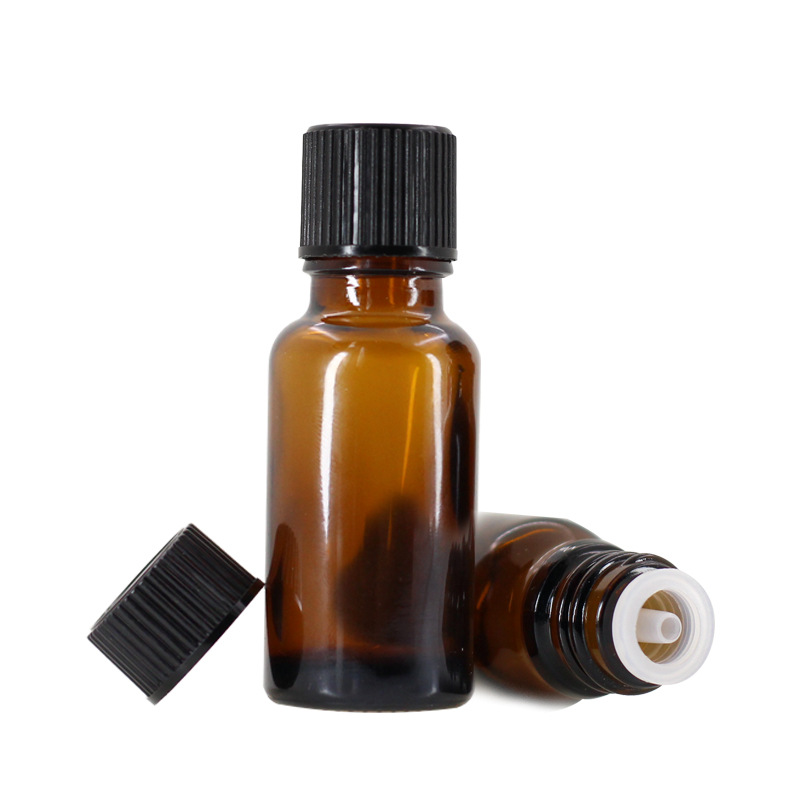
Pharmacy dropper packs concentrate the difficulty. The pipette, its collar and its bulb all live inside the closure, and a locking mechanism needs room there too. The result is a height budget measured in millimetres, which is why the dropper and the closure have to be selected as one system.
Tamper evidence adds a third layer. Shrink bands and induction seals must not interfere with the locking travel, and they must remain visually obvious after transport. Buyers can review the formats PauPack runs on the dropper bottle range and the pharmacy jar range before the closure discussion starts.
What PauPack Prepares Before the Lab Session
PauPack builds the sample set from production tooling, documents the liner and the application torque, and retains a reference pack for every project that involves childproof bottle closures. The quality management process covers how those records are held with the project, and the accessories supply service covers closures, liners and droppers as one order.
Buyers who want the wider context can read the notes on pharmaceutical dropper bottles, the medicine bottle quality test and the amber glass dropper bottle guide, which cover the bottle side of the same qualification.
The regulatory background is published: the Poison Prevention Packaging Act pages set out the framework, the CPSC test protocol describes how a panel is run, and the FDA guidance on container closure systems covers the pack from the drug side.
Send the product classification, market and fill volume and PauPack will confirm which of the seven steps apply, which components need to be locked together, and what the sample set has to contain before it goes to a laboratory. The seven steps do not take long when they run in order, and they take a very long time when they run in reverse.
Questions Buyers Ask About Childproof Bottle Closures
What counts as childproof bottle closures?
A closure counts as child resistant only as part of a tested package: the cap, the liner, the bottle and the way the two lock together. A cap sold as child resistant is a component, not a certified pack, until the assembled unit passes the protocol for the market.
Which products need child resistant packaging?
In the United States the requirement is set by the Poison Prevention Packaging Act and the rules made under it, which cover many medicines, some household chemicals and a list of specific products. Whether your pack is in scope depends on the product classification, the packaging and the market, so confirm it in writing before tooling.
How long does a child resistance test take?
The panel sessions themselves are scheduled, not continuous, and a full round usually runs across several weeks of calendar time. Add lab queue, sample preparation and reporting on top. PauPack books the sample build first so the test date is not lost waiting for parts.
How many children take part in the panel test?
The protocol defines the age band, the number of children, how the pack is presented and how long each attempt lasts. The numbers belong to the standard being followed, so work from the published protocol rather than from a supplier summary of it.
What is the senior-friendly test and why does it matter?
A pack that resists children also has to be openable by adults in the older age group, and protocols set a separate test for that. Failing it is just as serious as failing the child panel, because the pack then becomes a usability problem as well as a compliance one.
Does the test change if the bottle size changes?
Often, yes. A different neck finish, a different liner or a different bottle height changes how the closure engages, so the tested unit no longer matches the shipped unit. Treat any dimensional change as a trigger for re-qualification.
Are dropper bottles harder to make child resistant?
They are more complex, because the dropper assembly occupies the space inside the cap where a locking mechanism usually works. The pack still has to close on a bottle and pass as a unit, so the dropper, the collar and the cap are designed together rather than sourced separately.
How often does a child resistant pack need re-testing?
Re-test when the product, the pack or the supplier changes, and follow the interval your market expects for an unchanged pack. The trigger list belongs in the quality agreement, because a silent change to a liner can invalidate a passing test.
What does PauPack provide before the lab session?
PauPack prepares the assembled samples from production tooling with the specified liner and application torque, records the torque used, and keeps a reference pack aside. That record is what lets a later audit connect the tested unit to the shipped one.
Can a childproof bottle closure be too hard for adults?
Yes, and it happens when torque is set high to chase a pass result. Adults in the older age group then struggle with the same pack. Set torque to the sealing requirement first, then confirm the closure was designed for the application rather than forced into it.