

Airless pump priming is the six-check sequence that decides whether a pack dispenses cleanly on the first stroke or reaches the customer with air in it. Brands usually meet the topic at the worst possible moment, when a launch sample has already been photographed and the first press feels spongy.
PauPack builds airless packs for skincare and cosmetic brands across Asia, Europe and North America, from 15 ml travel sizes to 200 ml body formats. The failures repeat, and almost none of them come from the pump itself. They come from fill level, fill temperature, closing torque and how long the finished pack sat on its side before anyone pressed it.
This page walks through airless pump priming as a commissioning sequence: what each check proves, which numbers to record and what a failure usually means.
What Airless Pump Priming Has to Prove
An airless pack is a closed system. The piston sits under the product, the pump chamber sits above it, and a small volume of air lives between the two until the pack is stroked. Priming pushes that air out through the nozzle so the chamber can fill with product instead.
Three things have to be true at once. The product has to sit high enough for the piston to push it, the pump head has to be sealed to the body without being over-tightened, and the formula has to be able to move through the pump slot at room temperature. If any one of the three is wrong, priming cannot succeed, no matter how many strokes are applied.
Where Airless Packs Fail Before They Are Ever Pressed
Most airless pump priming problems are created upstream, in the filling room, days before the first press. The pattern is consistent enough to name:
- Product filled to the neck rather than to the designed level, so the piston starts above its seat.
- Fill temperature too warm, which thins a cream and lets it slip past the piston lip.
- Pump head torqued past the stop, which deforms the collar and closes the vent path.
- Finished packs stored on their side during transit, so product migrates into the air chamber.
- A formula that separates in the bottle, so the pump draws the watery phase first.
Each of these shows up as the same complaint. PauPack maps every one of them against the filling record before touching the pump, because fixing them at the source is cheaper than adding strokes at the end of the line.
Check One: Fill Level and Headspace
The fill level is the single most common cause of a pack that will not prime, and it is the variable PauPack adjusts first. The mould has a designed band, usually a few millimetres below the shoulder, and the piston's job is to start inside that band.
Fill above it and product is pushed into the pump chamber when the head is crimped or screwed on, which then leaks around the collar. Fill below it and the piston begins its travel under the product rather than against it, and the first strokes draw air through the slot.
The practical answer is a fill weight with a tolerance, not a visual fill line. PauPack quotes the fill window per mould and checks the first ten units on the line against it. The airless pump bottles we ship are dimensioned around that window, so the nominal volume on the drawing is not the fill volume.
Check Two: Stroke Count to the First Full Dose
Once the pack is upright and at room temperature, count the strokes until a full, even dose leaves the nozzle. A healthy pack reaches that point inside eight to twelve strokes, and the number barely changes between units of the same model.
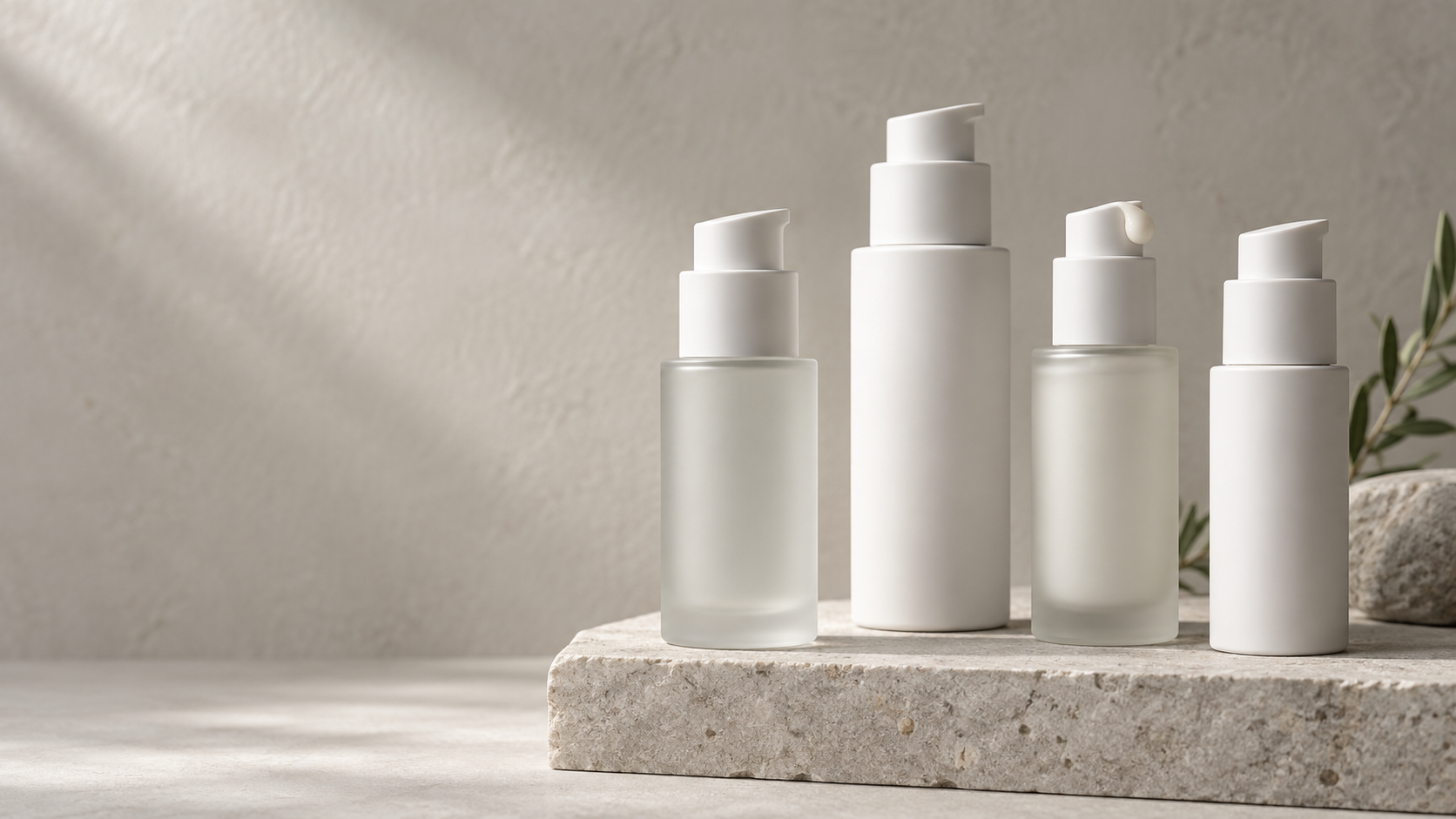
A pack that needs twenty strokes is not being difficult. It is usually telling you the fill level is low, or that the air has to travel further than the pump chamber was designed to move it. Recording the stroke count per pump model turns a vague complaint into a number that a second production run can be measured against.
The table below shows the pattern we see across the pump families we buy most often. Stroke counts are working figures from sample trials rather than laboratory limits, but the differences between columns hold.
| Pump family | Strokes to first full dose | What shortens it | What lengthens it |
|---|---|---|---|
| Standard screw-on airless, 15-30 ml | 6 to 9 | Higher fill level, thin formula | Cold room, over-torqued head |
| Twist-up airless, 30-50 ml | 8 to 12 | Slow fill, warm formula | Product sitting in the air path |
| Large body airless, 100-200 ml | 10 to 15 | Generous fill weight | Long internal travel to the slot |
| Airless with metal collar | 7 to 11 | Clean thread, correct torque | Collar distorted at capping |
Check Three: Dose Weight, Not Dose Volume
Dose volume is what the customer sees and dose weight is what the factory can measure, so the check belongs on a scale. Weigh the pack before the stroke, weigh it after, and record the difference across five consecutive strokes.
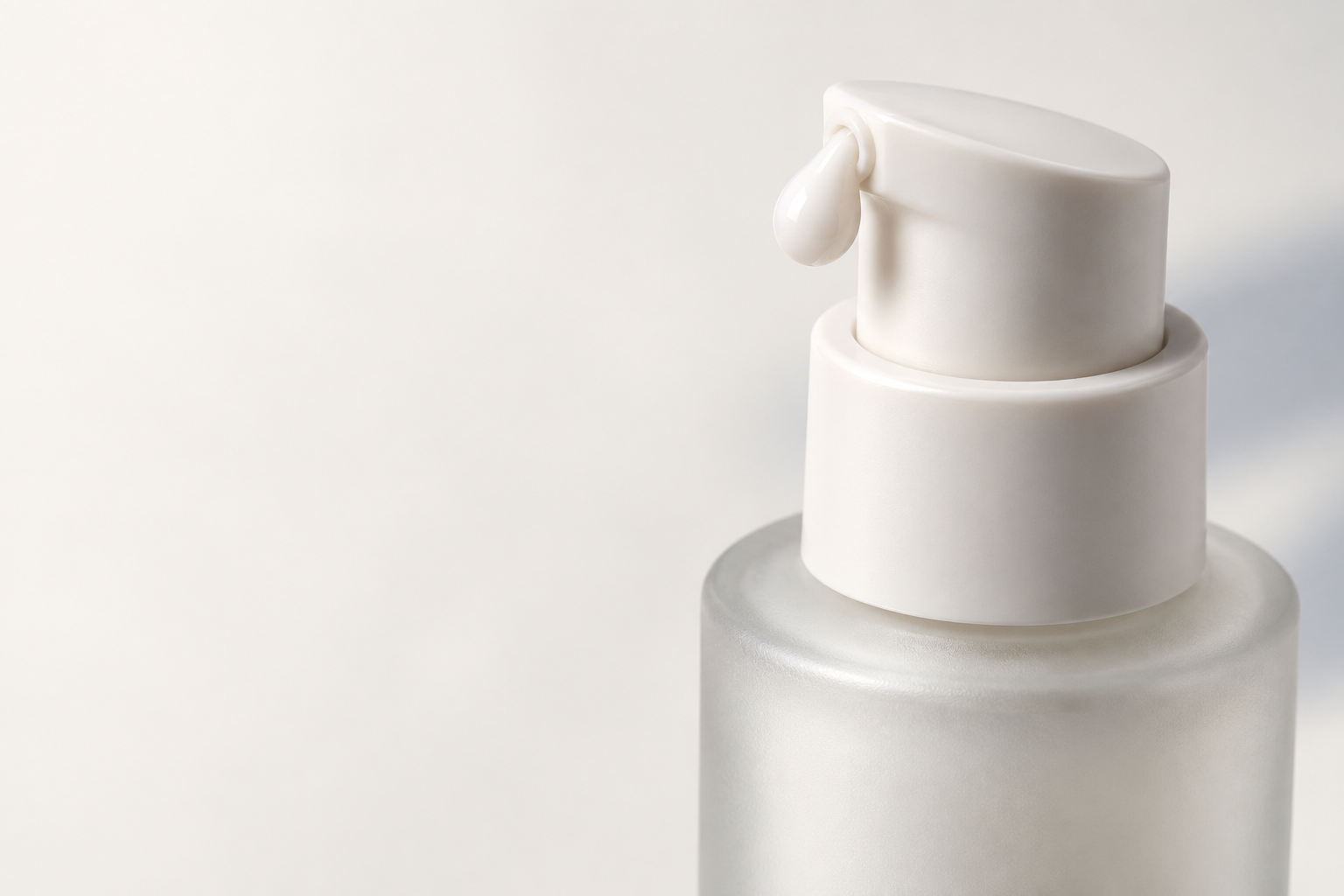
A tolerance band of plus or minus five percent of the label dose is achievable on a well-built pack, and a band of ten percent means the pump needs to be tested on its own before the formula is blamed. PauPack tests the pump on water at the same temperature as a control, because water removes viscosity from the argument and shows the mechanical spread of the moulding.
Check Four: Piston Travel and Body Seal
The piston is a wiper, not a plunger. It has to hold a seal against the body wall while it moves, and it has to be soft enough to change shape where the body tapers. A pack that primes, doses twice and then sputters is usually showing a piston that has lost contact.
Two causes dominate. The first is a body whose internal diameter drifts outside its tolerance, which is a moulding question rather than a pump question. The second is a formula with a high oil or silicone content that lubricates the wall so well that the wiper slides without sealing. The airless pump benefit claims our team reviews make the same point in a different way: an airless pack is only as protected as its seal, and the seal is a system.
Check Five: Gassing, Temperature and Thin Formulas
Air is not the only gas inside an airless pack. A formula that has been mixed quickly, or one that contains a volatile ingredient, can release dissolved gas for hours after filling. That gas migrates upward into the pump chamber and pushes the product back down.
The fix is time and temperature rather than pressure. Let the batch rest before filling, fill cool rather than warm where the formula allows, and keep the filling nozzle below the surface so it does not whip air into the cream. Where the finished pack also carries a child-resistance claim, the test applies to the pack as sold rather than to the pump alone, which is how the Poison Prevention Packaging Act frames the requirement, and it is a useful reminder that airless pump priming is judged on the assembled unit from first use to last.
Check Six: Storage, Transport and the Second Use
A pack that primes perfectly on the filling line can still fail in a bathroom cabinet, and the difference is usually orientation. Stored upright, the product stays above the piston. Stored on its side, product can migrate into the air chamber and the next stroke arrives uneven or not at all.
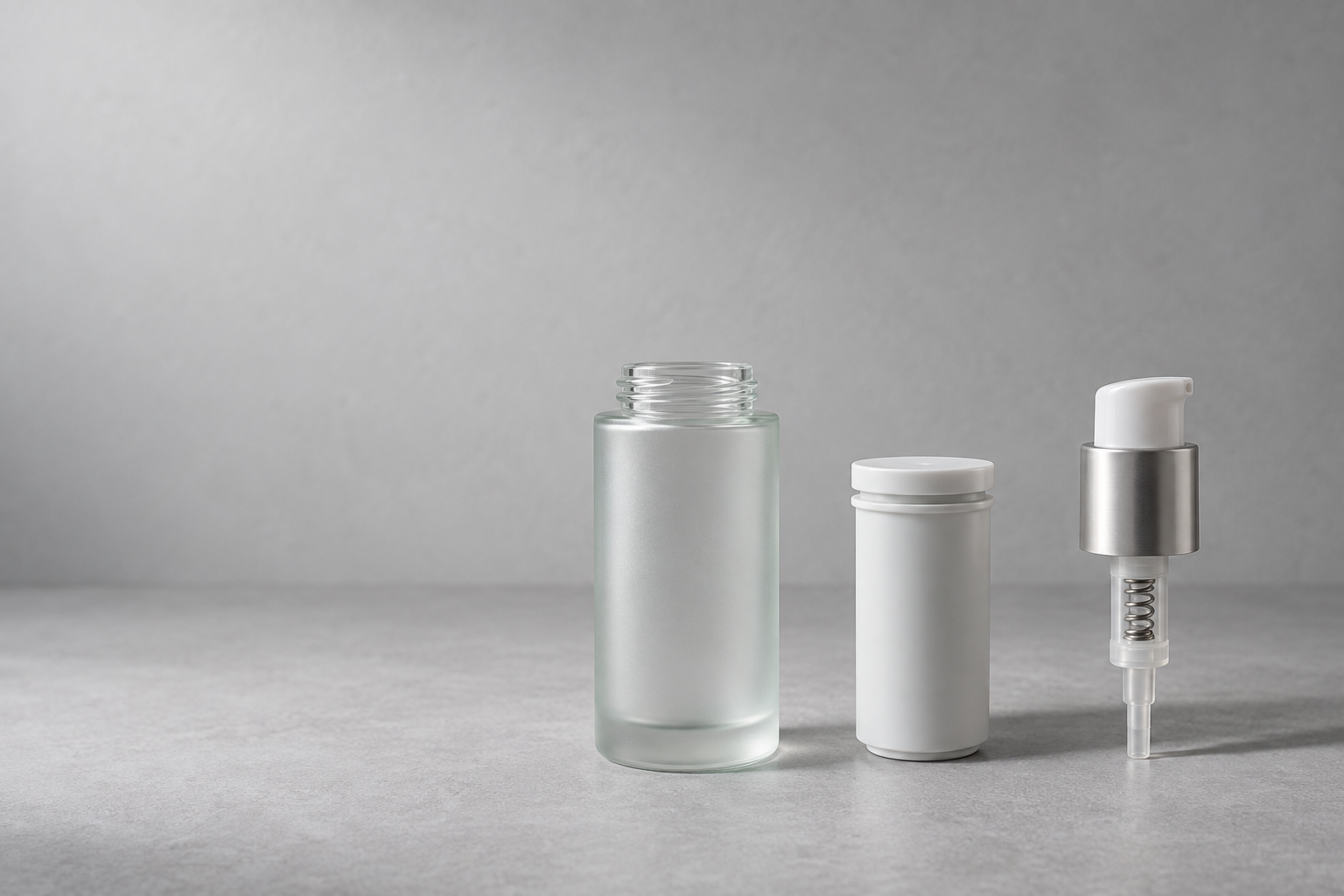
So the storage check belongs in the trial. Keep two primed units from every sample round, store one upright and one on its side at room temperature for seven days, then weigh the first stroke from each. A side-stored pack that returns a reasonable first dose is a pack that can survive a courier, a warehouse and a shop shelf without a complaint.
The Six Checks as One Commissioning Sequence
Run in order, the checks take about twenty minutes per sample round and remove almost every launch surprise:
- Confirm the fill weight and fill level inside the quoted window.
- Check the pump head torque against the pump supplier's figure, not against feel.
- Count strokes to the first full dose on three units, upright, at room temperature.
- Weigh the dose across five consecutive strokes on the same three units.
- Inspect the piston seal by cutting one unit open and reading the wall contact.
- Store two primed units, one upright and one on its side, and re-weigh after seven days.
Written down, those six lines become the primer specification for the product, and the next order can be checked against it in the same order. PauPack attaches that one-page record to the sample report so the specification cannot be lost between the trial and the purchase order.
Where Airless Pump Priming Sits in the Filling Room
Priming is not a line step, and treating it as one is why so many packs reach the brand unproven. It belongs to sampling and to commissioning, run on the finished pack at the temperature the customer will meet it in.
In practice we ask for fifteen finished units off the first production hour. Ten are primed and weighed on the spot, two are cut open to read the piston seal, and three are sealed in a bag for the seven-day storage check. Airless pump priming therefore becomes a documented result rather than a technician's opinion, and the record travels with the batch.
The same airless pump priming sequence repeats at low cost on every subsequent order. PauPack keeps the reference figures from the first production run and compares the next one against them, so a drift in fill weight or in pump torque shows up as a number rather than as a complaint from a customer.
What a Failed Prime Usually Means
Symptoms repeat even more reliably than causes, so we start the diagnosis from the symptom:
| Symptom | Usual cause | First fix to try |
|---|---|---|
| Nothing leaves the nozzle after twenty strokes | Piston seated below the product | Raise the fill weight into the designed band |
| Product weeps around the collar | Head over-torqued or a damaged collar | Re-set the capping torque and re-check the thread |
| First dose arrives, second dose sputters | Air still in the chamber or gas in the formula | Re-prime, then extend the batch rest time |
| Dose weight drifts upward through the pack | Formula separating in the body | Review the emulsion, not the pump |
| Uneven first stroke after storage on its side | Product migrated into the air path | Add an orientation note or change the carton |
None of these fixes needs a new mould. All of them are cheaper to apply at the sample stage than after launch, which is why PauPack runs the priming sequence before photography rather than after it.
What PauPack Prepares Before a Priming Trial
A priming trial needs the finished pack, not a bottle and a pump in separate boxes. PauPack assembles every sample round with the intended fill weight, the intended formula and the intended pump, and quotes the reference figures on the same sheet as the sample.
Where the pump comes from a specialist supplier, we test it against the body before the decoration is applied, so an invisible fault is not hidden under a sprayed finish. The USP container closure chapter sets the same expectation for regulated products: the closure, the container and the contents are qualified as a system rather than in isolation.
For brands running a full packaging programme, the priming record sits alongside the packaging quality control checklist and the release photograph, so a question asked two years later is answered from the file. Related reading from our own library includes airless packaging for skincare and bulk airless bottles, and the pump options we stock are listed under accessories supply.
Airless Pump Priming: The Ten Questions Brands Ask Us Most
What is airless pump priming?
Airless pump priming is the set of checks that removes the air sitting between the piston and the nozzle before a pack is approved. The pump cannot draw product until that air is gone, so priming is a commissioning step rather than a filling step, and it belongs in the sample report.
How many strokes should an airless pump need?
Most airless packs reach a full first dose inside eight to twelve strokes when the fill level, piston seal and formula viscosity are right. PauPack records the stroke count per pump model on the sample report so a second order can be measured against the first.
Why does my airless pump never prime?
Three causes cover most cases: the bottle was filled too low, so the piston starts below the body taper, the pump head was tightened past its stop and the air path is blocked, or the formula is thin enough to run past the piston lip during filling.
Should airless bottles be filled to the shoulder?
Fill to the level the mould was designed around, which is usually a few millimetres below the shoulder, and leave the neck clear. Overfilling pushes product into the pump chamber during capping, and that trapped product is what leaks out of the collar on the first stroke.
Does the formula change the stroke count?
It does. A thin serum moves quickly and can prime in five or six strokes, while a thick balm can need fifteen. Viscosity also decides whether the pack needs a slower fill line, because a fast fill traps air in a heavy cream and that air has to travel through the pump later.
What is a normal dose tolerance for an airless pack?
A working band is plus or minus five percent of the label dose when the pack is primed correctly, measured by weight across a full stroke. Anything outside ten percent points to the pump rather than the filling line, and the pump should be tested on its own.
Can an airless pump be primed after filling?
It can, and it should be. Priming after filling is exactly how the factory and the brand confirm that the pack works as a finished unit. Priming before filling only proves that the pump is clean and free of moulding flash.
Why does the pack stop dosing near the end?
The last few millimetres of product sit below the dip tube opening of the piston, so the pump draws air instead of cream. That is a fill level decision, not a fault, and the honest fix is either a slightly higher fill weight or a note on the pack that the final residue is expected.
Do airless packs need a storage check as well?
Yes. A primed pack that is stored on its side for a week can let product migrate into the air path, and the next stroke arrives uneven. PauPack keeps two primed units from every trial, stores one upright and one on its side, and weighs the first stroke from each after seven days. It is a cheap check, and it is the one that predicts courier damage most accurately.
What should be written into the sample report?
Fill weight, fill level, pump model, stroke count to the first full dose, dose weight across five strokes, the storage check and the closing torque. Those seven lines let a second production run repeat the result without repeating the argument.