

30g vs 50g cosmetic jars is not really a contest between two pieces of glass. It is a choice between two product experiences, two inventory commitments and two price stories. Put the same cream in both samples and the differences become practical: how the fill sits, how many uses the customer expects, how the hand reaches the formula, how the carton ships and how much cash the first order holds. PauPack begins with those differences before recommending a format.
The quick answer to 30g vs 50g cosmetic jars is simple. A 30g jar often suits concentrated products, travel-friendly lines, discovery formats and lower entry prices. A 50g jar often suits a core moisturizer, longer use period or a more substantial shelf presence. Neither answer is automatic. The formula, fill weight and role of the SKU decide.
Two Samples Arrive With the Same Cream
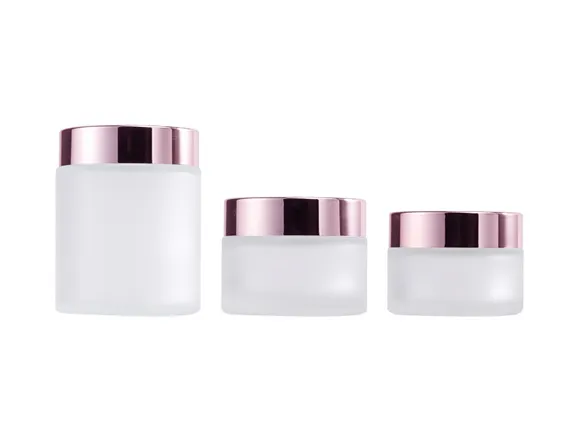
Imagine a skincare team reviewing two unbranded glass samples. The 30g version is compact and deep enough for a fingertip or spatula. The 50g version is wider, has more visible glass and feels more substantial in the hand. Both use a matching screw cap. At first glance, the meeting seems to be about aesthetics.
Then production asks whether 30 grams of the actual cream fits with the intended headspace. Marketing asks whether the larger jar makes a half-filled appearance obvious. Purchasing asks whether both sizes can share a closure and carton insert. E-commerce asks what each packed unit weighs. The useful 30g vs 50g cosmetic jars discussion begins only after those questions enter the room.
First Note: Grams Are Not Jar Volume
A gram is a unit of mass. A milliliter is a unit of volume. Cosmetic creams, gels, balms and masks do not all have the same density, so a jar described as 30 ml does not guarantee that 30 g of every formula will fit attractively or operate correctly. Air incorporated during mixing and filling can alter the visible result as well.
PauPack asks the brand or filler for the formula density under a defined condition, then treats the catalogue capacity as a starting point. The production-intent trial establishes the target net weight, practical headspace, fill line, closure clearance and appearance after settling. This avoids the awkward discovery that a “50g jar” holds the declared weight but leaves no clean closing margin.
Second Note: Give Each Size a Job
A strong portfolio does not use two sizes merely because both are available. Each should solve a distinct customer or channel need. A 30g jar may introduce a premium formula at a lower cash entry, support a targeted eye or treatment product, or travel more easily. A 50g jar may serve as the everyday hero SKU, support a longer regimen or provide room for a broader label panel.
The “not for” decision is just as useful. A small jar is a poor choice when the recommended dose makes it run out before the promised routine becomes credible. A large jar is risky when the formula is used sparingly, has a short after-opening period, or ties up too much launch inventory. PauPack writes the SKU job in one sentence so packaging is not asked to fix an unclear offer.
Third Note: Compare the Actual Use Period
Start with the recommended dose and expected frequency, then estimate how many uses the target net weight can support. This is a planning calculation, not a promise about consumer behavior. It helps the brand see whether the size, price and routine tell the same story when comparing 30g vs 50g cosmetic jars.
| Question | 30g format may favor | 50g format may favor | Evidence to collect |
|---|---|---|---|
| Portfolio role | Treatment, travel, discovery, entry tier | Core moisturizer, family or longer routine | SKU brief and channel plan |
| Use period | Shorter or low-dose program | Longer or higher-dose program | Recommended dose and frequency |
| Opening access | Needs enough diameter for clean access | Offers broader access but more exposed surface | Filled user trial |
| Shelf signal | Concentrated, precise, portable | Substantial, familiar, generous | Filled shelf mockup |
| Inventory exposure | May reduce formula per sellable unit | May improve value story but increases formula commitment | Demand and cash model |
This table keeps 30g vs 50g cosmetic jars connected to the product proposition. It does not declare a winner; it reveals which assumptions must be tested.
Fourth Note: Watch the Opening, Not Just the Outside
Jar diameter, shoulder shape and internal profile change how a person reaches the product. A narrow opening may look elegant but frustrate fingertips. A wide opening improves access yet exposes a larger product surface each time the jar is opened. An inner disc can protect presentation and reduce cap contact, but it also adds a component the user must lift and replace.
PauPack reviews the complete opening moment with the intended formula. The team notes whether cream gathers under the cap, whether an inner disc seats cleanly, whether a spatula fits, and whether product becomes trapped in a shoulder or base corner. These observations are more valuable than comparing outer diameter alone.
Fifth Note: Read the Jar Silhouette at Full Scale
Size changes the visual ratio between base, wall, opening and cap. A thick glass base can make 30g feel jewel-like; the same proportion on 50g may feel heavy. A tall cap can balance a small jar and overpower a broad one. Decoration also reads differently when the available print or label panel changes.
Review filled samples from shelf distance, in hand and inside the proposed carton. Include the actual formula color because white, amber or green products alter how clear and frosted glass appears. PauPack records the approved proportion rather than relying on isolated renderings.
Sixth Note: Build One Specification for the Filled Pack
The sample record should identify more than nominal capacity. For 30g vs 50g cosmetic jars, connect the jar code, material and color, capacity method, critical dimensions, neck finish, empty mass where relevant, cap, liner or inner disc, target fill weight, headspace, decoration and carton. The measurement owner and revision date belong beside the values.
| Specification line | Why it matters | Approval owner |
|---|---|---|
| Target net weight and tolerance | Protects the declared quantity and filling control | Brand, filler and regulatory owner |
| Formula density and condition | Connects grams to occupied volume | Formula or filling team |
| Headspace and closure clearance | Protects clean closing and finished appearance | Packaging and operations |
| Jar, cap and inner-disc codes | Keeps the tested assembly reproducible | PauPack and buyer quality |
| Artwork and protected zones | Controls the visible production result | Brand and decoration supplier |
| Packed configuration | Links the approved jar to shipping protection | Quality and logistics |
For 30g vs 50g cosmetic jars, a shared format family can simplify the file, but shared styling should never hide different fill, label and packed-case requirements.
Seventh Note: Net Contents Belong to the Product Owner
The package must carry an accurate net-quantity declaration under the rules that apply in the destination market. In the United States, FDA cosmetic-labeling guidance explains that solid, semisolid or viscous cosmetics are generally declared by weight, while liquids are generally declared by fluid measure. The FDA’s official Cosmetics Labeling Guide also explains principal-display-panel placement and type-size considerations.
EU Regulation (EC) No 1223/2009 requires nominal content at the time of packaging to be given by weight or volume, subject to stated exceptions. The official EU Cosmetics Regulation is a primary reference, but the responsible regulatory professional must review the current rules for each market. PauPack supplies packaging dimensions, samples and component identity; it does not decide the brand’s legal label claim.
Eighth Note: Test the Formula in Both Assemblies
A controlled comparison uses the same formula batch, filling method, settling time and inspection conditions. Record gross and tare weights, net fill, visible headspace, cap contact, leakage, product pickup, appearance after storage and any relevant compatibility observations. If the formula or process changes, note the boundary of the old result.
The purpose is not to force identical behavior. A wider 50g jar may settle differently from a deeper 30g jar. The comparison tells the team whether each assembly stays clean, closes reliably and supports the intended customer experience. PauPack can align identified samples with the brand’s qualified filler and testing partners.
To keep both sizes under the same evidence rules, work through PauPack's 12-check cosmetic jar sample testing protocol before approving either assembly for line trials or bulk production.
Ninth Note: Decoration Has a Different Canvas
A logo that looks balanced on 50g may crowd the front of 30g. A label may wrap too close to itself on the smaller circumference. Frosting, coating and metallization can alter the visibility of fill level, while thick bases and curved shoulders affect print placement. Artwork should be reviewed on the filled, closed container rather than on a flat dieline alone.
PauPack asks for minimum readable content, preferred viewing face, color target, finish boundaries and protected contact zones. When both formats launch together, one visual system can still use format-specific artwork. Consistency does not mean shrinking every element by the same percentage.
Tenth Note: Compare the Delivered Unit, Not the Empty Jar
Glass cost is only one line. The complete comparison includes cap and liner, inner disc, decoration, inspection, carton, dividers, case quantity, pallet efficiency, freight, filling labor, product mass, breakage allowance and excess components. The 50g pack may use more formula and freight capacity; the 30g pack may require more units, closures and handling to sell the same kilograms of cream.
For that reason, the commercial answer to 30g vs 50g cosmetic jars should be written per sellable, delivered unit and per realistic sales forecast. PauPack can quote the identified packaging configuration, while the buyer adds formula, filling, channel and inventory costs.
Eleventh Note: Let the Forecast Choose the Launch Shape
Launching both sizes can look flexible and split demand too early. If the forecast is uncertain, a single core size may protect purchasing focus, artwork control and replenishment. Another option is to use a stock jar family for the first launch and reserve custom molding or complex decoration for the volume that later earns it.
MOQ should be separated by component and process. Glass, cap, liner, decoration and carton may each have different economic quantities. PauPack shows those floors separately so the buyer can see leftover caps, undecorated glass and finished inventory instead of one headline number.
Twelfth Note: Protect the Reorder
The approved file for 30g vs 50g cosmetic jars should retain the filled reference, jar and closure codes, drawings, fill settings, artwork, finish master, component suppliers, packed sample, inspection criteria, deviations and change triggers. A reorder is not “the same” because the jar looks similar in a photograph.
Reopen the affected decision when the formula, jar plant, mold, color, neck, cap, liner, inner disc, decoration process, fill target, carton or transport route changes. PauPack treats an expansion from one size to the other as a new functional configuration even when the design language is shared.
Thirteenth Note: Send PauPack Both the Formula Story and the Sales Story
For a useful recommendation, share the formula type and density if known, target net weight, dose, use frequency, desired use period, price architecture, markets, channel, forecast, filling method, decoration and launch date. PauPack can compare options in our cosmetic jar range, connect the selection with our custom design service, and organize sample evidence before bulk production.
The final 30g vs 50g cosmetic jars decision should feel almost boring: one format has the clearer job, the better filled result and the more supportable inventory plan. That quiet clarity is more valuable than choosing the jar that looked largest in the first meeting.
Buyer Questions From the Sample Table
Is a 30g cosmetic jar the same as a 30ml jar?
No. Grams describe product mass and milliliters describe volume. The relationship depends on the actual formula density and the chosen filling conditions.
Which jar size is more common for face cream?
Both sizes are widely used. The right choice follows the product dose, use period, price architecture, channel and brand presentation rather than popularity alone.
How do I know whether 30g of cream will fit a jar?
Measure the production-intent formula, define the target net weight and headspace, then complete a controlled fill trial with the actual jar, inner disc and cap.
Does a 50g jar always cost much more than a 30g jar?
Not always. Compare the complete packed unit, including glass, closure, decoration, carton, freight, filling time, excess components and sellable yield.
Can 30g and 50g jars share the same lid?
Sometimes, when their neck and finish are designed around a shared closure. Verify the identified jar-and-lid pairing, liner or inner disc, torque and finished appearance.
Which format is better for a premium skincare line?
Premium positioning can work in either format. Proportion, glass distribution, closure feel, decoration, carton and the role of the SKU matter more than nominal size alone.
Should samples be filled before artwork approval?
Yes. A filled sample shows the true product color, headspace, label or print contrast, opening experience and shelf proportion before artwork is frozen.
How does jar size affect e-commerce shipping?
The larger format may add unit mass and require more protection, while the smaller format can increase unit count and handling. Test the finished jar, cap and carton in the intended route.
What changes when a brand moves from 30g to 50g?
Recheck fill settings, net-content artwork, closure fit, carton dimensions, case count, pallet plan, packed testing, cost model and demand allocation.
What should I send PauPack for a jar-size recommendation?
Send the formula type, density if known, target fill weight, dose, use period, markets, channel, artwork, forecast, filling method, closure preference and launch date.