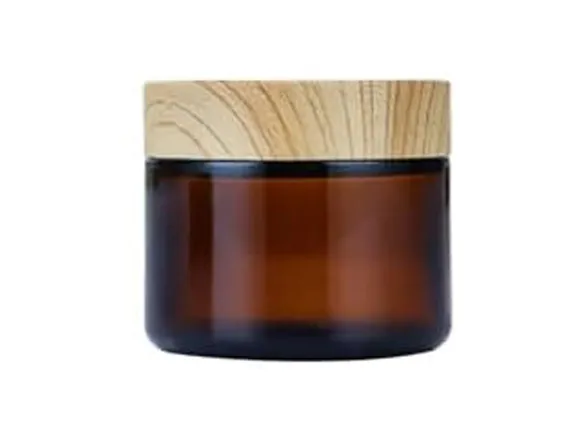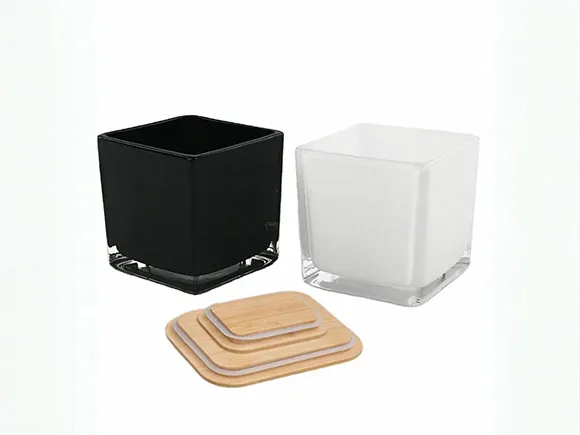


In an era of automation, handmade packaging tells a deeper story.
Wooden jar artisan workshops preserve the cultural, aesthetic, and emotional value of traditional craftsmanship—turning every jar into a piece of brand identity.
Let’s explore how these workshops continue to shape premium packaging today.
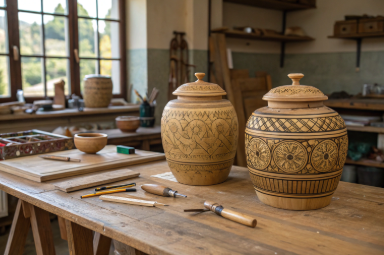

Why Traditional Wooden Jar Craftsmanship Still Matters in 2025?
Technology moves fast—but craftsmanship leaves a timeless impression.
In 2025, beauty and wellness brands are rediscovering the power of handcrafted packaging to convey authenticity, care, and luxury.
Here’s why traditional wooden jars still matter:
-
They feel personal: Slight variations in grain and carving make each piece unique
-
They tell a story: About origin, heritage, and artisan dedication
-
They align with slow beauty: A movement toward mindful, lasting product design
-
They reduce mechanical uniformity: Standing out on the shelf or social feed
At PauPack, we source directly from artisan workshops that preserve generational wood-turning and carving skills—blending old-world artistry with modern brand expectations.
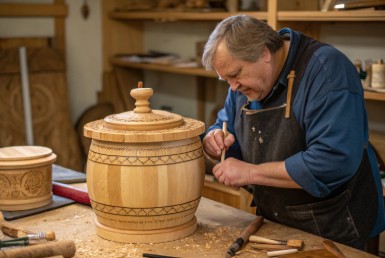
How Artisan Workshops Shape the Character of Wooden Packaging?
Factory machines cut fast. Craftsmen carve with feeling.
Artisan workshops imprint natural wood packaging with subtle qualities that machines can’t replicate—from tool-marked textures to wood-tone nuances and edge softness.
The Artisan Impact
| Element | Artisan Result |
|---|---|
| Surface Finish | Oil-polished by hand for organic touch |
| Joinery | Precision-fitted without adhesives or visible fasteners |
| Engraving | Deep, textured, and individually aligned |
| Wood Selection | Eye-based grain matching for balanced patterns |
These workshops often work with locally harvested woods—like bamboo, pine, or walnut—sustainably managed and aged properly. At PauPack, we audit each artisan’s process to ensure both craft quality and ethical standards.
What Are the Key Techniques Behind High-end Wooden Jar Design?
True luxury comes from control over every cut, curve, and corner.
The finest wooden jars are shaped using traditional techniques that emphasize symmetry, fit, and finishing—often performed with hand tools or legacy lathes.
Essential Techniques in Artisanal Jar Making
| Technique | Description | Value |
|---|---|---|
| Turning | Rotating blocks of wood into jar bodies/lids on a lathe | Precise curves |
| Joinery | Carving matching threads, rings, or inserts | Airtight seals |
| Burnishing | Using friction to polish surface naturally | Smooth, low-impact finish |
| Oiling/Waxing | Hand-applied natural sealants | Enhances grain, adds durability |
| Hand-engraving | Logo or iconography carving | Branding + texture |
PauPack incorporates these time-tested methods into high-MOQ production through hybrid manufacturing, where artisans handle detail finishing on machine-prepped pieces—achieving both beauty and scalability.
How PauPack Collaborates with Craft Masters for Scalable Beauty?
It’s not tradition vs efficiency—it’s both.
At PauPack, we integrate artisan input into every stage of wooden packaging—from design to final detailing—ensuring handmade character meets commercial consistency.
Our model includes:
-
Shared artisan networks in Asia and Eastern Europe
-
Batch sampling with pre-production prototypes reviewed by craftspeople
-
Hybrid workflows: CNC shaping + hand-finishing
-
Custom sourcing: Matching wood species to scent or product feel
-
Low-MOQ access: As few as 1000 pcs with artisan engraving
This enables brands to launch bespoke wooden jars without commissioning their own workshop—while still owning a story of heritage and handcrafted care.
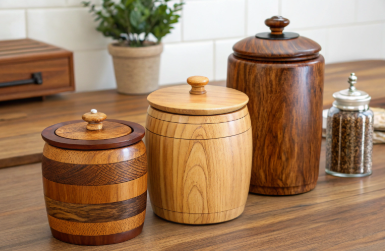
How Brands Benefit from Embracing Handmade Packaging Heritage?
The modern consumer seeks meaning, not just function.
By embracing artisanal packaging, brands elevate their perceived value, deepen customer loyalty, and support sustainable, skill-based economies.
Brand Value from Artisan Packaging
| Benefit | Impact |
|---|---|
| Luxury Signal | Adds perceived value to product pricing |
| Differentiation | Distinguishes your offer in a saturated market |
| Cultural Alignment | Connects with wellness, slow beauty, eco-conscious consumers |
| Storytelling Asset | Great for founder story, social content, PR features |
| Sustainability Proof | Supports local craft economies over mass industry |
At PauPack, we help brands weave artisan insight into their launch strategy—with behind-the-scenes workshop content, QR-linked maker stories, and packaging that’s more than packaging—it’s a promise.
How Artisan Woodwork Brings Emotional Value to Modern Packaging?
Packaging isn’t just about protection—it’s about perception.
Handcrafted wooden jars create emotional resonance by engaging senses: sight, touch, even scent. They suggest care, detail, and integrity—qualities consumers subconsciously associate with the product inside.
Consider the feeling of:
-
Smooth wood grain under the fingertips
-
Slight weight variations that suggest authenticity
-
A faint aroma of natural oil or wax
These tactile cues tell a story that glass or plastic can’t. At PauPack, we harness this emotional impact by blending modern packaging structure with visible craftsmanship—each jar designed to connect, not just contain.
Why Consumers Are Reconnecting with Handmade Materials in Beauty?
Mass luxury is everywhere—but handmade is personal.
Today’s beauty buyers, especially Gen Z and millennial consumers, seek brands that value ethics, emotion, and artisanship. Wooden packaging embodies all three.
Why it resonates:
-
Slow beauty values: Minimalism, quality over quantity
-
Natural material appeal: Aesthetic + environmental
-
Craft as culture: Connecting consumers with heritage
-
Reusability: Jars feel too beautiful to throw away
This is why boutique skincare brands, organic balms, and aromatherapy lines are turning to wooden jars with hand-touched finishes—they reflect the very essence of the clean, conscious products they hold.
What Makes Each Wooden Jar a Unique Expression of Craft and Culture?
No two trees are the same—and no two wooden jars should be either.
In artisan workshops, each jar tells a different story based on the wood's grain, color, and how it’s carved, finished, and detailed by hand.
Craft Elements That Define Uniqueness
| Feature | Impact |
|---|---|
| Wood grain alignment | Creates visual flow across lid and base |
| Tool marks | Subtle lines that reflect the maker’s hand |
| Oil or wax variation | Affects tone, texture, aroma |
| Engraving depth | Varies slightly by piece, enhancing authenticity |
PauPack works with artisan partners who understand this beauty in variation. We ensure your logo or design is placed to highlight—not hide—these one-of-a-kind features, so each unit feels exclusive and intentional.
How PauPack Bridges Tradition with Scalable Production for Global Brands?
Craft doesn’t have to mean small batch—it can mean smart batch.
PauPack brings the handmade spirit to scalable production by integrating artisan finishing into CNC-aided shaping, ensuring consistency where needed and uniqueness where it counts.
Here’s how we scale:
-
CNC turning of basic shapes for mold consistency
-
Hand polishing and oiling for finish variation
-
Laser logo engraving + optional hand-debossing
-
Modular design: shared base, custom lid or insert
-
Batching by grain tone or wood type for visual continuity
We offer this hybrid production model at MOQs as low as 1000 pcs—perfect for limited editions, luxury launches, and seasonal drops.
How to Tell a Brand Story Through Artisan-crafted Packaging?
Packaging is your first impression. Handcrafted wood lets you say more—with less.
Artisan wooden jars can carry stories of heritage, material, and maker—all of which add meaning and memorability to your brand.
Storytelling Ideas We Support at PauPack
| Angle | Example |
|---|---|
| Maker origin | "Crafted in partnership with a third-generation woodturner in Zhejiang" |
| Material transparency | "Made from sustainably harvested FSC-certified ash wood" |
| Cultural alignment | "Inspired by traditional apothecary jars from Yunnan" |
| Reuse narrative | "Designed to be refilled, repurposed, and remembered" |
We also help clients integrate QR codes into packaging that link to workshop footage, maker interviews, or tree-to-jar timelines—making each unit more than just a container, but a conversation.
Conclusion
Artisan wooden jars bring more than beauty—they bring meaning. PauPack connects heritage craft with modern brand needs, helping you turn every jar into a quiet act of storytelling.