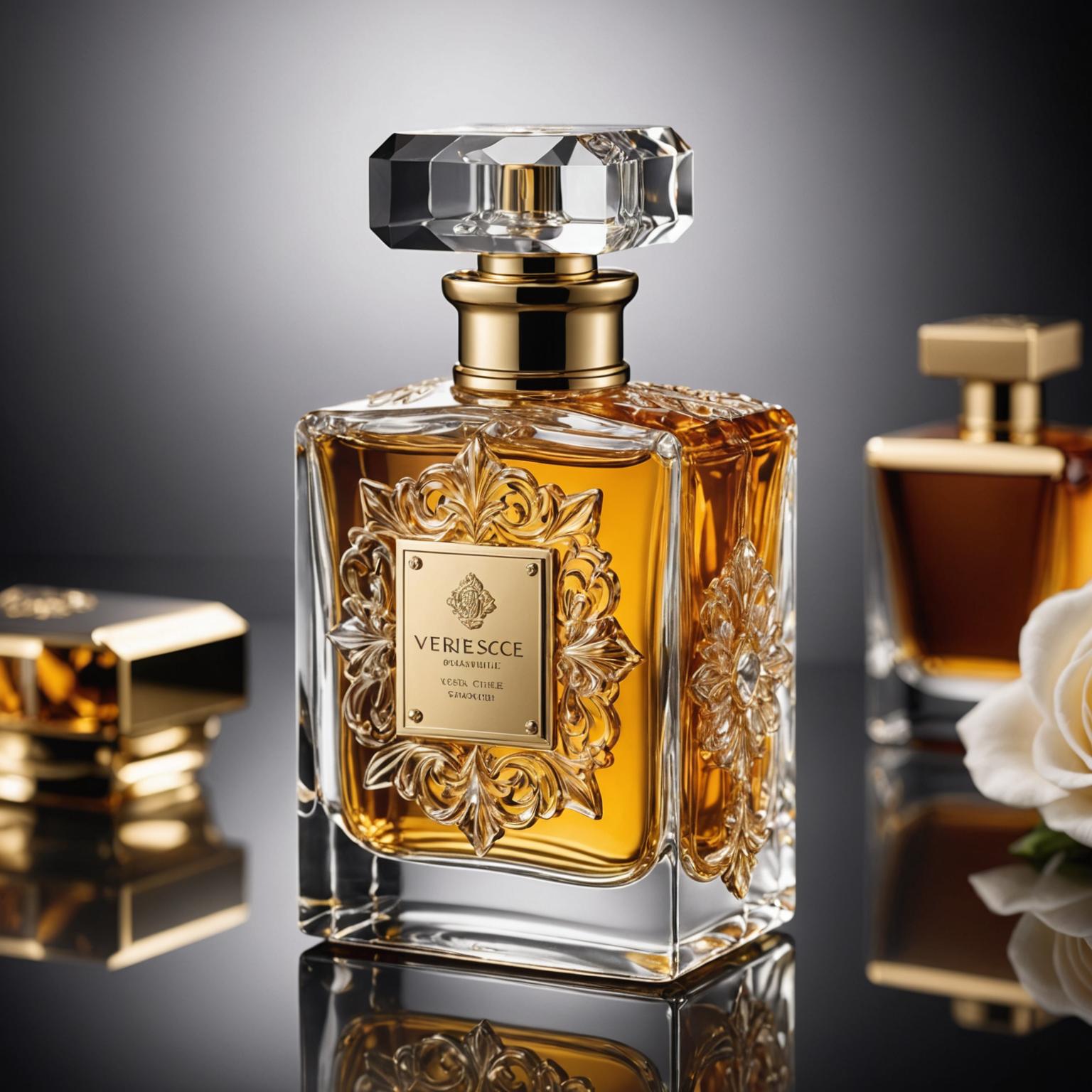


A refillable fragrance bottle is not a bottle with a refill pack next to it. It is a pack engineered to be opened, cleaned and closed again without losing the seal that made the first fill work.
That distinction decides whether a refill programme becomes a selling point or a support queue. Brands that test it before launch usually discover one part that was never designed for handling, and it is almost never the glass.
PauPack supplies refillable and reusable packaging for fragrance and home-scent brands across Europe and North America, and this is where refill projects succeed or quietly stop.
What follows is the cycle test we run, the numbers behind it, and the design choices that decide how many fills a bottle really carries.
What a Refillable Fragrance Bottle Has to Survive
Five stresses repeat in every refill programme: the opening cycle itself, the cleaning step, the re-torque, the repeated handling of a decorated surface, and the time spent open while the customer finds the refill.
A single-use pack sees none of them. It is filled once, crimped or torqued once, and shipped. A refillable fragrance bottle sees the same operations five or ten times, on a kitchen counter, by someone who is not a filling operator.
That is why the specification for a refill pack reads more like a device specification than a container one. Torque retention, interface fit and abrasion all belong in it from the first sample.
The Three Refill Models and Their Mechanics
Refill programmes differ far more than the bottles look. Each model moves the risk to a different component.
| Model | How it works | Where it fails first | Best suited to |
|---|---|---|---|
| Pour refill | Bottle is opened and topped up from a refill pack | Collar thread and gasket after cleaning | Heavy-base glass, wide neck |
| Insert cartridge | Sealed inner cartridge clips into a decorative outer shell | Clip interference and shell wear | Travel retail and gift formats |
| Return and re-fill | Whole bottle is collected, washed and refilled industrially | Decoration and label removal | Brands with a closed retail channel |
| Concentrate refill | Customer adds concentrate and a carrier | Dosing accuracy and neck cleanliness | Home fragrance and body mists |
Read the second row as the usual losing case for a refillable fragrance bottle. The cartridge is often a different polymer from the shell, and the two wear against each other at rates nobody measured during sampling.
Interface Wear: The Insert, the Collar and the Crimp
A refill pack has one more sealing surface than a sealed pack, and that surface is the interface between the removable part and the body.
On a screw design it is the collar thread and the gasket. On a cartridge design it is the clip and the shell ring. Both are measured as interference fit, and both change with every cycle. A tenth of a millimetre of wear is enough to move the seal from firm to marginal.
PauPack measures the interface at cycle one, five and ten using the same gauge, because the failure is dimensional long before it is visible. Where wear is unavoidable, a captive gasket that compresses on a fresh surface each time buys several extra fills for very little cost.
How Many Cycles Before Something Fails
These figures come from refill trials on production moulds, not from accelerated laboratory cycles. Treat them as planning numbers and confirm them on your own pack.
| Component | Cycles before measurable change | What changes |
|---|---|---|
| Glass body, stable mould | Beyond 20 | Nothing measurable at the neck |
| Screw collar, captive gasket | 10 to 14 | Torque retention drifts 8 to 12 percent |
| Laminated liner disc | 5 to 8 | Compression set, loss rate climbs |
| Plastic cartridge clip | 6 to 10 | Interference fit falls below 0.15 mm |
| Soft-touch coating | 4 to 6 | Polish and wear at contact points |
The pattern is consistent. The glass outlives everything attached to it, so the design question for a refillable fragrance bottle is what to make the interface from, not how thick to make the glass.
The Refill Cycle Test Protocol
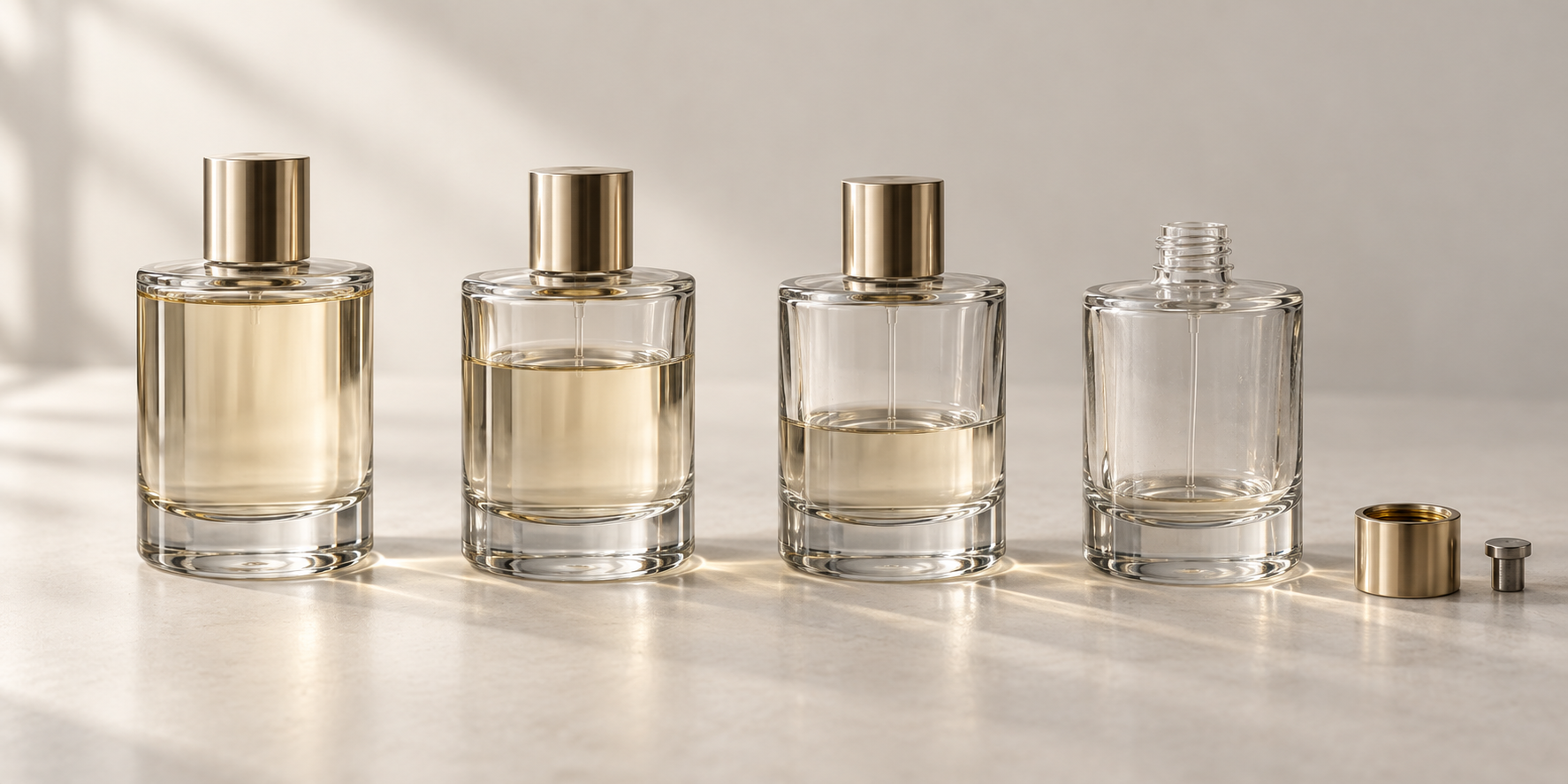
Twelve bottles, ten cycles, and a measurement at every one. It takes about three weeks of bench time and it replaces every argument about whether a refill design will hold.
- Fill twelve production bottles to the working level and torque the closures to the production figure.
- Record fill weight, closure torque and interface fit on every bottle before the first cycle.
- Open, empty and rinse five bottles, then dry them fully and refill. Repeat to ten cycles.
- Weigh all twelve at day 7 after cycles one, five and ten to compare loss rates across the programme.
- Rub the decoration on three bottles with a standard abrasive pad and photograph the wear against the reference.
- Cut one bottle at the neck after cycle ten and inspect the seat, the thread and the gasket contact band.
- Write the interface material, the gasket type and the cycle limit into the specification, then keep the cut section with the record.
PauPack runs this on the production mould with the brand's own fragrance, because alcohol content changes how a gasket ages and a water-based home fragrance behaves differently again.
Cleaning Between Fills
Cleaning is where a refill programme quietly develops a reputation. Warm water and a mild neutral detergent, then a full dry, is enough for most alcohol-based fragrances.
What causes trouble is skipping the rinse. Alcohol evaporates and leaves the heavier fraction of the formula behind as a film, which shows up as haze on the glass and as a slower top note by the third or fourth fill. It is also the residue that attacks a gasket.
PauPack writes the cleaning step on the refill insert card and tests the fifth-fill appearance rather than the first, because that is the bottle the customer judges.
Decoration and Wear on a Refillable Fragrance Bottle
Decoration decides how a refill pack looks in month six. Fired organic finishes and acid etching are part of the glass surface and wear at the same rate as the glass itself.
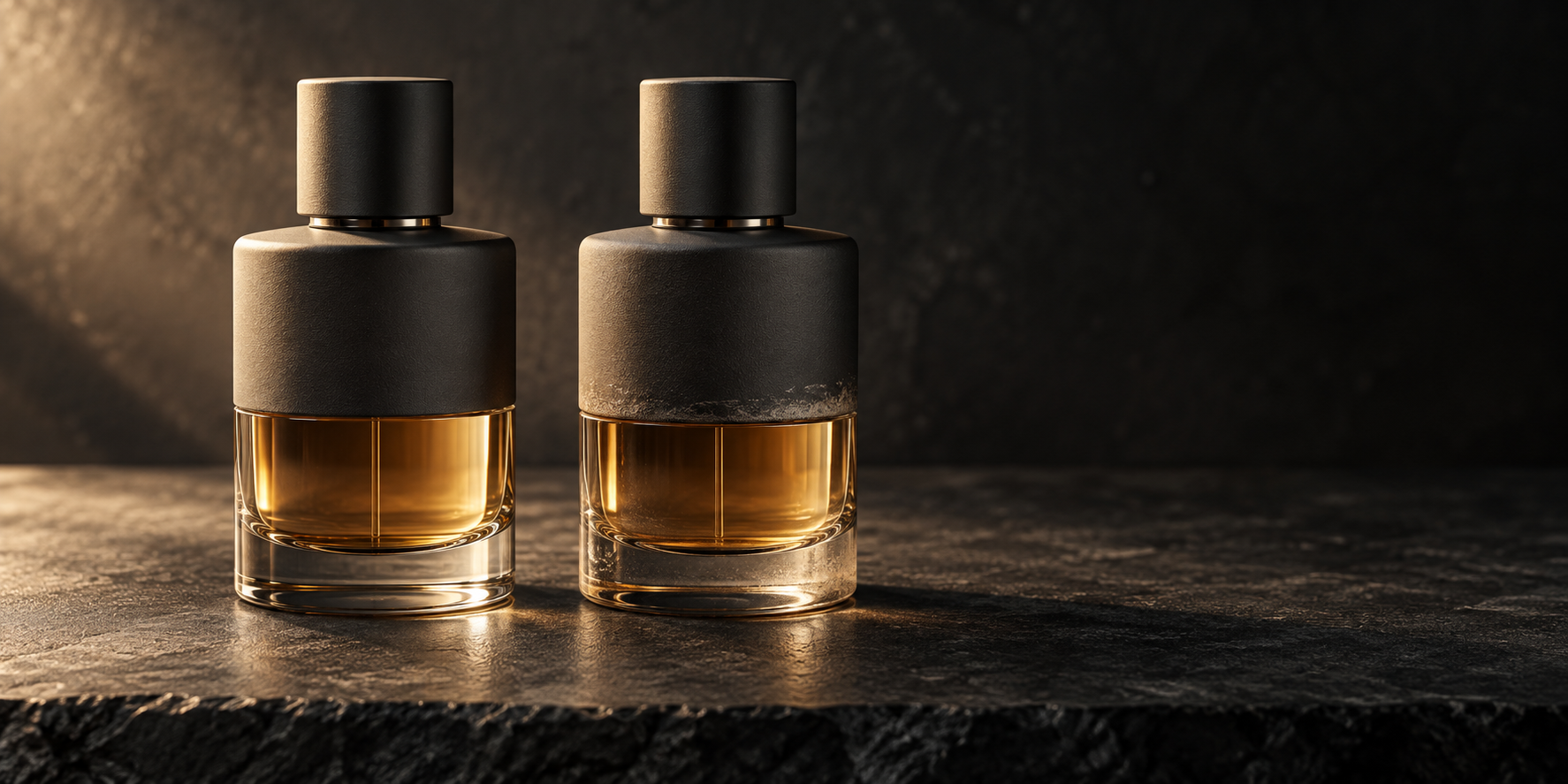
Lacquers and soft-touch coatings wear at the contact points first: the base, the shoulder and the collar band. Water-transfer prints lift at the edges. Both are acceptable on a single-use pack and a problem on one designed for ten fills.
Where the design depends on a coated finish, PauPack specifies a heavier coat on the contact bands and tests abrasion against a reference bottle rather than against a colour swatch. Our notes on fragrance packaging decoration set out which finishes survive handling.
Concentrate Refills and Dosing Accuracy
Concentrate models move the risk from the closure to the customer. A refill that asks for 8 ml of concentrate into 42 ml of carrier needs a dosing aid, or the bottle comes back tasting wrong and the programme is blamed.
A marked chamber in the refill pack, a dropper insert, or a pre-filled sachet each solve it differently, and each one costs something different. PauPack quotes all three on the same bottle so the decision is made against the retail price rather than against the concept deck.
Faults Refill Packs Develop
Four complaints account for most refill warranty work. All four are visible in the first ten cycles if anyone is measuring.
| Complaint | Underlying cause | First fix |
|---|---|---|
| Collar loosens between fills | Gasket compression set | Captive gasket, retest torque at cycle five |
| Bottle looks hazy by fill four | No rinse between fills | Add a rinse step to the insert card |
| Cartridge feels loose in the shell | Interference fit worn below 0.15 mm | Change clip polymer or add a spring rib |
| Coating dull at the base ring | Handling wear on a soft coat | Heavier coat on contact bands |
Storage and Travel With an Open Interface
A refill bottle spends part of its life half-full, which is the condition a sealed pack never sees. Half a bottle with a screw collar loses more per week than the same bottle filled to the working level, because the headspace is large and the seal is being opened and closed.
Two rules keep it under control. Cap it firmly and travel it upright, and keep the refill pack in the same box so the bottle is not left open on a shelf for a week. Where a brand sells a travel pouch, a simple moulded insert that holds the bottle upright removes most of the leak complaints before they start.
PauPack tests the half-full case as a separate scenario, because a refillable fragrance bottle that only behaves when it is full has not been tested in the condition customers actually use.
What Refillability Is Worth
A refill programme is a logistics decision before it is a marketing one. If the refill is hard to buy, customers revert to the original pack and the environmental argument evaporates, which is why PauPack asks about the supply route early.
Where the channel supports it, the numbers work: one bottle carrying four fills replaces four packs, and the glass, which carries most of the embodied impact, is used again. Where the refill sits behind a counter in two cities, the same bottle carries one fill and a heavier footprint.
PauPack asks about the refill supply route before quoting a refillable fragrance bottle, because the design of the interface depends on where the refill will be bought.
What PauPack Prepares Before a Refill Launch
Refill projects need one extra pass at sample stage, and it is the pass that decides whether the launch is quiet. PauPack prepares perfume bottles wholesale with the collar, insert and gasket matched to the intended cycle count, and supplies cut sections with the first shipment so the seat dimensions are on file.
Brands building a reusable range usually pair this with refillable cosmetic jars and the formats in glass diffuser bottles, which share the same interface logic at a larger neck diameter. Where the pack is a prestige piece, our notes on luxury perfume bottles cover the shoulder and base weights that survive repeated handling.
The USP packaging and storage requirements make the point that container, closure and storage condition are qualified as one system, and a refill pack adds a handling variable to that system rather than replacing it.
Refillable Fragrance Bottle: The Questions Brands Ask
What makes a refillable fragrance bottle different from a standard one?
Three things carry the load: the insert interface, the collar or crimp at the neck, and the decoration. A refillable fragrance bottle is judged over five or more fills, so every one of those parts has to survive handling that a single-use bottle never sees.
How many refill cycles should a bottle survive?
Plan for ten cycles on a glass body and five on a plastic insert, and test above that figure. Glass bodies with a stable mould generally show no measurable change at twenty cycles. Plastic inserts and laminated collars are the parts that move, usually losing interference fit somewhere after the sixth or eighth fill.
Do refill bottles leak more than sealed ones?
Not if the interface is designed and tested. The refill pack has one extra sealing surface, so it has one extra way to fail. PauPack measures loss per month after the first fill and again after the fifth, and the two numbers should sit within 20 percent of each other.
Can I refill a crimped spray bottle?
Not through the crimp. A crimped neck is closed permanently, so refillable designs use a screw collar, a bayonet insert or a removable pump assembly instead. Each route trades a little sealing performance for the ability to open the pack, and the test exists to quantify that trade.
What about cleaning between fills?
Warm water and a neutral detergent, then a full dry before the next fill. Alcohol-based fragrance is a good cleaner on its own, but it leaves a residue film behind when it evaporates, which shows up as a hazy bottle by the fourth or fifth cycle if it is never rinsed.
Does decoration survive repeated handling?
Some does. Fired and acid-etched finishes last as long as the glass. Lacquers and soft-touch coats wear at the contact points, and water-transfer prints lift first. Test any refillable fragrance bottle decoration with an abrasion rub rather than with a visual inspection on the sample.
Does a refill pack change the net content claim?
It can, and the rules differ by market. Where a refill is sold as a separate unit, that unit needs its own net content statement. Where the bottle is sold with a lifetime fill count, the wording has to make the refill volume clear. The CPSC statutes pages are a reasonable starting point for the US position.
Is a refill system actually better for the environment?
Only when the refill gets used. A bottle that is refilled four times and then discarded carries a far lower impact per millilitre than four single-use packs. Our notes on sustainable perfume packaging set out where the arithmetic actually works.
What closure do you recommend for a first refill project?
A screw collar with a captive gasket on a heavy-base mould, unless the brand needs a crimped look. That pairing survives opening, cleaning and re-torquing without relying on a laminated disc, and it keeps the perfume bottle evaporation loss inside a normal band across cycles.
What should a refill cycle record include?
Cycle number, fill weight, closure torque before and after, interface dimensional check, decoration rub result, and a photograph of the collar. PauPack keeps that sheet with the mould record so the fifth shipment is measured against the first, not against memory.