

Poor storage leads to spoiled oils, faded herbs, and wasted investment—yet so many brands still don’t get this right.
Essential oils and herbal ingredients should be stored in cool, dark, airtight conditions using the right containers to preserve their potency, aroma, and shelf life.
Whether you're an aromatherapy enthusiast or a skincare entrepreneur, knowing how to properly store these materials is the foundation of product quality. Let’s explore the most important storage rules together.

How should essential oils be stored?
If your essential oils smell “off” or seem weaker than expected, poor storage may be to blame.
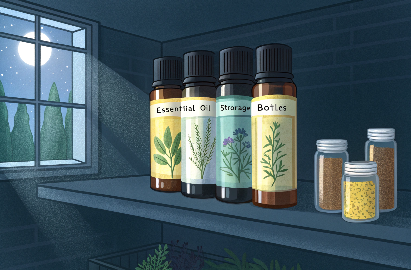
Essential oils should be stored in dark glass bottles—preferably amber or cobalt blue—in a cool, dry, and dark place away from sunlight and temperature fluctuations.
Why amber glass is the industry standard
Essential oils are volatile and highly sensitive to light and oxygen. UV rays can accelerate oxidation, degrading their aroma and therapeutic value. That’s why amber glass bottles are widely used in the wellness industry. They block harmful UV light while maintaining chemical stability.
At PauPack, we manufacture amber glass essential oil bottles in a variety of sizes—5ml, 10ml, 15ml—with dropper, roller, or spray closures. All of them are designed for UV protection, airtight sealing, and easy dispensing.
Proper sealing to prevent oxidation
Each time an essential oil bottle is opened, oxygen enters and begins a slow degradation process. Tightly sealed closures such as screw caps with orifice reducers or tamper-evident dropper tops help extend shelf life. Avoid plastic containers—they can interact with oil compounds over time.
Temperature control and storage location
Store oils in a cabinet or drawer, away from heat sources like radiators or direct sunlight. Room temperature (60°F–75°F / 16°C–24°C) is ideal. For longer shelf life, especially with citrus oils that oxidize quickly, refrigeration is an option—just make sure bottles are airtight to prevent moisture contamination.
What is the 30 50 20 rule for essential oils?
If you're blending or storing oils without a framework, your formulas and shelf life might be inconsistent.
The 30-50-20 rule refers to blending ratios for essential oils: 30% top notes, 50% middle notes, and 20% base notes, creating balanced aromatherapeutic blends.
What each category contributes
-
Top notes (30%): Light and fresh oils like lemon, peppermint, eucalyptus. They evaporate quickly and give the initial impression.
-
Middle notes (50%): Oils like lavender, rosemary, and geranium. They form the “heart” of the scent.
-
Base notes (20%): Deep, heavy oils such as patchouli, sandalwood, or frankincense. They linger and stabilize the blend.
Using this rule not only improves the sensory experience but also optimizes the shelf life. Base notes are more stable and anchor volatile top notes.
Storage after blending
When you’ve created a blend using this formula, it must be stored in appropriate glass bottles. PauPack offers premium-grade blending bottles with pipettes and UV protection, which are perfect for labelling and preserving unique fragrance formulas.
Don’t forget to label each bottle with the blend date and ingredients for proper rotation and tracking.
How do you store herbal medicine?
Improper storage can cause herbs to lose potency or develop mold, making them unsafe for use.
Herbal medicines should be kept in airtight containers made from glass or metal, stored away from heat, humidity, and direct light.
Avoid moisture at all costs
Humidity is the biggest enemy of dried herbs. It can lead to mold growth, microbial contamination, and deterioration of active compounds. Airtight lids and desiccant packs are excellent solutions for preserving dryness.
Ideal containers for herbs
-
Amber or clear glass jars with screw-top lids are most recommended.
-
Metal tins (non-reactive and lined) can be used for powdered herbs.
-
Avoid plastic or paper containers for long-term storage.
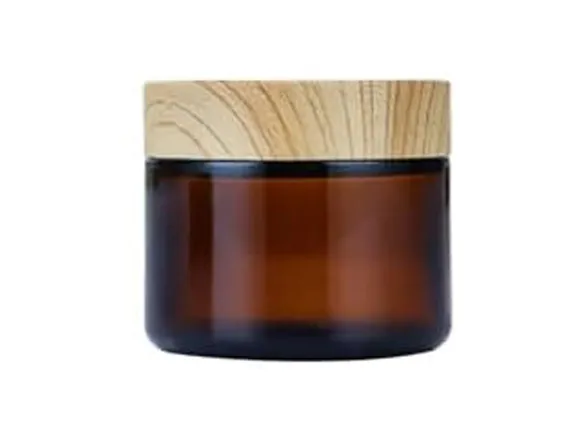
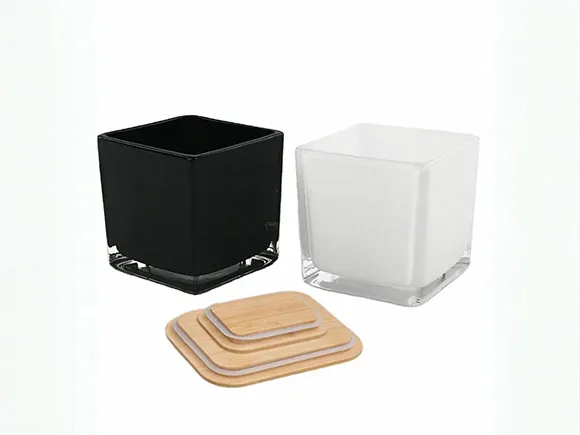
At PauPack, our herb-safe glass jars come in multiple sizes and shapes—with child-resistant, tamper-evident, or cork lids—making them ideal for health brands and bulk herbal apothecaries.
Storage environment
A cool, dark pantry or cabinet is best. For high-value herbs like ginseng or saffron, consider a dedicated storage box with individual compartments and light protection.
How do you store herbal oil?
If you’ve infused herbs into oils like olive or jojoba, they’re even more vulnerable to spoilage.
Herbal oils should be stored in UV-protected glass bottles with tight seals, kept in a cool, dark space, and used within 6–12 months.
Understand the infusion risk
Unlike distilled essential oils, infused herbal oils are made by steeping dried herbs in a carrier oil. This introduces risk of contamination, especially if moisture remains in the herbs. The presence of organic matter shortens the product’s shelf life.
What to do post-infusion
After filtering the herbs, pour the oil into a clean amber bottle. Add a few drops of vitamin E or rosemary extract as natural antioxidants to extend longevity. Always label the batch with the production date.
At PauPack, we offer dropper and pump bottles tailored for infused oils—perfect for brands creating serums, massage oils, or medicinal blends. These bottles combine easy dispensing with strong UV defense and airtight protection.
Consider refrigeration
While not essential, refrigeration can prolong the shelf life of fragile oils like flaxseed or rosehip. Just make sure to let them return to room temperature before use to avoid condensation issues.
Conclusion
The integrity of your oils and herbs starts with storage—choose the right bottle, the right material, and the right conditions. PauPack helps you get it right from the start.