

How to Source Olive Oil Bottles Wholesale for Your Brand: The Ultimate B2B Sourcing Guide
Your brand has carefully crafted a premium extra virgin olive oil, rich in fruity aroma and smooth mouthfeel, ready to impress the market. Yet, your team may soon find itself trapped by packaging details. Where do you find the right high-quality olive oil bottles that protect your precious liquid gold while elevating your brand identity? You and your team need expert guidance to navigate the confusion of selecting the perfect olive oil container and manufacturer.
As glass packaging specialists, we are here to take you on a deep dive into how to source olive oil bottles wholesale. Sourcing packaging materials in large quantities requires a delicate balance of cost management, technical understanding of product protection (light blockage, pour control), and aesthetic evaluation for shelf impact.
This comprehensive B2B sourcing guide is designed to help you navigate the entire wholesale procurement landscape. Whether you are a brand manager seeking reliable olive oil bottles, a distributor stocking bulk inventory, or an industry buyer, this guide provides the practical tools and technical insights to streamline your purchasing workflow. After reading this guide, we believe you will have the exact answers needed to establish a robust, reliable, and cost-effective packaging pipeline.

Table of Contents
-
Introduction
-
Understanding the Olive Oil Market: Categories, Trends, and Packaging Demand
-
Key Technical Factors When Selecting Glass Olive Oil Bottles
-
Light Protection: The Science of Dark Glass and Its Selection
-
Pour Control: From Spouts to Neck Design
-
-
Mastering the Closure System: Caps, Inner Seals, and Tamper-Evident Mechanisms
-
Sourcing Models: Working with Manufacturers vs. Distributors vs. Importers
-
Streamlining the Supply Chain: MOQs, Customization, and Turnkey Solutions
-
Evaluating an Olive Oil Bottle Supplier: A Buyer's Checklist
-
Conclusion
I. Understanding the Olive Oil Market: Categories, Trends, and Packaging Demand
To make informed sourcing decisions, you must first understand the unique structure and consumer trends of the olive oil market. Unlike hot sauce, which pursues "heat and flavor," olive oil sourcing decisions are heavily influenced by product grade, light sensitivity, and usage scenarios.
1. Product Grade Determines Packaging Positioning
Olive oil has a strict quality grading system that directly dictates your packaging strategy:
a) Extra Virgin Olive Oil: The highest quality, with acidity below 0.8%. It is richest in flavor and antioxidants. Dark glass bottles (green, amber, or brown) are mandatory to block UV radiation and prevent oxidative rancidity. Packaging design should pursue premium, elegant, and culturally authentic aesthetics to reflect its "liquid gold" value.
b) Virgin Olive Oil and Refined Olive Oil: Lower quality or processed, with milder flavors. Glass remains preferred for chemical stability, but packaging flexibility increases.
c) Pomace Oil or Blended Oils: Typically used for high-heat cooking or bulk food service. Clear glass, large PET plastic containers, or metal tins are acceptable, with cost as the primary concern.
2. Core Market Trends
a) Dominance of Dark Bottles: In the retail market, over 80% of extra virgin olive oil is packaged in dark green or amber glass bottles. This is not merely tradition—it is science. Consumers have directly associated dark bottles with "high-quality olive oil."
b) Miniaturization and Gift-Ready Formats: For home cooking, 250ml–500ml bottles are most popular. Simultaneously, mini bottles (50ml–100ml) containing variety packs are growing rapidly in the gifting and premium food store segments.
c) Bulk Food Service Packaging: Commercial kitchens and hotel chains, aiming for cost control and ease of use, prefer 3-liter, 5-liter, or larger dark glass bottles or tin containers, often paired with pour spouts or metered pumps.
II. Key Technical Factors When Selecting Glass Olive Oil Bottles
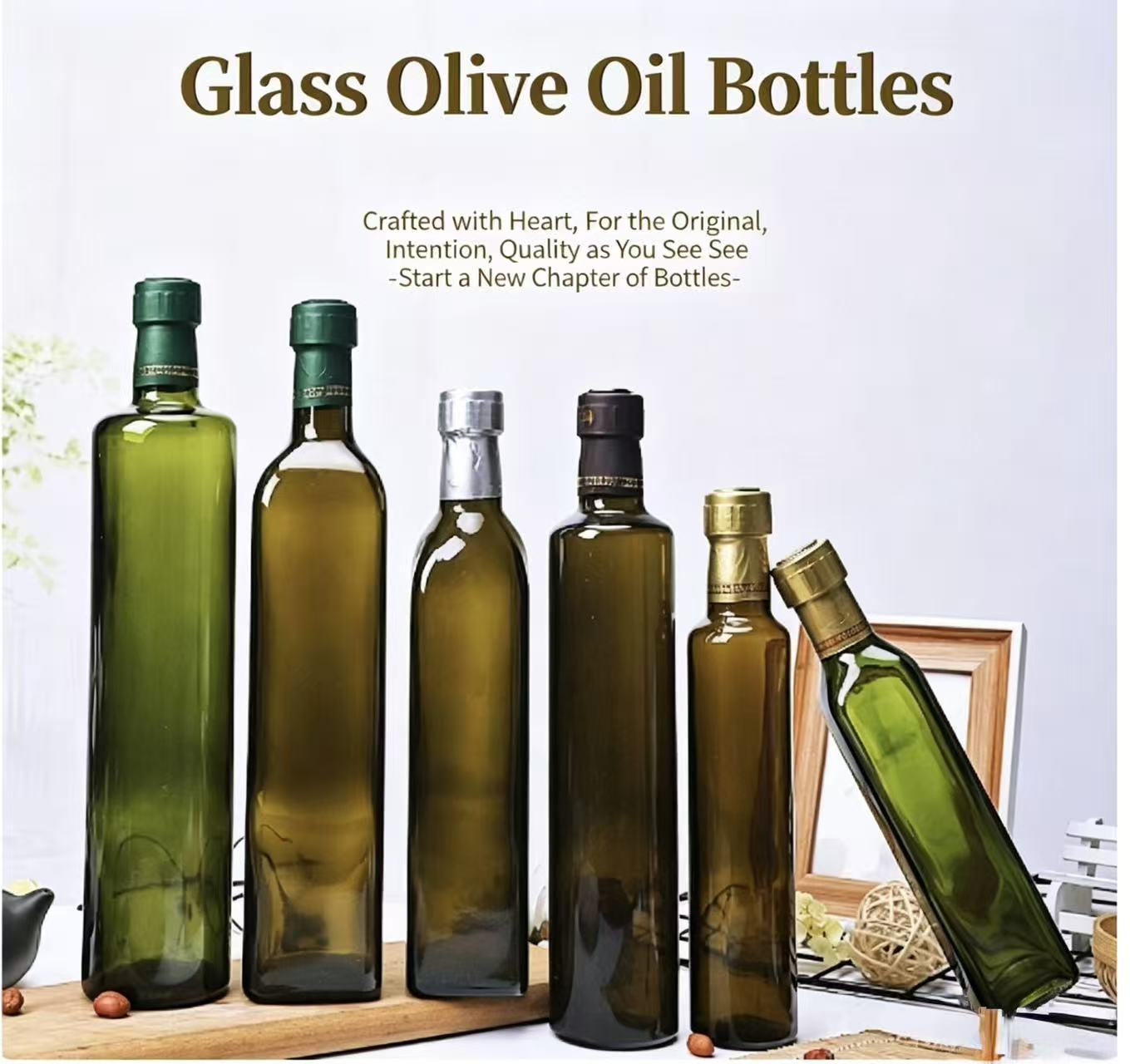
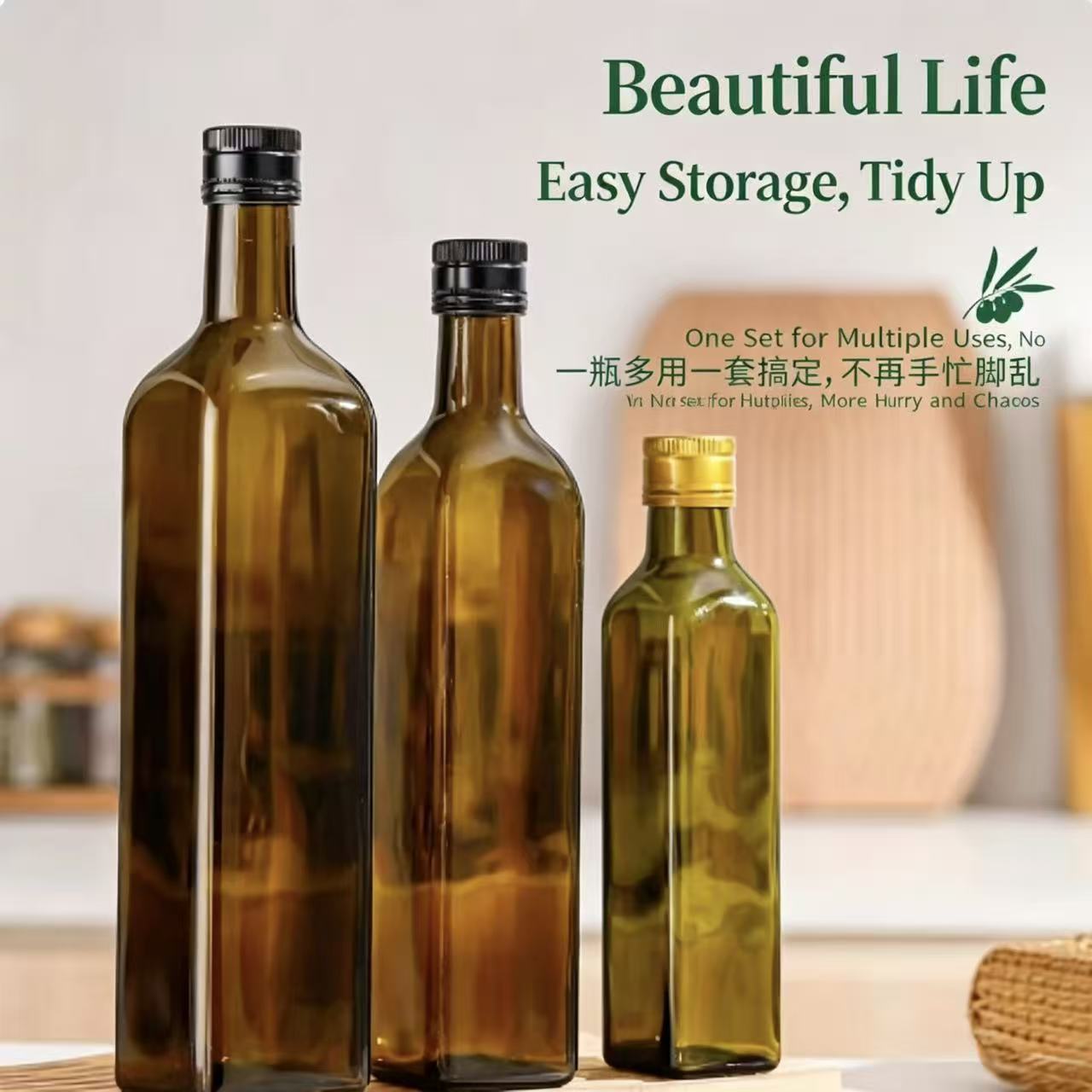
3L 5L Dark Bulk Olive Oil Bottles Wholesale
1. Light Protection: The Science of Dark Glass and Its Selection
This is arguably the single most important technical decision for olive oil packaging. Olive oil, especially extra virgin, is rich in chlorophyll, vitamin E, and polyphenols. These compounds accelerate oxidation when exposed to UV light (especially UV-A in the 320–400nm range), leading to off-flavors (rancidity), color fading, and nutritional loss.
a) Dark Green Glass: The global standard. It blocks approximately 90% of UV radiation while conveying a traditional, natural, and reliable image. Suitable for most mid-to-premium olive oil brands.
b) Amber/Brown Glass: Offers the best UV protection (over 97% blockage), the gold standard for "extreme protection." Often used for pharmaceuticals and highly sensitive foods. Choosing amber communicates a message of "scientific rigor and premium care," ideal for brands highlighting high polyphenol content.
c) Flint (Clear) Glass: Strongly discouraged for any extra virgin olive oil requiring a shelf life beyond one month. Unless your product is for immediate consumption or sold through a protected channel (e.g., a closed specialty store), clear glass will lead to rapid degradation under standard retail lighting. Technical note: Even with an outer carton, once the consumer opens the package, the risk of light exposure remains.
2. Pour Control: From Spouts to Neck Design
While hot sauce needs flow restriction for heat control, olive oil needs pour rate management. A poor design leads to over-pouring, messy countertops, and ruined dishes.
a) Built-in Pour Spout/Drip Ring: The hallmark of a premium olive oil bottle. This is a small ring or ridge molded into the bottle's finish (neck). It allows oil to flow back after pouring, preventing it from running down the outside of the bottle. This is the ultimate solution to the "last drop" problem. Sourcing this requires adding the feature to the mold (customization).
b) External Plastic Pour Spout: An accessory fitted over the bottle finish. It offers flexibility but adds plastic cost and can be lost by consumers.
c) Neck Geometry: A tapered, slender neck profile offers significantly better pour control than a straight, cylindrical neck. This is a key detail when selecting stock bottle shapes.
IV. Mastering the Closure System: Caps, Inner Seals, and Tamper-Evident Mechanisms
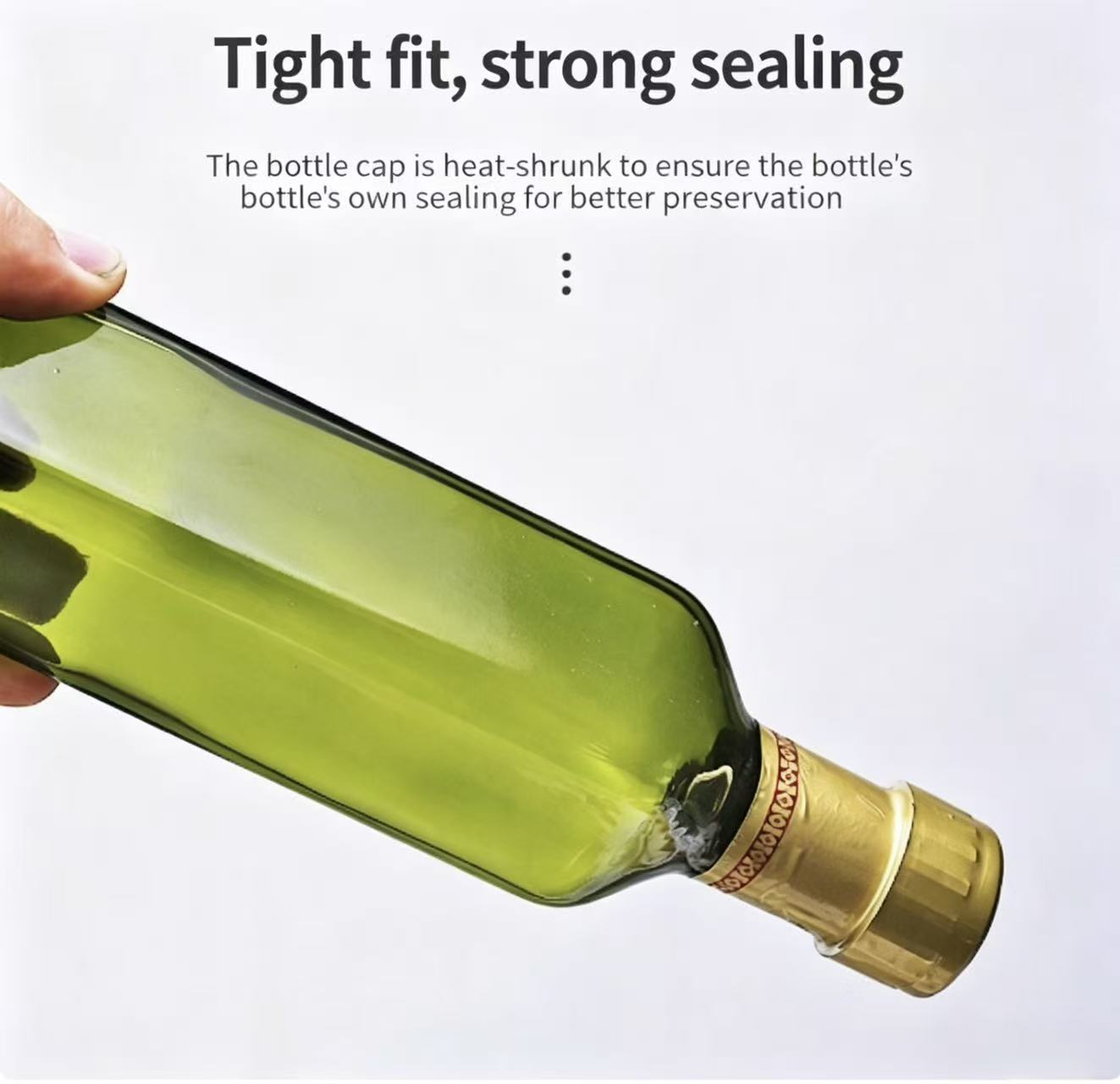
Olive oil closures must simultaneously solve three problems: oxygen ingress (oxidation), liquid leakage (pour control), and tamper evidence.
V. Sourcing Models: Working with Manufacturers vs. Distributors vs. Importers
When sourcing olive oil bottles wholesale, you will encounter a more complex supply chain than for hot sauce: local distributors, large domestic glass manufacturers, and overseas specialty glass importers.
1. When to Buy from Distributors/Wholesalers
-
Best for: Startup brands, small test batches (<5,000 units), emergency restocking.
-
Advantages: Very low MOQs (as low as one case), immediate availability, no import/logistics management.
-
Disadvantages: Highest per-unit cost (typically 30–50% markup), limited selection (common green and flint stock bottles), no customization (color depth or unique shapes).
2. When to Source Directly from Domestic Factories
-
Best for: Growing to established brands, annual volumes >30,000 units, cost control as priority.
-
Advantages: Lowest unit cost (no middleman), ability to customize color (e.g., specific shade of green), ability to add embossed logos on glass.
-
Disadvantages: High MOQs (typically 30,000–50,000 units), self-managed logistics, large capital commitment.
3. When to Import from Overseas Specialty Bottlers (e.g., Italy, France)
-
Best for: Ultra-premium brands, leveraging "Made in Italy" narrative, high budget.
-
Advantages: Unmatched design aesthetics and brand storytelling. Italian and French glass factories have undisputed traditions in design and surface finishing (e.g., frosted glass, applique decals).
-
Disadvantages: Highest cost (bottle itself may be 3–5x domestic prices), extremely long lead times (2–4 months for sea freight + customs), very high MOQs (full container load).
-
VI. Streamlining the Supply Chain: MOQs, Customization, and Turnkey Solutions
1. The Reality of MOQs for Custom Olive Oil Bottles
Glass manufacturing is a capital-intensive industry. Creating an exclusive mold for a unique bottle shape typically costs between ¥8,000 – ¥30,000 RMB, depending on complexity and size. Consequently, factories require high MOQs, usually 50,000–100,000 units, to amortize mold and production line changeover costs.
Compromise Solutions:
-
Semi-customization: Use a factory's existing stock (private) mold but customize the color (e.g., run a specific shade of emerald green) and surface treatment (e.g., frosted or sprayed finish). MOQs can drop to 20,000–30,000 units.
-
Local customization: Add an embossed or silk-screened logo to a stock bottle. This can achieve lower MOQs than a full custom shape.
2. The Advantages of One-Stop Sourcing
Turnkey sourcing is even more critical for olive oil than for hot sauce because of the high number of tightly-toleranced components: bottle, inner seal, induction foil, cap, and external pour spout. A mismatch in any single component (e.g., inner seal too tight, foil failing to seal) will halt your entire filling line.
By choosing a one-stop supplier, you can:
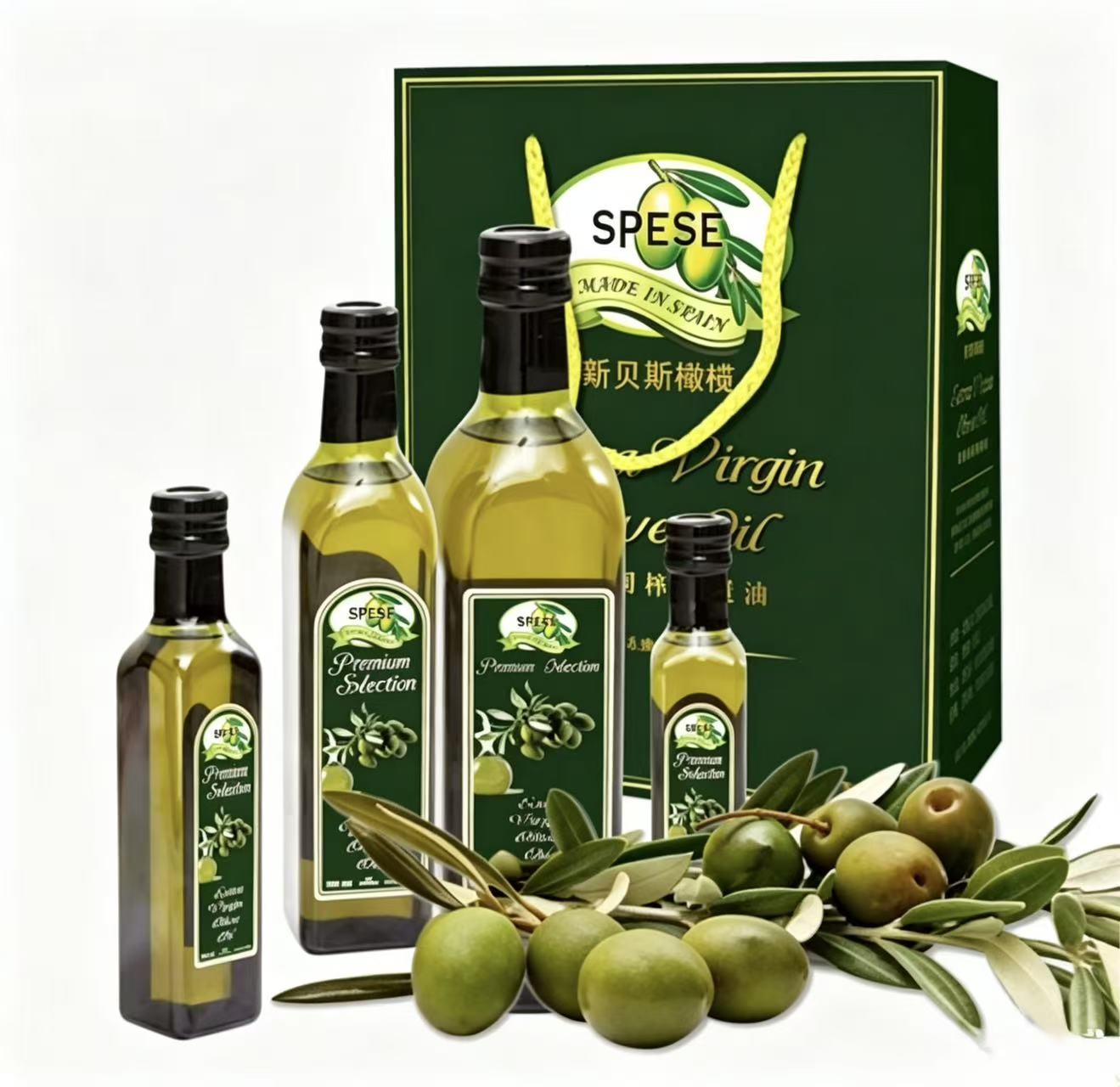
a) Source perfectly matched glass bottles, foil-lined inner seals, tamper-evident caps, and plastic pour spouts from a single point of contact.
b) Receive compatibility testing performed before components leave the factory.
c) Streamline contracts, payments, and logistics, allowing you to focus on your olive oil.
VII. Evaluating an Olive Oil Bottle Supplier: A Buyer's Checklist
Before signing a contract, evaluate potential suppliers against these dimensions:
1. Regulatory and Compliance Standards
-
Food Contact Safety Certification: Must provide test reports compliant with GB 4806.5 (China) , FDA (USA) , or EU (European Union) standards, confirming heavy metal extraction limits are within safe bounds.
-
Traceability: Can the supplier trace every batch of raw glass material? This is critical in the event of a quality issue.
2. Technical Capability Assessment
-
Dark Glass Formulation: Can they consistently produce your specified shade of dark green or amber? What is the batch-to-batch color variation? (Request a color tolerance report.)
-
Thermal Shock Resistance: Even though olive oil is typically cold-filled, temperature differences between the filling line, bottle washer, and warehouse can cause breakage. Request thermal shock delta T data (typically must withstand >42°C differential).
3. Production Capacity and Lead Times
-
Daily Output: Is your maximum monthly requirement less than 30% of their daily capacity? If so, you may not receive priority scheduling.
-
Lead Times: Stock bottles typically require 30–45 days. Custom bottles (new mold) typically require 60–90 days. Always plan for at least 3 months of lead time, especially before the autumn olive harvest and bottling season.
4. Quality Control System
-
In-line Inspection: Does the factory use Automated Optical Inspection (AOI) machines to reject bottles with bubbles, cracks, or contamination?
-
Pre-shipment Inspection: Do they support third-party inspection (e.g., SGS) or provide a detailed pre-shipment inspection report?
-
VIII. Conclusion
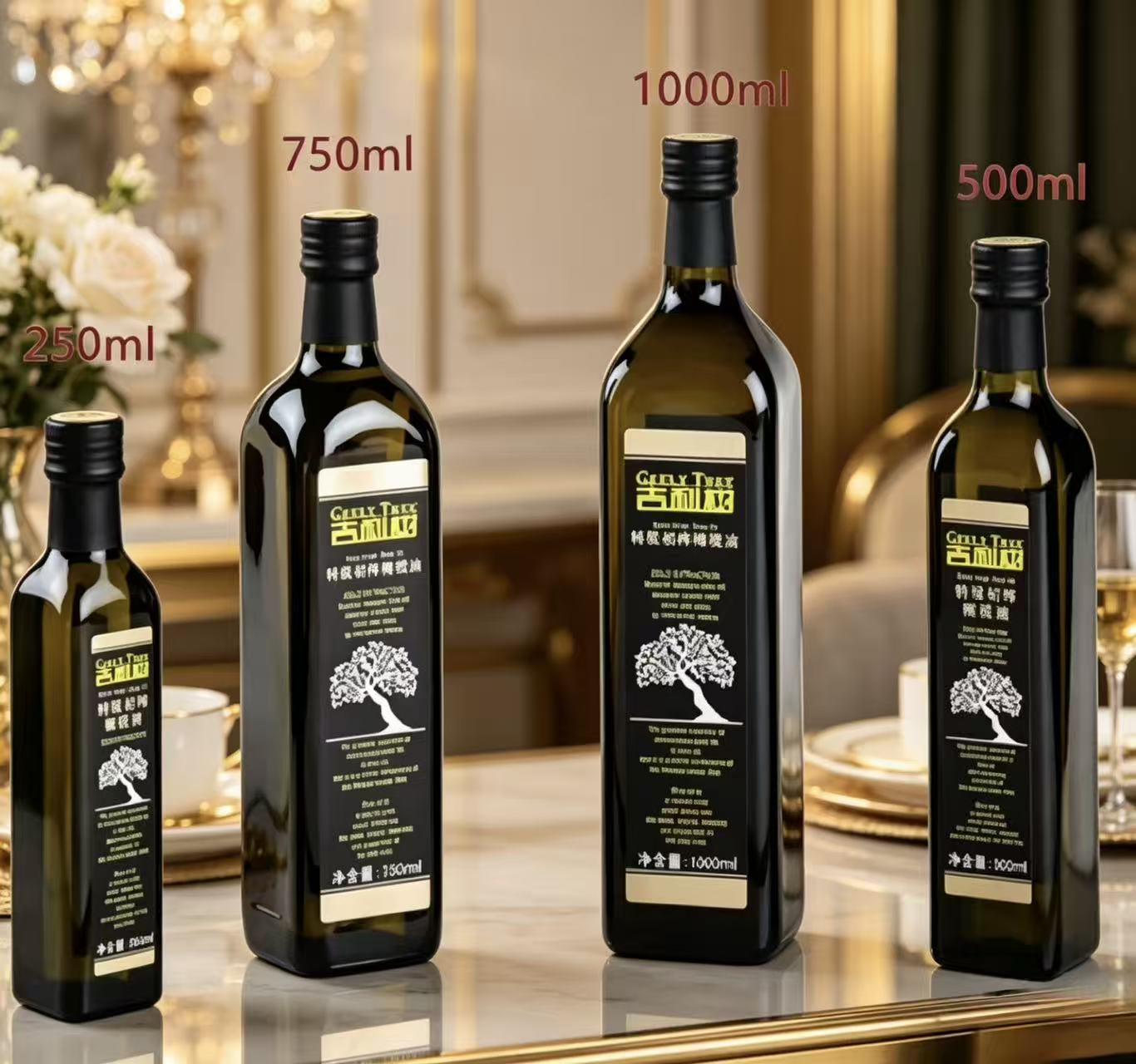
250ml 500ml 750ml 1000ml Dark Extra Virgin Olive Oil Bottles Wholesale
Sourcing your olive oil bottles wholesale is far more complex than a simple purchasing task—it is a strategic business decision that directly impacts product integrity, operational efficiency, and brand perception. From understanding market segmentation (extra virgin demands dark glass) to mastering technical challenges (light transmission rates, drip-free pour spouts, hermetic foil seals) and selecting the right sourcing partner (distributor, domestic factory, or overseas importer), each step profoundly influences your profitability and supply chain resilience.
As your brand scales, move decisively away from high-cost local distributors and toward a strategic, direct partnership with a manufacturer capable of turnkey, one-stop service. By locking in a partner that can simultaneously deliver high-quality dark glass, precision-matched components, and reliable production capacity, you will protect both your liquid gold from oxidation and your brand from disruption. This allows you to focus on what you do best: bringing exceptional olive oil to tables around the world.
This translation maintains professional B2B terminology, technical accuracy, and the original structure while adapting all units, standards, and cultural references appropriately for an international English-speaking audience.