

Private label juice bottles pass through more hands than the finished label suggests. Brand, product developer, filler, bottle supplier, closure partner, decorator, quality team and logistics provider each hold part of the brief. PauPack uses a handoff chain so the flavor promise, food-contact boundary, filling route and packed product remain connected from the first concept to the next reorder.
Handoff 1: Brand Turns a Shelf Idea Into a Product Brief
State the juice type, pulp or particulates, intended fill, channel, serving occasion, shelf presentation, destination and launch volume. Separate requirements from preferences. PauPack also records what the packaging is not expected to do; this prevents a decorative request from quietly becoming an unqualified shelf-life or process claim.
Handoff 2: Product Development Defines the Contact Boundary
Identify juice composition, acidity or other relevant characteristics, fill temperature, storage, contact time and required product studies. The U.S. FDA explains that a food-contact article is the finished item formed from food-contact materials and substances. Qualified food-safety and regulatory owners should evaluate the exact bottle, cap, liner, seal, ink, label and adhesive route for intended use.
Handoff 3: The Filler Describes the Real Line
Record bottle infeed, rinsing or preparation where used, filling method, temperature boundaries, headspace, closure application, coding, inspection, accumulation and case packing. PauPack maps equipment contact and clearance to the bottle drawing. A container that works in a hand-filled sample may still need a line trial before commercial approval.
Handoff 4: PauPack Shortlists the Bottle and Closure Together
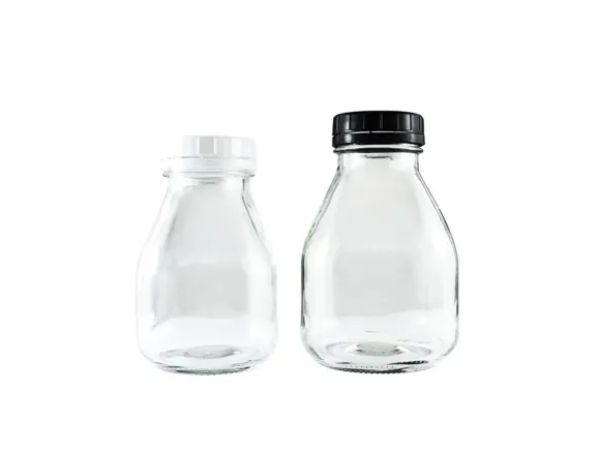
Compare stock formats first when speed and low tooling exposure matter. Review custom color, embossing or new geometry only when the commercial role justifies added development gates. PauPack matches neck finish, cap or closure, liner and tamper-evidence route as one assembly and keeps all codes on the same comparison sheet.
The Handoff Record
| Owner | Must provide | Must receive back |
|---|---|---|
| Brand | Positioning, volume and artwork direction | Approved filled presentation |
| Product/filler | Formula and process boundaries | Line-relevant identified samples |
| Packaging team | Bottle, closure and packing specification | Fit, quality and change evidence |
| Logistics | Route and handling assumptions | Approved case and pallet reference |
Handoff 5: Capacity Becomes a Shelf Decision
Nominal volume, target fill, headspace, bottle proportions and label panel shape work together. Compare single-serve, family, sampler and food-service roles. PauPack asks the filler to confirm production-relevant fill presentation so private label juice bottles are not approved from an empty photograph or a capacity number alone.
Handoff 6: Decoration Receives a Real Geometry
Map label or print to curves, seams, grip zones, coding areas and the visible fill. Define artwork version, color reference, registration, adhesion assumptions and protected surfaces. PauPack's design support uses production-relevant dielines and samples. The legal and regulatory owner approves destination language; the decorator should not be asked to infer it.
Handoff 7: Quality Translates Expectations Into Checks
Define incoming identity, dimensional or interface checks, workmanship limits, closure observations, decoration criteria and packed-product review. Separate safety- or function-related conditions from cosmetic variation. PauPack uses physical masters and controlled methods instead of adjectives such as perfect, premium or food grade without an evidence boundary.
Handoff 8: Logistics Approves the Complete Case
Record case count, divider or tray, orientation, top load assumptions, pallet pattern, storage and route. Select testing based on the actual distribution objective with qualified owners. PauPack keeps the bottle, filled product and secondary pack together because damage can arise from their interaction, not from an isolated component defect.
Handoff 9: Purchasing Opens the Cost Beyond Unit Price
Compare bottle, closure, liner or seal, decoration, setup, inspection, cartons, pallets, spares, freight and residual inventory. Different components can have different minimums and case multiples. PauPack models sellable units under base, slow and upside forecasts. This shows when a custom cap or low-volume label creates more exposure than the glass itself.
Handoff 10: The Launch Team Owns Decision Dates
Glass, closures, decoration, filled trials, packed approval and freight booking follow different schedules. Add customer response dates and named approvers. PauPack shows the impact of late formula, label or volume decisions. A realistic schedule for private label juice bottles includes the time required to learn and approve, not only supplier production days.
Build the SKU Family Before Approving One Bottle
A core juice, seasonal flavor and sampler may share glass and cap while using different labels and cartons. Map shared and unique components. PauPack checks how forecasts affect component minimums, leftover inventory and line changeovers. A strong private-label range is designed as a replenishment system, not as a row of unrelated renderings.
Give Sales a Truthful Product Story
Sales teams should be able to explain what is customized, which materials contact the beverage, which closure route is used and which claims require destination review. PauPack avoids broad environmental or preservation promises that are not tied to evidence. The technical file and commercial language should describe the same construction.
Set a Complaint Evidence Route Before Launch
Define which photographs, codes, fill records, closure observations and returned samples customer service should collect. Leakage, damaged decoration, incorrect fill perception and transit breakage need different investigations. PauPack ties every complaint to component and production identity before assigning cause or corrective action.
Create the Reorder Handoff
Archive drawings, component codes, food-contact documentation, filled masters, artwork, inspection rules, packed references, deviations and supplier change requirements. PauPack connects the food and beverage range, quality process and project services to the same controlled record.
Invite PauPack Into the First Handoff
Send the juice profile, process, capacity, closure, decoration, quantities, destinations and target date. PauPack can structure private label juice bottles as a complete handoff chain that purchasing, filling, quality and brand teams can each use. The goal is not more paperwork; it is fewer invisible assumptions at launch.
Run a Preflight Meeting Before Mass Production
Review the latest drawing, component codes, filled sample, artwork, case, inspection criteria, quantities, delivery assumptions and open deviations in one short meeting. PauPack records the owner and due date for every unresolved point. This catches version drift while the team can still correct files or material, rather than after filled inventory has been produced.
Measure Handoff Quality, Not Email Volume
A useful handoff answers the next team's decision without forcing them to reconstruct the project. Track missing inputs, reopened approvals, version errors and unplanned residual components. PauPack uses these signals to improve the next private label juice bottles launch and shorten repeat-order review without weakening control.
Give the Filler a Golden Case, Not Only a Golden Bottle
Retain an approved filled bottle together with its cap, label, code position, divider and case orientation. PauPack calls this the golden case because it shows how private label juice bottles should look and travel as sellable units. It also gives line, quality and logistics teams one physical reference for scale-up.
Plan Seasonal Artwork Without Breaking Component Control
A seasonal flavor may change label and carton while keeping glass and closure stable. Use a version matrix that separates common components from campaign-specific ones, and require the artwork file to point to the approved bottle geometry. PauPack keeps private label juice bottles flexible without letting a short promotion overwrite the core technical specification.
Reconcile Forecast, Case Multiple and Filling Loss
Translate the sales forecast into filled units, component order quantities, setup units, expected process loss, samples and spare parts. Round each component by its real case or production multiple, then show residuals. PauPack uses the calculation to prevent a launch from having enough glass but too few caps, labels or dividers.
Define the End of the Handoff Chain
The project is not closed when bottles arrive. Close it when filled and packed evidence is approved, deviations are dispositioned, remaining inventory is known and the next-order file is current. PauPack uses this final gate to make private label juice bottles easier to replenish across new flavors, regions or channels.
Frequently Asked Questions
What should the first juice bottle brief include?
Include the beverage profile, process, target fill, closure, channel, quantity, destination and launch date.
Why must the filler join early?
Filling, headspace, closure application, equipment contact, coding and packing affect bottle selection.
Should bottle and cap be approved together?
Yes. Bottle finish, closure, liner or seal and application method form one system.
What is a food-contact article?
FDA terminology describes it as the finished item formed from food-contact materials and substances.
When is a line trial useful?
Use it when hand samples cannot prove infeed, filling, closing, coding, inspection or packing behavior.
How should capacity be approved?
Review nominal volume, target fill, headspace, visible presentation and process accuracy together.
Why can component minimums differ?
Glass, caps, liners, labels and cartons may follow different production routes and case multiples.
What should a packed reference contain?
It should identify the filled bottle, closure, decoration, divider, case count, orientation and protection.
When should the packaging be reviewed again?
Review changes to beverage, process, bottle, closure, decoration, packing, supplier or distribution.
What protects a repeat order?
Controlled codes, drawings, documentation, filled masters, inspection records, packing evidence and change rules protect it.