

Your product might be pure, powerful, and beautifully formulated—but if your packaging doesn’t reflect that, you’ve lost your first chance to win the customer.
Custom essential oil packaging boxes offer tailored protection, premium presentation, and branding alignment that elevates your product, builds trust, and increases perceived value.
In a market driven by sensory appeal, safety, and storytelling, a custom box isn’t just packaging—it’s your competitive advantage.

What are the benefits of custom boxes?
Generic boxes protect. Custom boxes persuade.
Custom boxes offer strategic advantages across protection, marketing, and logistics—designed to fit your product dimensions, reflect your brand identity, and improve user experience.
Whether you're targeting health-conscious buyers or retail stores, customized packaging tells your story the moment someone picks up the product.
Benefits Breakdown
| Benefit | Description | Business Impact |
|---|---|---|
| Perfect fit | Reduces movement, breakage, leakage | Fewer returns, safer shipping |
| Branded design | Matches your colors, logo, and tone | Increases shelf appeal, brand recognition |
| Enhanced unboxing experience | Adds layers, inserts, and surprises | Drives word-of-mouth and online reviews |
| Value perception | Looks more premium, justifies higher pricing | Boosts conversion and repeat sales |
| Regulatory compliance | Room for ingredient lists, warnings, usage directions | Supports global export and retail readiness |
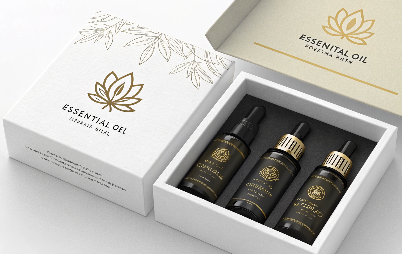
At PauPack, we specialize in building custom essential oil boxes that combine form, function, and feel. From single-bottle cartons to luxury gift sets, we design every box to meet both performance standards and brand storytelling goals.
What is the best packaging for essential oils?
Purity starts with the bottle—but it ends with the box.
The best packaging for essential oils uses UV-resistant glass bottles (amber or cobalt) with tamper-proof closures, paired with custom-fit boxes that protect against light, impact, and oxidation.
Not all oils are the same. Packaging must reflect the product’s use case, target audience, and retail environment.
Best Practices in Oil Packaging
| Component | Optimal Choice | Why It Matters |
|---|---|---|
| Bottle | Amber glass, 5–30ml | Preserves chemical stability |
| Cap | Dropper, roller, or tamper-evident | Dispensing accuracy, user safety |
| Inner tray | Foam, paperboard, molded pulp | Keeps bottles secure in transit |
| Outer box | Kraft, rigid, or magnetic closure | Combines protection and premium feel |
| Print materials | Waterproof, oil-resistant labels | Maintains quality through daily use |
PauPack’s essential oil kits are modular and scalable—ideal for both indie brands launching a 3-piece starter set and established companies creating 12-oil collections with blend guides.
What is the best packaging material for oil?
Material matters—not just for cost, but for product stability and sustainability.
For essential oils, the best packaging materials include amber or cobalt glass for the bottle, and rigid paperboard or kraft paper for the box—designed to block light, withstand pressure, and reflect brand values.
Key Material Considerations
| Material | Use | Strengths |
|---|---|---|
| Amber glass | Bottles | UV protection, chemical resistance |
| Cobalt glass | Bottles | UV-resistant + premium appearance |
| Rigid paperboard | Outer boxes | Durable, luxury feel, customizable |
| Kraft paper | Eco-friendly boxes | Sustainable, natural aesthetic |
| EVA or molded pulp | Inner fitment trays | Holds bottles securely, lightweight |
At PauPack, we provide FSC-certified, food-grade packaging materials, supporting our clients’ sustainability goals and compliance with international safety standards.
Is there a difference between cheap and expensive essential oils?
The oil may be the same species—but the difference in quality and presentation is dramatic.
Yes, expensive essential oils often differ from cheaper alternatives in terms of purity, extraction method, origin, and packaging—all of which impact customer experience and perceived value.
Packaging is one of the most visible differences. Cheap oils often come in generic, clear, or plastic bottles with basic labels. Premium oils use dark glass, tamper seals, and custom boxes—which signal trust and justify the price.
Value Signals in Packaging
| Quality Level | Bottle & Box Features | Consumer Perception |
|---|---|---|
| Low-end | Clear bottle, no insert, paper label only | Generic, low-value, possible counterfeit |
| Mid-tier | Amber bottle, printed label, basic folding box | Trustworthy, mass market |
| High-end | Custom bottle, branded box, foam insert | Premium, giftable, therapeutic-grade |
At PauPack, we help brands bridge this gap—offering affordable customization that elevates even small-batch oils to a premium look and feel. With low MOQs, we make quality packaging accessible to startups and scale-ups alike.
Conclusion
Custom essential oil packaging boxes are more than protection—they’re a projection of your product’s value, your brand’s voice, and your customer’s expectations. From bottle to box, the right packaging is what turns a drop of oil into a lasting impression.