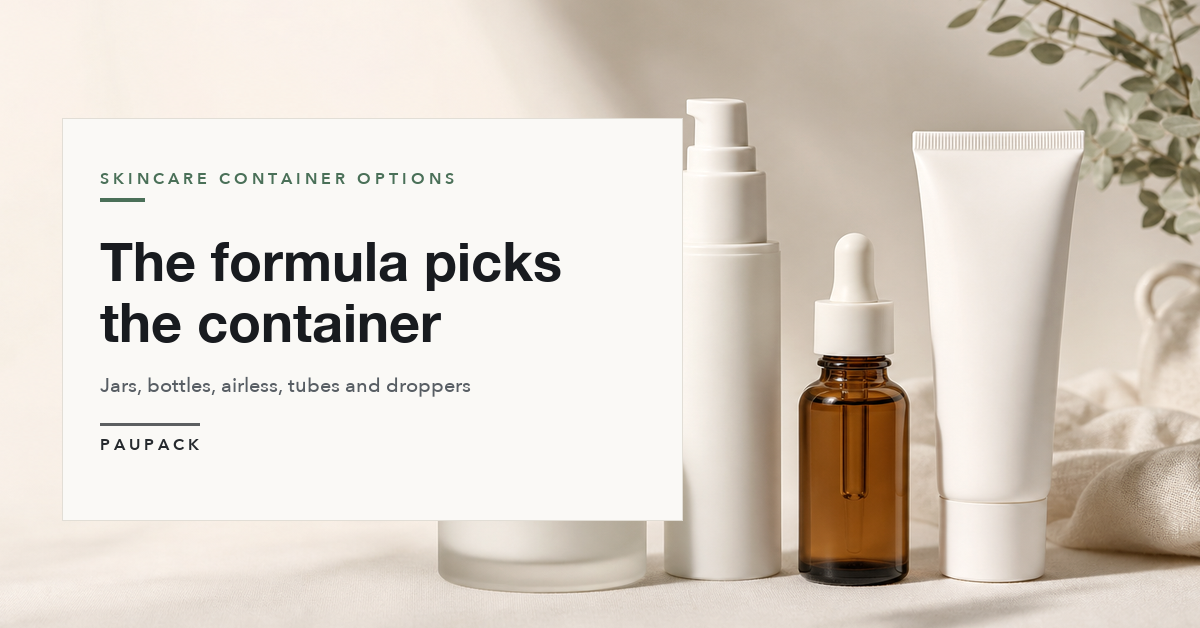


A skincare package can look right in a product photo and still be wrong for the formula, filling plan, or customer habit. Cream jars, lotion bottles, and bottle-and-jar sets each solve a different problem. The useful question for a buyer is not which one looks more premium. It is which pack will protect the product, work with the filling process, fit the label, survive shipping, and make sense for the way the customer uses the formula.
This guide is written for skincare brands, private label buyers, spa product teams, and sourcing managers comparing glass cream jars and lotion bottles before asking for samples or a quotation.

Start With the Formula, Not the Container
A thick cream usually asks for a wide-mouth jar because the customer needs to scoop or apply a heavier texture. A lotion, serum, toner, or lighter emulsion may work better in a bottle because the customer expects cleaner dispensing and easier dose control. A set that includes both a jar and a bottle can make sense when the brand sells a complete face-care routine.
Before comparing prices, write down the formula texture, fill volume, target sales channel, expected shelf life, and whether the product will be used at home, in a spa, in travel kits, or as a gift set. That one page of information helps a supplier recommend the right format instead of quoting a container that only matches a reference photo.
When Glass Cream Jars Make Sense
Glass cream jars are useful for moisturizers, masks, balms, body butter, eye cream, and other products where the consumer expects a rich texture and a premium hand feel. A jar also gives more visual weight on shelf, especially for skincare brands that want the pack to look stable, clean, and giftable.
The tradeoff is that a jar exposes more product surface each time it is opened. Brands should think about formula compatibility, liner selection, cap fit, and how the customer will use the product. If the cream is sensitive, the team may need to discuss sealing, spatulas, secondary packaging, or a bottle option with the technical side of the project.
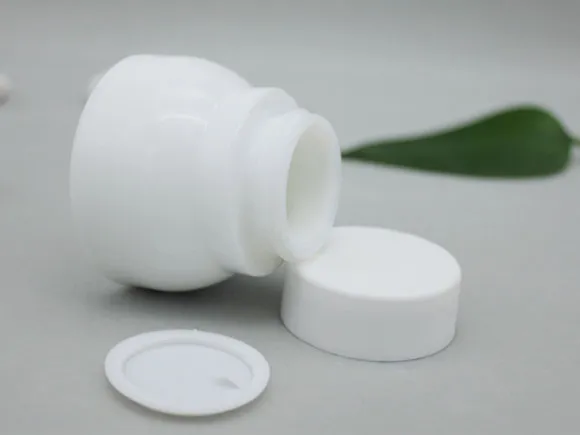
For a jar sample, check the inside finish, cap threading, liner contact, decoration area, base stability, and whether the label or printing still looks balanced after the jar is filled. A jar that looks elegant when empty may look very different when the product color is inside.
When Lotion Bottles Are the Better Choice
Lotion bottles are stronger when the formula should be dispensed in a controlled amount. They are often used for facial lotion, light cream, body lotion, serum-style products, cleanser, toner, and other liquid or semi-liquid formulas. A bottle can reduce mess, support repeatable use, and make the product feel more hygienic to the customer.
The closure is the key detail. A lotion pump, spray pump, screw cap, dropper, or reducer changes the user experience and the filling requirement. Buyers should confirm neck finish, pump compatibility, output volume, cap torque, dip tube length, leakage risk, and whether the pump can handle the actual viscosity of the formula.
Comparison Table for Buyers
| Packaging format | Best fit | Buyer checks |
|---|---|---|
| Glass cream jar | Face cream, mask, balm, body butter, eye cream | Cap fit, liner, label area, weight, carton protection, filled appearance |
| Lotion bottle | Lotion, cleanser, toner, serum-style products, light emulsions | Pump fit, output, dip tube, leakage, viscosity, shoulder label space |
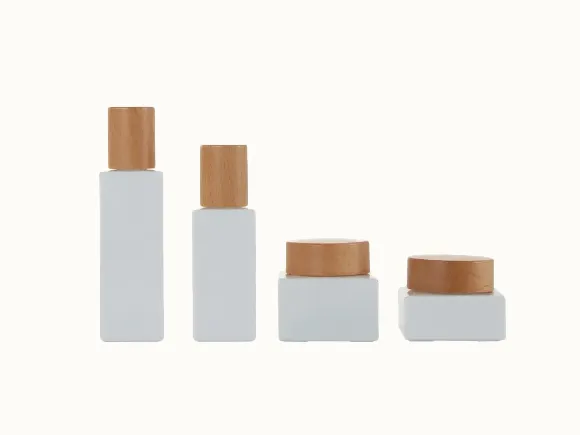
| Bottle and jar set | Skincare routines, gift sets, spa lines, private label collections | Color matching, cap consistency, decoration alignment, carton layout, MOQ |
Do Not Separate Decoration From the Pack Choice
Decoration can change the right container. A short jar may be perfect for a simple front label but too crowded for multilingual copy. A tall bottle may look clean with screen printing but less balanced with a large paper label. A wooden cap can support a natural brand story, while a simple white cap may be better for clinical skincare positioning.
For new brands, labels are usually the most flexible starting point because they keep sampling and MOQ easier to manage. Screen printing, hot stamping, frosting, coating, and custom color can add value, but they may affect lead time, minimum order quantity, and sample approval. Buyers can browse the PauPack products page before sending reference photos.
Sample Checks Before Bulk Production
A serious sample review should include more than appearance. Fill the sample with the real or trial formula if possible. Check whether the jar opens cleanly, whether the bottle dispenses properly, whether the pump returns after pressing, whether the cap feels stable, and whether the filled pack still matches the brand's visual direction.
Then test the supporting details: label adhesion, carton fit, tray or divider space, export packing, barcode placement, and how the pack looks in a simple product photo. If the product will be sold in the U.S. market, the brand team should also review cosmetic label wording with the appropriate internal or external compliance support. The FDA cosmetics labeling guidance is a useful public reference for U.S. cosmetic labeling basics.
What to Send for an Accurate Quote
Good quotation requests are specific. Send the formula type, target capacity, preferred material, bottle or jar reference, cap or pump requirement, decoration method, order quantity, destination market, carton preference, and any deadline. If the project is still early, say that too. A supplier can often suggest a stock item first, then quote decoration or custom options once the direction is clearer.
PauPack works with buyers on glass bottles, jars, caps, pumps, decoration, sampling, and packaging project details. Learn more about the company on the PauPack about page, or send project requirements through the PauPack contact page.
FAQ
Are glass cream jars better than lotion bottles?
Neither format is always better. Glass cream jars are usually stronger for rich creams, balms, and masks. Lotion bottles are usually better for liquid or semi-liquid formulas that need cleaner dispensing and better dose control.
Can a skincare brand use both jars and bottles in one line?
Yes. Many skincare brands use a jar for cream and a bottle for lotion, toner, cleanser, or serum-style products. The key is to keep color, cap style, decoration, and carton design consistent.
What should buyers check before approving samples?
Check formula compatibility, closure fit, pump output, leakage risk, label area, decoration quality, filled appearance, carton protection, and packing method before bulk production.
What helps PauPack quote faster?
Send capacity, container type, cap or pump requirement, decoration method, order quantity, destination market, reference images, and any packaging or compliance requirements.