

Even nature's purest extracts have a shelf life. Left too long, your lavender may smell like... nothing at all.
Yes, essential oils can go bad over time—oxidizing, losing potency, or even developing an off smell. Proper storage and usage help extend their shelf life.
Essential oils don’t “expire” in the way food does, but their quality and aroma can degrade—especially if exposed to light, heat, or air. Let’s look at the signs and science behind essential oil spoilage.

How can you tell if essential oils have gone bad?
Just because it’s still fragrant doesn’t mean it’s still effective—or safe.
You can tell an essential oil has gone bad if the scent is dull, sour, or different than before, or if the texture changes, such as becoming cloudy or sticky.
These changes indicate oxidation—a natural process where oils react with oxygen and lose their therapeutic properties.
Signs Your Oil Is Past Its Prime
| Symptom | What It Means | Action Needed |
|---|---|---|
| Faded or altered scent | Oil has oxidized or broken down | Discard or use for cleaning |
| Cloudy or thick | Contaminants or degradation present | Stop skin use immediately |
| Skin irritation | Oil has chemically changed | Do not use topically |
| Sticky residue | Oxidation or carrier oil separation | Replace the bottle |
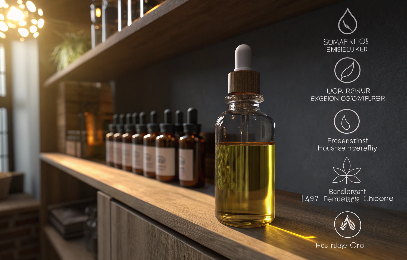
At PauPack, we often advise our clients to package oils in amber or cobalt blue bottles—not just for aesthetics, but because they block UV light that accelerates spoilage. Combined with airtight droppers and shrink seals, this keeps the oil fresher longer.
Prevention through Packaging
The wrong bottle = faster spoilage. The right one = months (or years) of potency. That’s why packaging isn’t a small decision—it’s a shelf-life guarantee.
Do essential oils lose their scent?
They sure can—and when they do, they lose their magic.
Yes, essential oils gradually lose their scent over time due to oxidation, especially when stored improperly or exposed to air and light.
Each oil has a different degradation timeline. Citrus oils like lemon and orange go bad faster (6–12 months), while heavier oils like patchouli or sandalwood may last years.
Shelf Life by Oil Type
| Oil Type | Typical Lifespan | Storage Advice |
|---|---|---|
| Citrus (lemon) | 6–12 months | Keep cool and out of light |
| Herbaceous (lavender) | 1–2 years | Use within 18 months for full effect |
| Woody (cedarwood) | 4–6 years | Store in amber glass bottles |
| Resins (frankincense) | 5+ years | Use dropper caps to reduce air contact |
That’s why dropper bottles and airtight closures aren’t just about user convenience—they’re essential to preserving potency. At PauPack, we provide packaging solutions specifically designed to extend oil shelf life, including UV-blocking glass and tamper-evident seals.
Can You Restore the Scent?
Once oxidized, an oil’s scent and function are often lost for good. No freezing, shaking, or wishing will bring it back. When in doubt, swap it out.
When should you throw away essential oils?
You want your oils to heal—not harm. There comes a time to let go.
You should throw away essential oils when they smell rancid, cause irritation, look cloudy, or are past their recommended shelf life.
Old or spoiled oils aren’t just ineffective—they can be irritating or even unsafe, especially when applied to skin.
Safe Disposal Tips
-
Don’t pour them down the drain—they’re concentrated chemicals.
-
Dilute with a carrier oil and use as a cleaning solution.
-
Contact your local hazardous waste program for disposal guidance.
At PauPack, we help brands build trust by printing expiration timelines and batch numbers directly on the label or box. It’s a small detail that communicates professionalism and transparency—especially important in regulated markets.

What is the 30/50/20 rule for essential oils?
This isn’t a safety guideline—it’s a scent formula.
The 30/50/20 rule refers to how you blend essential oils: 30% top notes (fast-fading), 50% middle notes (heart of the scent), and 20% base notes (long-lasting base).
It’s a common technique used in perfumery and aromatherapy to create a balanced and pleasant aromatic profile.
Note Types Explained
| Note Type | Examples | Function | Duration |
|---|---|---|---|
| Top | Lemon, peppermint | First impression, uplifting | 30 min – 1 hr |
| Middle | Lavender, geranium | Heart of the scent, balance | 2–4 hours |
| Base | Sandalwood, patchouli | Depth and fixative | 5–12+ hours |
When you’re formulating blends for retail, this ratio helps maintain consistency in how your product performs over time. Packaging plays a role too—especially for boxed sets or multi-oil kits.
Packaging a Balanced Blend
Want to educate your customer? Use packaging to your advantage:
-
Label oils by note type on the box
-
Include a guide or chart insert to teach blending
-
Use color-coded caps or graphics to reinforce the rule visually
This strategy not only builds trust but positions your brand as a knowledgeable guide—not just a product seller.
At PauPack, we work with brands to create packaging that informs and inspires. From tri-fold guides inside boxes to interactive QR code links, we ensure your packaging tells your scent story.
Conclusion
Yes, essential oils go bad—and yes, they can lose their scent. But with smart packaging and a clear understanding of shelf life, you can protect your product, your brand, and your customer’s experience.