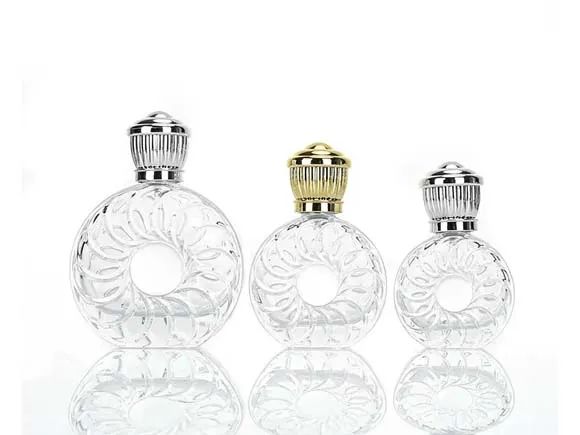


Long before modern glass factories and sprayers, perfume was already a symbol of luxury, seduction, and identity—captured inside remarkable vessels.
In the past, perfume bottles were made from glass, crystal, porcelain, metal, and even stone—often hand-crafted, symbolic, and more valuable than the scent itself.
At PauPack Bottles, we specialize in modern perfume packaging, but we take inspiration from the artistry and innovation of vintage designs. Here's a journey into the bottles that came before us.

What were old perfume bottles made of?
Before the age of industrial glass, perfume bottles were intimate luxury items—carefully crafted from the finest available materials.
Old perfume bottles were made of blown glass, enamel-painted porcelain, crystal, gold, silver, and sometimes semi-precious stones like jade or lapis.
Each material had specific meanings, functions, and cultural ties. In many cases, the bottle itself was more expensive than the liquid inside.
Historical Bottle Materials Overview
| Material | Era & Usage | Characteristics |
|---|---|---|
| Blown Glass | Ancient Egypt, Rome | Lightweight, artistic, fragile |
| Crystal | 18th–19th c. France, Bohemia | Sparkling, faceted, cut by hand |
| Porcelain | 1700s (China/Europe) | Hand-painted, elegant, decorative |
| Metal (Gold/Silver) | Medieval & Renaissance Europe | For perfume oils, worn as amulets |
| Stone (Alabaster) | Egypt, Greece | Opaque, carved, symbolic |
In the 18th and 19th centuries, perfume bottles were often given as aristocratic gifts, designed to be both wearable (like pendants) and collectible.
What did they use for perfume in the 1800s?
The 1800s were a golden age for perfume artistry. The French perfume houses were rising, and with them came opulence in packaging.
In the 1800s, people used flacons made of crystal, porcelain, or hand-blown glass—many sealed with glass stoppers and wax, later evolving to screw tops or atomizers.
Perfume during this time was often oil-based or alcohol-infused colognes. The containers had to reflect their contents—luxurious, refined, and aromatic.
Iconic Bottle Styles in the 1800s
| Bottle Type | Design Notes | Brands/Regions |
|---|---|---|
| Baccarat Crystal | Cut-glass decanters with stoppers | France (Guerlain, Houbigant) |
| Laydown Bottles | Oval or pen-shaped, portable | England, France |
| Scent Lockets | Small perfume vessels worn as jewelry | Victorian Britain |
| Chatelaine Bottles | Hung on belts or purses for quick access | Women’s fashion in Europe |
Interesting fact: The first commercial atomizer wasn’t introduced until the late 19th century. Before that, perfume was dabbed using glass stoppers or corks.
How do you identify vintage perfume bottles?
Identifying a true vintage perfume bottle is both an art and a science—it takes knowledge of design eras, production techniques, and branding.
Vintage perfume bottles can be identified by shape, weight, closure type, maker’s marks, and packaging style—some even carry etched signatures from crystal houses like Baccarat or Lalique.
Key Signs of Vintage Authenticity
| Feature | What to Look For |
|---|---|
| Glass Quality | Bubbles, uneven cuts (pre-1930s), clarity |
| Markings | Brand name, logo, batch codes, etched base |
| Closure Mechanism | Ground glass stopper vs. screw cap |
| Label/Sticker Design | Art Nouveau or Art Deco fonts/images |
| Packaging | Velvet boxes, hand-painted cases |
Common Eras by Style:
-
Art Nouveau (1890–1910): Floral, flowing shapes, pastel colors
-
Art Deco (1920–1940): Geometric, gold trim, symmetry
-
Mid-Century (1950–1970): Sleek lines, early plastics, branding focus
PauPack’s design team often references these historic styles when helping brands create modern perfumes that feel timeless.
What is the history of perfume bottles?
Perfume’s story is as old as civilization itself—and bottles have evolved alongside it, from sacred vessels to brand-defining masterpieces.
Perfume bottles have evolved from ancient alabaster jars in Egypt to ornate crystal flacons in 18th-century France, to modern sprayers that combine art with engineering.
Timeline of Perfume Bottle Evolution
| Time Period | Bottle Evolution | Cultural Significance |
|---|---|---|
| Ancient Egypt (3000 BC) | Alabaster jars with narrow necks | Used in burial rituals and worship |
| Ancient Rome | Blown glass amphorae | Mass production began |
| Islamic Golden Age | Perfume stored in glass vials with calligraphy | Medical and spiritual applications |
| Renaissance Europe | Gold & silver pomanders, wearable perfume | Courtship and high society |
| 18th Century France | Crystal flacons, engraved labels | Rise of perfume maisons (e.g., Guerlain) |
| 20th Century Modernism | Atomizers, branded bottles (Chanel No. 5) | Mass luxury, designer fragrance era |
| Today | Custom glass, refillable sprayers, eco designs | Mix of function, fashion, and sustainability |
Many perfume bottle collectors today value not just the scent, but the craftsmanship of past designs—cut glass, gold plating, enamel paintings, and sculptural caps.
At PauPack, we honor this legacy by offering custom-mold development for glass perfume bottles, allowing modern brands to create collectible packaging with historical inspiration.
Conclusion
Perfume bottles weren’t just containers—they were heirlooms, art pieces, and status symbols. Today’s brands have the opportunity to blend that history with innovation.
When you understand the bottles of the past, you design better ones for the future.