

Essential oils are delicate, aromatic, and valuable—so why do so many brands still package them in generic boxes?
Custom essential oil boxes are packaging solutions specifically designed to protect, present, and promote essential oil bottles, aligning with brand identity while preserving product integrity.
These boxes go beyond function. They’re part of your marketing strategy, a tactile representation of your brand values, and a key factor in customer experience. Whether sold online or in-store, a well-designed box turns a small bottle into a premium product.


What is the introduction of essential oils?
Before we talk boxes, let’s talk about what’s inside.
Essential oils are concentrated plant extracts obtained through distillation or cold pressing, used for aromatherapy, skincare, wellness, and natural remedies.
Each oil carries the essence of its botanical source—its scent, its chemistry, and its therapeutic potential. Oils like lavender calm, peppermint energizes, and tea tree purifies.
At PauPack, we understand that packaging must reflect the oil’s purity, purpose, and positioning. That’s why we build our boxes to match the quality of the product they hold—from dropper bottle to shelf display.
What is the 30 50 20 rule for essential oils?
This foundational rule informs not only how oils are blended—but how they’re grouped and sold.
The 30/50/20 rule describes the ideal composition of an essential oil blend: 30% top notes, 50% middle notes, and 20% base notes—to achieve a balanced, long-lasting aroma.
This ratio affects how customers perceive scent kits and how brands organize multi-oil collections.
Packaging by Note Structure
| Note Type | Role in Blend | Packaging Consideration |
|---|---|---|
| Top (30%) | First impression | Highlight as energizing or refreshing |
| Middle (50%) | Emotional balance | Core focus of box design |
| Base (20%) | Fixative and depth | Emphasize longevity and richness |
PauPack helps brands structure their packaging based on note categories, offering insert trays, visual guides, and usage tips—all housed in a cohesive branded box.
What is the best packaging for essential oils?
The best oil needs the best box to match.
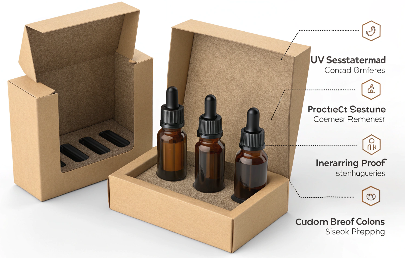
The ideal packaging for essential oils includes dark glass bottles with droppers or rollers, enclosed in custom-designed boxes made of rigid or kraft material, with inserts to prevent movement and exposure.
It must balance protection, presentation, and practical use. Packaging that fails at any of these points risks spills, customer dissatisfaction, or wasted product.
Why Custom Boxes Matter
-
Protection: From light, heat, and shipping damage
-
Presentation: Reinforces price point and value
-
Branding: Communicates quality and philosophy
-
Regulation: Supports ingredient and safety labeling
At PauPack, we use UV-resistant amber glass bottles, tamper-proof closures, and custom-fit carton designs—ensuring your essential oils arrive as fresh and effective as when they were bottled.
What is the summary of essential oils?
Let’s wrap the oil part before we fully zoom in on the box.
Essential oils are plant-derived, aromatic substances used for therapeutic and cosmetic applications, valued for their purity, potency, and versatility across wellness, beauty, and home products.
Their effectiveness relies not only on the source but also on how they are stored and delivered. Without the right packaging, even the finest oil loses power.
This is why custom packaging is not optional—it’s an essential part of the product journey.
Conclusion
Custom essential oil boxes are where function meets feeling. They shield the oil, shape the story, and support the brand. A thoughtful box turns a simple product into a signature experience—and in today’s competitive market, that’s the difference that sells.