

They’re not just boxes—they’re a brand’s first impression, a protector of purity, and a silent salesman.
Essential oil packaging boxes are designed to hold and protect glass bottles, enhance product presentation, and support branding while preserving the oils’ quality and shelf life.
At PauPack, we believe your box should work as hard as your formula. That’s why we design custom boxes that reflect your brand and safeguard every drop inside. Let’s look at what makes the best essential oil packaging—and what to avoid.


What is the best packaging for essential oils?
Essential oils are delicate, so their packaging must be deliberate.
The best packaging for essential oils includes amber or cobalt glass bottles housed in sturdy, UV-blocking boxes made from eco-friendly, shock-resistant materials.
Dive Deeper: Features of great essential oil packaging
Your oil might be premium—but if it arrives broken or looks generic, it won’t sell.
Top Packaging Priorities:
| Feature | Why It Matters |
|---|---|
| UV Protection | Prevents oil degradation |
| Shock Absorption | Protects fragile glass bottles |
| Custom Branding | Enhances shelf and online appeal |
| Eco Materials | Aligns with wellness & sustainability |
| Insert Holders | Prevents movement during shipping |
At PauPack, we offer full OEM/ODM packaging services—from FSC-certified kraft boxes to rigid magnetic closures. Whether you're selling singles or a gift set of six, we tailor it to fit your vibe and your margins.
What is the 30 50 20 rule for essential oils?
This rule helps you blend like a pro—and market with confidence.
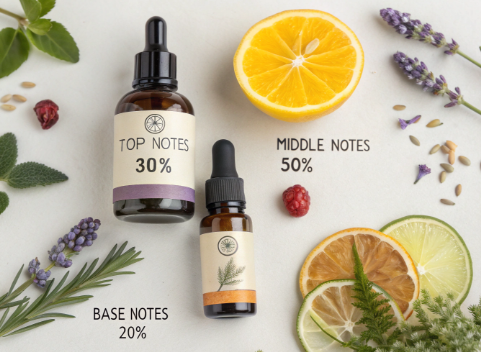
The 30-50-20 rule refers to the ratio of top, middle, and base notes in essential oil blends: 30% top, 50% middle, and 20% base for balanced scent and performance.
Dive Deeper: How this affects packaging
Your scent blend influences your packaging needs. Why?
-
Volatile top notes (30%) require airtight seals to prevent rapid evaporation.
-
Middle notes (50%) define your blend—your box must tell their story visually.
-
Base notes (20%) anchor the aroma—UV-protective packaging helps preserve them.
At PauPack, we match your blend to appropriate bottle and box specs. Heavier, base-note-heavy blends may need stronger droppers and reinforced inserts; lighter blends may benefit from a more elegant, minimalistic look.
What are the materials used in oil packaging?
Scent meets science. Packaging needs to protect—and impress.
Essential oil packaging typically includes glass bottles (amber, cobalt), paper-based outer boxes, EVA or foam inserts, and protective coatings for branding and safety.
Dive Deeper: Material checklist
| Component | Common Material | Purpose |
|---|---|---|
| Bottle | Glass (amber, cobalt) | UV protection, chemical resistance |
| Cap | PP, phenolic resin | Airtight seal, leak prevention |
| Dropper/Pipette | Glass + rubber bulb | Controlled dosing |
| Box | Kraft / Art paper | Branding, shock resistance |
| Insert | EVA foam / molded pulp | Bottle stabilization |
At PauPack, our packaging solutions combine visual appeal with durability. We offer textured finishes, gold foil stamping, and biodegradable inner trays—so your brand can stay green and luxe at once.
What kind of plastic is safe for essential oils?
Plastic isn’t ideal—but sometimes necessary. Here’s what works.
When glass isn’t an option, HDPE, PET, and PP are the safest plastics for short-term storage of diluted essential oils or carrier oils. Never store pure essential oils in low-grade plastic.
Dive Deeper: Safe vs. unsafe plastics
| Plastic Type | Safe for EO? | Notes |
|---|---|---|
| HDPE | Yes (diluted) | Good for short-term or large volumes |
| PET | Yes (diluted) | Often used in cosmetics |
| PP | Moderate | Works for caps and closures |
| PVC/PS | No | Reacts with oils, unsafe |
At PauPack, we recommend using plastic only when necessary—and always in high-integrity formats like HDPE. Our primary recommendation for essential oils remains amber or cobalt glass, paired with recyclable caps and sustainable outer boxes.
Conclusion
Essential oil packaging boxes are more than containers—they're protectors, storytellers, and brand builders. Choose smart materials, pair with the right bottle, and let every unboxing moment speak for your brand.