

Less material, less waste—but how little is too little?
As brands push for greener packaging, reducing PCR bottle weight has become a key sustainability goal. But shaving grams off comes with trade-offs in strength, sealing, and consumer perception.
Let’s explore the limits of going light, and how to do it smart.
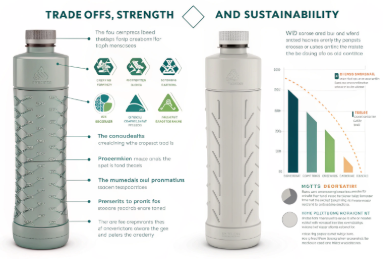

Why Weight Reduction in PCR Bottles Matters for Sustainability and Cost?
Every gram saved helps the planet—and your bottom line.
Lightweight PCR bottles use less resin, lower carbon emissions per unit, and reduce shipping costs. For brands scaling fast, that adds up to real environmental and financial impact.
Key benefits of reduced weight:
-
🌍 Lower carbon footprint (fewer kg CO₂e per bottle)
-
🚛 Freight cost savings (especially for air or small-parcel)
-
💸 Material savings (PCR cost is rising)
-
♻️ Faster recyclability (thinner walls break down more easily)
At PauPack, we’ve helped clients reduce bottle weight by up to 18% without altering shape—simply by refining mold flow, neck geometry, and wall tapering.
What Are the Technical Limits of PCR Bottle Wall Thickness?
There’s a minimum below which performance breaks down.
PCR plastic, especially PET and PP, has structural limits. If walls are too thin, they deform under pressure, can’t hold threads, or crack during filling or capping.
Practical Thickness Thresholds (PCR Resin)
| Bottle Type | Minimum Wall (mm) | Risk Below Limit |
|---|---|---|
| Dropper Bottle (15–30ml) | 0.9 mm | Thread collapse, flex during squeezing |
| Spray/Mist Bottle (50–100ml) | 1.1 mm | Pressure blowout |
| Jar (30–120ml) | 1.5 mm | Cap deformation, base denting |
| Roll-on (10ml) | 1.0 mm | Cap-neck misalignment |
PauPack uses finite element analysis (FEA) during design to simulate pressure, torque, and drop forces—ensuring weight reduction doesn’t mean performance reduction.
How Does Ultra-lightweight Design Affect Durability and Leak Prevention?
Lighter isn’t always stronger—especially with essential oils or active formulas.
Reduced wall thickness can affect barrier properties, drop strength, and cap engagement—leading to leak risk, shelf deformities, or a “cheap” feel.
Common failure points in ultralight designs:
-
Loose cap fit due to neck flex
-
Cracking near shoulder in filling lines
-
Bulging under thermal expansion (e.g. air shipping)
-
Poor user grip, especially with oils
That’s why PauPack uses multi-factor testing, including:
-
Drop tests (1.2m, filled)
-
Thermal cycle tests (−10°C to +45°C)
-
Vibration sim for transport stress
-
Torque-resistance tests with CR caps
Only designs that pass all tests move to mass production—because sustainable packaging must still perform.
How PauPack Engineers Lightweight PCR Bottles Without Compromising Quality?
Smart engineering saves weight the right way.
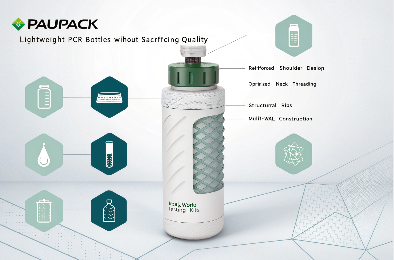
At PauPack, we apply biomimetic structures, stress-redistribution geometry, and multi-wall molding options to reduce material while preserving bottle integrity.
Our lightweighting strategies:
-
🧠 Reinforced shoulder design: Thinner sidewalls, thicker impact zones
-
🧪 Optimized neck threading: Tighter pitch, stronger seal
-
🪶 Material blend tuning: Mixing 70–90% PCR with virgin resin for critical areas
-
⚙️ Mold temperature precision: Prevents weak spots
-
📐 Structural ribs or texture: Adds strength without weight
We also offer real-world testing kits so brands can evaluate the “feel” of lightweight bottles before committing to scale.
How to Communicate Lightweight Packaging as a Premium Sustainability Feature?
Less weight shouldn’t mean less value—it should mean more intention.
Brands can position lightweight packaging as a high-efficiency, low-impact choice by using smart messaging and transparency.
Messaging Examples
| Statement | Why It Works |
|---|---|
| “Reduced resin by 18%, same performance” | Quantifies savings without fear |
| “Lighter bottle = lower carbon shipping footprint” | Shows lifecycle thinking |
| “Engineered for minimalism, made for function” | Aligns with modern brand values |
| “Our most efficient jar yet—because less is more” | Emotionally persuasive |
| “Certified drop-tested lightweight design” | Adds trust through testing |
PauPack supports storytelling with LCA reports, resin documentation, and sample visuals—helping you market your lightweight bottle as a smart, stylish step forward.
What’s Driving the Push Toward Lighter PCR Bottle Designs in 2024?
From cost to carbon, brands are under pressure to trim excess.
The demand for thinner, lighter PCR packaging is driven by shifting regulations, growing consumer expectations for sustainability, and logistics cost increases.
Key Trends Fueling Light-weighting
-
🌱 Scope 3 emissions targets in EU/US packaging policies
-
📦 Freight inflation across global shipping networks
-
🧴 Minimalist aesthetics in beauty and wellness branding
-
🧮 Cost per unit optimization amid PCR material price spikes
At PauPack, we saw a 40% rise in client requests for lightweight variants between 2022 and 2024—especially for global DTC brands trying to reduce carbon per shipment.
How Have Manufacturing Technologies Enabled Thinner Bottle Walls?
Thinner doesn’t mean weaker—if you know how to mold it.
Advances in precision blow molding, temperature control, and multi-zone mold cooling have enabled PCR bottles to go thinner while preserving functional performance.
Key Enablers
| Technology | Impact |
|---|---|
| 3D mold design with FEA (Finite Element Analysis) | Identifies stress points before production |
| Multi-stage blowing | Allows gradient wall thickness for balance |
| High-precision trimming | Reduces weight without risking leakage |
| Resin blend control | Improves flow and hardening in thin walls |
PauPack leverages these technologies in every lightweight PCR project—allowing us to hit wall thicknesses as low as 0.85 mm in 15ml droppers and still pass drop + pressure tests.
What Trade-offs Do Brands Face When Pushing Weight Reduction?
Less is more—until you lose function.
Aggressive weight cuts can affect grip, shelf presence, closure fit, and even perceived value—especially in luxury or refill formats.
Common Trade-offs
| Area | Risk When Too Light |
|---|---|
| User experience | Bottle may feel “flimsy” or deform in hand |
| Label adhesion | Surface flex may cause wrinkling or peeling |
| Cap torque tolerance | Cap may over-squeeze or lose seal |
| UV barrier performance | Thin amber PET may transmit more light |
| Stacking/storage | Base or shoulder may warp in warehouses |
That’s why PauPack always pairs lightweighting with structural testing, real-world use simulation, and branding alignment reviews—so thin doesn’t equal weak.
How PauPack Differentiates Itself in Lightweight Engineering?
Not all lightweight bottles are equal—and not all suppliers can do it well.
At PauPack, our lightweight PCR bottles go through a proprietary 5-step design-to-production process, balancing reduction with resilience.
Our Differentiation
-
🧠 Pre-design consultation: Define optimal weight target based on usage and formula
-
🔍 Material analysis: Select best PCR blend by viscosity and impact rating
-
🛠️ Custom mold tuning: Reinforced necks, ribbed midwalls, or domed bases as needed
-
🧪 Accelerated durability testing: Includes heat chamber, pressure inversion, drop cycle
-
📦 Flexible MOQ: Start with pilot batch before scaling
We also offer side-by-side samples of standard vs lightweight formats to help teams choose confidently with full cost-performance data.
How to Position Lightweight Bottles as a Competitive Advantage?
Don’t hide your reduction—highlight it.
Lightweight PCR bottles can be marketed not as cost cuts, but as signs of intelligent design, material efficiency, and modern environmental values.
Positioning Tips
| Approach | Example |
|---|---|
| Highlight the math | “Reduced 20% resin vs 2022 model” |
| Appeal to minimalism | “Slim, efficient, elegant” |
| Connect to carbon goals | “Lowers shipping CO₂ by 18% per unit” |
| Use iconography | Add “lightweight verified” label or LCA badge |
| Educate on purpose | Story card or QR code explaining the eco-benefit |
PauPack provides marketing-ready sustainability support kits with lifecycle data, comparison visuals, and retail pitch copy—so you not only go lighter, you sell smarter.
Conclusion
Lightweight PCR packaging is here—and going thinner can be a strategic win. With PauPack’s engineering, testing, and design expertise, you can reduce resin, cut emissions, and stay strong where it counts.