

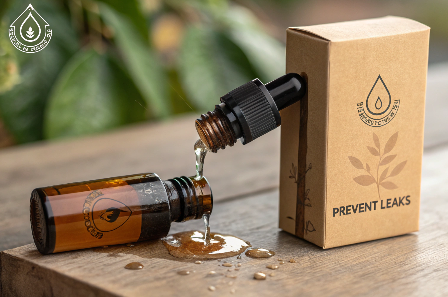
Ever opened a package to find a soaked label or a leaky cap? A burst or leaking essential oil bottle can ruin your product, damage packaging, and affect brand trust.
To prevent essential oil bottles from bursting, use airtight glass containers with pressure-tolerant caps, leave headspace in the bottle, and store in a cool, dark place away from heat and sunlight.
Let’s explore what causes bottles to fail—and how to design, fill, and store them the right way, so your packaging protects your brand, not compromises it.

Why do essential oil bottles leak?
It’s usually not a defect—it’s pressure and chemistry.
Essential oil bottles often leak due to temperature changes, overfilling, improper seals, or incompatible packaging materials that can't handle the oil’s chemical properties.
The Real Culprits Behind Leakage and Bursting
Essential oils are volatile by nature. That means they evaporate easily and react quickly under the wrong conditions. Combine that with unsuitable materials or careless filling, and you’ve got a recipe for product failure.
Common Causes of Leaks or Bursts:
| Cause | How It Happens |
|---|---|
| Overfilling | No space left for air to expand under pressure |
| Heat Exposure | Warms up oil, increases vapor pressure inside bottle |
| Poor Sealing | Loose caps or cheap liners let oil escape |
| Plastic Breakdown | Essential oils degrade weak plastics, causing seepage |
| Improper Storage | Storing flat or under sunlight causes deformation |
Even a tiny bit of excess oil can build pressure in a tightly sealed bottle, especially in transit where it’s exposed to fluctuating temperatures. This is why PauPack designs essential oil bottles with pressure-tolerant caps, tamper-evident seals, and precise reducer inserts to avoid leaks and preserve product integrity.
What is the 30/50/20 rule for essential oils?
It’s not a strict law—but it’s a helpful safety guide.
The 30/50/20 rule suggests blending essential oils at no more than 30% strength, storing them at around 50% humidity, and leaving 20% headspace in the bottle to accommodate pressure changes.
The Science Behind 30/50/20
This rule is rooted in basic physics and good packaging hygiene.
-
30% dilution max – Stronger formulas are more reactive. They’ll erode plastics, distort seals, and emit more vapor.
-
50% humidity storage – Too dry and labels peel. Too humid and bottles sweat. 50% keeps things stable.
-
20% air gap – Like any liquid, essential oils expand with heat. Air space acts as a buffer to avoid cracking or cap ejection.
| Rule Element | Purpose | Benefit |
|---|---|---|
| 30% EO Max | Reduce volatility | Less chemical breakdown |
| 50% Humidity | Minimize condensation | Protects labels and closures |
| 20% Headspace | Allow safe expansion | Prevents bursting/leaks |
At PauPack, we engineer every bottle and cap to meet these safety thresholds. Whether you’re bottling a lavender room spray or an undiluted eucalyptus oil, our OEM packaging guidance ensures each product meets proper fill level and pressure standards—even before it leaves the factory.
Is it okay to store essential oils in plastic bottles?
Only in specific cases—and only temporarily.
It’s not okay to store undiluted essential oils in plastic bottles long term. Plastic degrades and may leach chemicals into the oil. Only PET, HDPE, or PP plastics are safe for short-term or diluted use.
Which Plastics Are Safe?
Not all plastics are created equal. Many essential oils, especially citrus and eucalyptus types, will eat right through soft or cheap plastics like PVC or LDPE.
| Plastic Type | EO Safe? | Use Case |
|---|---|---|
| Amber Glass | ✅ Best | Long-term EO storage |
| Cobalt Glass | ✅ Good | Adds UV protection |
| PET / HDPE | ✅ Conditional | Diluted sprays, short-term use |
| PP (Caps) | ✅ | Dropper caps, reducers |
| PVC / LDPE | ❌ Unsafe | Will degrade, leak, or warp |
At PauPack, our plastic essential oil packaging options are limited to PET and HDPE bottles—always paired with EO-resistant caps. We also offer PLA-based biodegradable packaging, ideal for clients targeting eco-conscious markets. But for high-potency formulas or long shelf-life products, we always recommend glass.
How do you dilute essential oils in a spray bottle?
Dilution also protects your packaging—not just your skin.
To dilute essential oils in a spray bottle, mix 10–20 drops of EO with a solubilizer like alcohol or witch hazel, then add 100ml distilled water. Shake well before use.
Why Proper Dilution Matters
Essential oils are concentrated. When undiluted, they can degrade plastic nozzles, corrode rubber seals, and even vaporize through weak closures. Diluting reduces chemical strength and helps the oil blend better with water-based sprays.
Recommended EO Spray Recipe:
| Ingredient | Amount (Per 100ml Bottle) |
|---|---|
| Essential Oil | 10–20 drops |
| Alcohol/Witch Hazel | 20–30 ml |
| Distilled Water | 70–80 ml |
Tips for a Leak-Free Spray
-
Always shake before use
-
Use emulsifiers (e.g., polysorbate 20) for better blending
-
Choose glass spray bottles or EO-compatible PET if plastic
-
Use fine mist sprayers with EPDM or silicone gaskets for oil resistance
PauPack’s spray bottles are designed with all of this in mind. Our fine mist amber glass bottles, combined with leak-tested atomizers and solubilizer-resistant seals, make them ideal for global brands shipping EO sprays across climates and continents.
Conclusion
Preventing an essential oil bottle from bursting is all about smart packaging and proper storage. Use the right materials, avoid overfilling, and keep your oils cool, dark, and sealed—and your product will stay safe and professional from production to delivery. At PauPack, we don’t just sell bottles—we help you build a packaging system that protects your brand at every stage.