

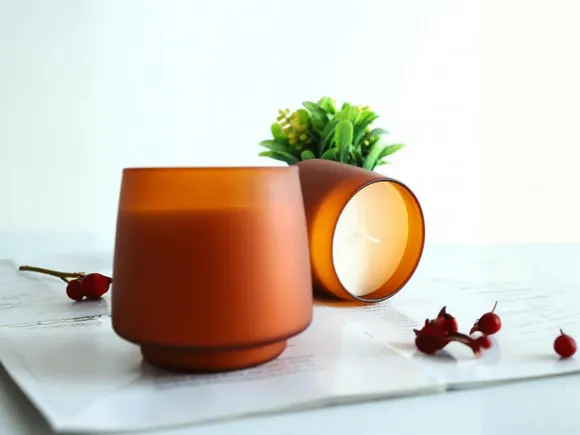
Thermal shock candle jars are not proven by thickness, weight or a supplier adjective. The real question is whether the identified glass container, manufacturing condition, candle system and use boundary are supported by relevant evidence. PauPack builds a failure map before launch so design, candle maker, glass supplier and quality team can see what each check does and does not establish.
Failure Zone A: Residual Stress Starts Before Filling
Glass forming and annealing history can leave stress patterns that are not visible in a product photo. Scratches, impacts and secondary processing can change risk later. PauPack asks for identified lots, manufacturing records and agreed inspection methods. A heavy base may influence appearance and heat distribution, but mass alone is not evidence of correct annealing or fitness for a specific candle.
Failure Zone B: The Candle System Changes the Boundary
Wax, fragrance, additives, color, fill mass, vessel geometry, wick family, wick count and placement interact during burning. The candle manufacturer and qualified safety owners must develop and evaluate the finished candle. PauPack supplies controlled vessel information and production-relevant samples; it does not declare a jar safe from an empty-container observation.
Failure Zone C: Decoration Can Change What the Surface Experiences
Coatings, frosting, printing, labels and adhesives may add processing steps, hide damage or change inspection visibility. Define protected zones, curing route, color standard and contact with fixtures or dividers. PauPack reviews decorated units from the intended route, not only clear glass, and keeps secondary-processing identity with the vessel lot.
Failure-map rule: a pass applies to the identified vessel and tested candle system under the approved method; it is not a universal promise for every wax, wick or use condition.
The Evidence Map for Thermal Shock Candle Jars
| Question | Evidence owner | Record to retain |
|---|---|---|
| Was the glass produced and annealed as specified? | Glass manufacturer and quality | Lot identity and applicable results |
| Does the finished candle behave within the approved plan? | Candle maker and brand safety team | Development and burn-test record |
| Does decoration survive processing and use? | Decorator and packaging quality | Decorated master and observations |
| Does the packed product arrive intact? | Logistics and quality | Packed reference and selected study |
Read ASTM F2179 With the Scope Attached
ASTM F2179 covers minimum performance requirements and associated test methods for annealed soda-lime-silicate glass containers produced for use as candle containers. Its published scope distinguishes filled candle containers from accessories such as holders for free-standing candles. PauPack asks qualified owners to obtain the current version, confirm applicability and define acceptance rather than quoting a standard number without context.
Failure Zone D: A Scratch Is Also a History
Damage can arise during bulk packing, unpacking, washing where used, filling, labeling, conveying or consumer handling. Map every contact point and inspect the zones that guides, dividers and neighboring vessels touch. PauPack uses packed and line-relevant samples to show whether a cosmetic scuff is only visual or whether suspect damage needs technical disposition.
Failure Zone E: Geometry Creates Local Questions
Wall transitions, corners, bases, embossing and changes in thickness can affect forming and the candle's thermal environment. A dramatic shape may also change wick placement and wax pool behavior. PauPack connects the controlled drawing to candle-development questions so visual changes are not approved independently from the system they influence.

Failure Zone F: Consumer Use Is Not One Laboratory Moment
Drafts, surfaces, room conditions, burn intervals, trimming and misuse can change the real use environment. Responsible candle teams establish instructions, warnings, methods and limitations for the destination market. PauPack ensures the packaging brief leaves space for required communication and that decoration does not undermine legibility.
Build a Sample Ladder Instead of One Final Test
Use early stock samples to screen geometry and decoration feasibility. Move to identified production-relevant glass for candle development. Then approve decorated, filled and packed units under the qualified plan. Every rung should state what changed and what question it answers. PauPack prevents an early visual sample from being treated as the final evidence for thermal shock candle jars.
Separate Thermal Shock From Burn Performance
Thermal shock performance of the container and behavior of the finished candle are related but not interchangeable questions. Keep methods and owners explicit. A vessel result does not approve wick selection, and a burn observation does not replace glass manufacturing evidence. PauPack brings both records into one release review without collapsing their meanings.
Review the Lid Without Hiding Heat and Use Assumptions
Lids influence presentation, dust protection, storage and packing, but their intended use must be clear. Check fit, liner or insert, finish contact and consumer instructions. Do not assume a decorative lid belongs on a recently extinguished vessel unless the responsible product team has explicitly addressed that condition.
Map Packing Contact Around the Finished Surface
Case count, divider design, bagging, orientation and pallet handling can affect glass and decoration before the product reaches the consumer. ISTA explains that test selection depends on distribution objectives and the complete package-product. PauPack records the exact packed configuration and requires review when the case, divider or route changes.
Plan Cost Around the Approved System
Compare vessel, decoration, lid, protective packing, inspection, sample loss, development time and residual inventory. A cheaper jar may need more protection or create lower decoration yield. PauPack models sellable-unit cost and reorder resilience instead of selecting thermal shock candle jars by empty-vessel unit price.
Make Change Control Specific
Review changes to glass source, furnace or forming route where relevant, geometry, color, decoration, wax, fragrance load, wick, fill mass, instructions, packing or distribution. The decision owner should state which evidence transfers and what must be repeated. PauPack keeps this matrix with the approved product so change review is fast and defensible.
Who This Packaging Route Fits
This route fits candle brands prepared to control the vessel and finished candle as one program. It is a poor fit when a team wants a generic material statement to replace product development or when frequent untracked component substitutions are expected. PauPack may recommend a simpler stock, undecorated path when it provides a clearer starting point and more stable replenishment.
Close the Failure Map With PauPack
Send the vessel drawing or target size, glass direction, candle system, decoration, lid, quantity, channel and destination. PauPack connects thermal shock candle jars to candle container options, quality management and project support. The brief should end with an identified product, approved evidence and explicit limits.
Use a Stop Rule During Production
Define which observations stop filling or release: unidentified glass, visible cracks, suspect damage, incorrect decoration, abnormal candle-development result or packing deviation. Name who contains material and who can restart. PauPack keeps the stop rule short enough for operators to use, while the investigation record preserves the technical detail needed for disposition.
Keep the Approved Negative Evidence
A useful file includes explained failures, not only passed samples. Record what failed, which condition was different and why the final specification excludes it. PauPack uses this negative evidence to train teams and prevent a visually similar but unqualified vessel from entering a reorder. It makes the boundary around thermal shock candle jars easier to understand.
Audit Storage Before the Candle Is Filled
Empty glass can encounter stacking, temperature swings, dust, moisture and repeated handling before it reaches the candle line. Define warehouse conditions, carton orientation and maximum practical dwell time with responsible teams. PauPack keeps suspect damage and lot identity visible so thermal shock candle jars are not filled after an uncontrolled storage event.
Separate Design Samples From Safety Evidence
Color chips, 3D models and hand-decorated pieces can support brand decisions, but they may not represent production glass or the final candle. Label each sample by purpose and limitation. PauPack uses this discipline to keep thermal shock candle jars tied to production-relevant evidence while allowing creative work to move forward at its own pace.
Review Returns Without Guessing at Consumer Use
Collect photographs, vessel and candle codes, purchase or lot information, burn history where available, remaining wax, packaging and the returned unit. Do not assign cause from a single crack pattern or incomplete account. PauPack routes the evidence to qualified owners and compares it with retained samples and production records before corrective action is proposed.
Frequently Asked Questions
Does a thick candle jar automatically resist thermal shock?
No. Glass composition, forming, annealing, geometry, damage history and the finished candle system all matter.
What does ASTM F2179 cover?
Its published scope addresses annealed soda-lime-silicate glass containers produced for use as filled candle containers.
Does a vessel test approve the wick?
No. Wick and candle-system development require their own qualified methods and responsible owners.
Should decorated jars be included?
Yes. Production-relevant decoration can affect handling, inspection visibility and surface contact.
Why keep glass lot identity?
Lot identity connects samples and production to the manufacturing and inspection evidence being evaluated.
What should a packed reference show?
It should identify the vessel, candle, lid, divider, case count, orientation and protection route.
When should evidence be reviewed again?
Review changes to vessel, decoration, candle system, instructions, packing, supplier or distribution.
Can one pass cover every fragrance and wax?
No. A result belongs to the identified system and method unless qualified owners justify transfer.
What belongs in a supplier brief?
Include geometry, glass direction, candle system, decoration, lid, quantity, channel, destination and evidence needs.
What protects repeat production?
Controlled drawings, codes, lot records, masters, test evidence, packed references and change rules protect it.