

A cracked bottle might seem like a small issue—until it leaks, breaks during shipping, or damages your product reputation.
Burst testing ensures that bottles can withstand pressure without cracking or leaking, protecting your product during storage, transportation, and end-user use.
Let’s break down what a bursting test actually measures, how it’s done, and why it’s a critical part of any quality packaging program—especially for glass containers used in beauty, wellness, and pharmaceutical products.

What is the purpose of bursting test?
Looks aren’t everything—a beautiful bottle must also be tough.
The bursting test is performed to evaluate a bottle’s structural strength and confirm it can withstand internal pressure without failing or exploding.
Dive Deeper: Bursting test = real-world stress test
Whether it’s during hot filling, air freight, or altitude shifts, bottles are exposed to pressure changes. The bursting test simulates those conditions by applying internal hydraulic or pneumatic pressure until the bottle fails—revealing the pressure tolerance level.
Why It Matters:
| Scenario | Pressure Risk | Impact of Failure |
|---|---|---|
| Air cargo shipment | Cabin pressure changes | Cracks or leaks |
| Carbonated liquids | Gas buildup | Cap pop-off or explosion |
| Essential oil storage | Thermal expansion | Seal failure |
| Repeated squeezing (plastic) | Structural fatigue | Breakage at seams |
At PauPack, we subject our glass bottles to rigorous burst testing—especially for pressurized, dropper, or liquid products—to ensure our clients get safe, high-quality packaging that won’t let them down in the field.
What is the bottle test method?
Testing isn’t just about squeezing the bottle until it breaks—it’s science.
The bottle test method involves applying hydraulic or pneumatic pressure inside the bottle while monitoring at what point it fails; some tests also simulate drop or compression scenarios.
Dive Deeper: How burst testing is done
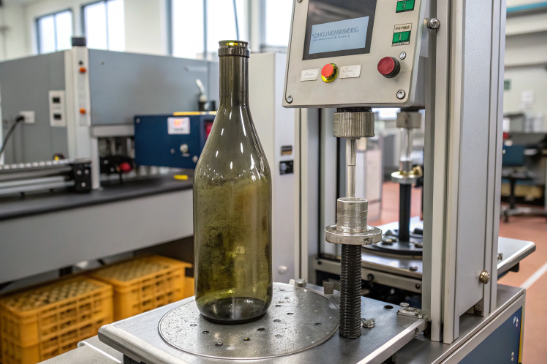
Burst testing is performed using a calibrated machine that fills the bottle with water or air, gradually increasing pressure while measuring PSI (pounds per square inch). The test ends when the bottle breaks or leaks.
Standard Bottle Testing Methods:
| Test Type | Purpose | Typical PSI Range |
|---|---|---|
| Hydrostatic Pressure Test | Tests bursting strength | 50–300 PSI |
| Leak Test (Vacuum) | Finds micro-cracks | 15–30 PSI |
| Drop Test | Simulates transport accidents | Height: 1–1.5m |
| Compression Test | Tests stacking strength | Measured in kN |
Each test mimics a real-world scenario. PauPack’s QC process includes hydrostatic burst testing for all essential oil and perfume bottles, and we provide technical sheets with pressure ratings upon request.
What is the burst test process?
So how exactly do manufacturers test bottles to the point of failure?
The burst test process uses a pressurized chamber to increase internal pressure within the bottle until it breaks, recording the maximum PSI it can handle.
Dive Deeper: Step-by-step burst test explained
Here’s what happens behind the scenes at a glass bottle factory when burst testing is part of quality control:
Typical Glass Bottle Burst Test Procedure:
-
Visual Inspection – Check for bubbles, cracks, or thickness inconsistencies.
-
Fill with water or air – Usually via a sealed nozzle.
-
Apply increasing pressure – Gradually ramped up via machine.
-
Observe failure point – Note burst location (neck, wall, base).
-
Record PSI – Determines batch performance.
Many beauty brands, especially those selling internationally, now require packaging that passes burst testing as part of compliance. At PauPack, we offer burst-tested glass and plastic packaging that meets FDA, ISO, and export standards.
Why do bottles burst?
Bottles don’t burst without a reason—it’s usually a sign of stress, weakness, or misuse.
Bottles burst due to excessive internal pressure, structural flaws, material fatigue, or improper use (like over-tightening caps or storing volatile liquids improperly).
Dive Deeper: Root causes of bursting failures
Understanding why bottles burst helps you avoid it—both in your own packaging development and your end customer’s use.
Common Causes of Burst Failures:
| Cause | Example |
|---|---|
| Overpressure | Carbonated product in a non-pressurized bottle |
| Thermal shock | Pouring hot liquid into cold glass |
| Thin walls or weak seams | Manufacturing defect |
| Cap over-tightening | Cracks in neck or threads |
| Chemical degradation | Oils reacting with plastic |
That’s why PauPack performs 100% inspection on critical-use bottles and offers burst-resistance guidance in our packaging specs. For aromatherapy, pharmaceutical, or skincare packaging, durability isn’t optional—it’s a necessity.
Conclusion
Burst testing protects your product, your customers, and your brand. It’s a behind-the-scenes quality step that makes all the difference in real-world reliability.