

PCR (Post-Consumer Recycled) bottles are only as effective as the systems that collect and recycle them.
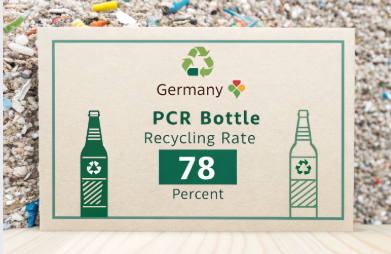
Germany leads the world with a 78% recycling rate for PCR plastic bottles, setting a benchmark for sustainability and regulatory alignment in packaging.
Understanding country-level recycling rates can help brands make smarter sourcing, compliance, and branding decisions.

Why Recycling Rates Matter When Choosing PCR Bottle Suppliers?
Recycling isn’t just about what goes in the bin—it’s about what comes back into production.
Higher national recycling rates mean better raw material availability, cleaner PCR feedstock, and more cost-stable supply chains.
Key reasons this matters:
-
Sustainability Claims: Authenticity depends on real end-of-life recycling data
-
Compliance: Local recycling rates influence Extended Producer Responsibility (EPR) fees
-
Material Quality: Better sorting = clearer, more consistent PCR resin
-
Cost: Regions with poor recycling rely on more expensive imported PCR
At PauPack, we prioritize sourcing PCR resin from countries with robust collection and recovery systems—like Germany, the Netherlands, and Japan—ensuring consistency and traceability for every bottle we supply.
How Do Recycling Rates Compare Across Key Global Markets?
The differences are dramatic—and they affect packaging strategy.
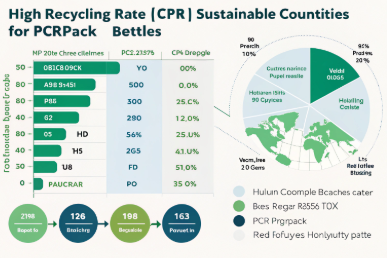
European markets lead global recycling performance, while major production regions like the U.S. and Southeast Asia lag behind in PCR recovery rates.
Global PCR Bottle Recycling Rates (2024 Data)
| Country | PCR Recycling Rate | Notes |
|---|---|---|
| Germany | 78% | Deposit refund, strict EPR |
| Netherlands | 70% | Highly efficient dual-stream system |
| Japan | 64% | Citizens separate 9+ waste streams |
| UK | 52% | Progressing post-Brexit reforms |
| U.S. | 31% | No national policy, state-level only |
| China | 26% | Focused more on industrial recycling |
| Indonesia | <10% | Low public sorting, high landfill |
If your target market is Europe, sourcing PCR from high-recovery countries like Germany or the Netherlands boosts both your supply stability and brand credibility.
What Makes Germany a Global Leader in PCR Bottle Recovery?
Germany’s recycling leadership didn’t happen by accident.
A mix of government mandates, consumer participation, and deposit systems have made Germany the gold standard for PCR bottle recovery.
Key factors include:
-
Pfand system: Consumers pay a refundable deposit on every plastic bottle
-
Clear labeling: Products carry standardized recycling icons
-
High-tech sorting: Optical scanners separate plastics by resin type
-
Public education: Waste sorting is taught early and enforced socially
For brands, this means German-sourced PCR is:
-
More available
-
Cleaner and less contaminated
-
Consistently priced
-
Aligned with EU green labeling laws
At PauPack, we leverage these upstream advantages to supply high-quality PCR packaging to clients who want premium sustainability without the premium price tag.
How PauPack Supports Brands in High-compliance Markets?
When you sell in countries like Germany, compliance isn’t optional—it’s a differentiator.
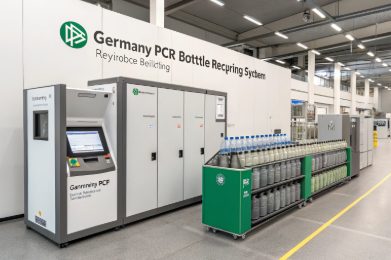
PauPack offers fully REACH-tested, EU-compliant PCR packaging backed by chain-of-custody documentation and ready-to-print carbon footprint data.
Here’s what you get:
-
✅ Resin origin traceability: Know where your PCR came from
-
✅ Low MOQ PCR bottles: Start with 1000 pcs for new markets
-
✅ Custom design + compliance support: EU/UK labeling guidance
-
✅ Export-ready logistics: With documentation for EPR submission
Whether you're entering DM (Germany), Boots (UK), or Amazon EU, PauPack ensures your PCR packaging is not just beautiful—it’s certified, audit-ready, and strategically sourced.
How to Align Your Packaging Strategy with Global Recycling Trends?
Every country recycles differently—your packaging strategy should too.
Smart brands localize their PCR material sourcing, label claims, and disposal instructions to match national recycling realities.
Strategic Packaging Alignment Tips
| Market | PCR Tip |
|---|---|
| Germany/NL | Use transparent bottles + deposit-compatible barcodes |
| Japan | Minimize multi-material caps for easier sorting |
| U.S. | Avoid dark-colored plastics, low curbside compatibility |
| Southeast Asia | Focus on refillable or biodegradable alternatives |
| UK | Include OPRL-approved recycling symbols on-label |
PauPack offers global packaging playbooks tailored to each region. From carbon-neutral PLA jars in the EU to PET + PCR hybrids in the U.S., we help you match product, policy, and consumer expectations.
What Recycling Rates Reveal About Your Packaging’s End-of-life Value?
A bottle’s job doesn’t end at purchase—it ends when it’s successfully recovered and reprocessed.
High national recycling rates indicate better infrastructure, consumer awareness, and ultimately, a higher chance your PCR packaging will actually be recycled again.
Why this matters:
-
Brand accountability: Scope 3 emissions now include packaging end-of-life
-
Recyclability claims: Can be challenged if local recycling is low
-
Consumer trust: Green buyers are savvy—they check your facts
For example, using a PCR bottle made from 100% recycled PET means little if it’s sold in a market with <20% recovery rate. PauPack helps you close this gap with localized sourcing and design-for-recyclability consulting.
Why Brands Expanding to Europe Must Prioritize High-PCR Sources?
The EU is the strictest region in the world for packaging sustainability.
For brands entering Germany, France, the Netherlands, or the Nordics, using PCR from high-recovery regions ensures smoother compliance, better cost control, and stronger retailer acceptance.
Key reasons:
-
Green Deal & PPWR require minimum recycled content in packaging
-
Eco-modulation fees reward high-recyclability formats
-
Retailers like DM, Carrefour, Boots prefer traceable PCR
PauPack sources PCR materials directly from German and Dutch recovery streams. These materials are:
-
REACH-compliant
-
Food-grade (when required)
-
Available at low-MOQ with full certification
This makes it easier for emerging brands to enter the EU market with confidence—and without greenwashing risk.
How Regulatory Pressure Is Reshaping PCR Packaging Decisions?
Recycling stats aren’t just environmental—they’re political.
Governments are using recycling data to inform packaging tax policies, label mandates, and import requirements—forcing brands to rethink their PCR packaging from top to bottom.
Examples of impact:
| Region | Regulation | Implication |
|---|---|---|
| Germany | VerpackG + LUCID Registry | Requires recyclability scoring |
| France | Triman + info-tri symbols | Mandatory disposal labeling |
| California | SB 343 + PCR mandates | Bans misleading recycling claims |
| UK | Plastic Packaging Tax | 30% PCR minimum or pay levy |
PauPack works with legal and sustainability teams to offer:
-
Packaging LCAs
-
Localized compliance labeling
-
Custom designs optimized for recyclability in target regions
How PauPack Builds a Global PCR Supply Chain with Circularity in Mind?
We don’t just buy PCR—we invest in the systems that keep it circulating.
PauPack partners with certified recyclers in high-performance markets, and designs PCR bottles that align with real-world recycling systems.
Our supply chain model:
-
Source from high-recovery regions (Germany, NL, Japan)
-
Produce in ISO 14001 facilities using renewable energy
-
Design bottles for mono-material recovery
-
Use shared tooling to reduce material waste
-
Offer refillable/recyclable packaging hybrids
For instance, our 100ml PCR dropper bottle uses:
-
75% EU-sourced PCR PET
-
PP cap with debossed logo (easy to separate)
-
Label-free version for direct print (no contamination)
This ensures not just one life—but multiple cycles for every bottle we make.
How Brands Can Leverage Recycling Data for Stronger Sustainability Marketing?
Data builds trust—and smart brands are using recycling metrics to boost engagement.
By showing country-specific recycling data, brands can position themselves as informed, responsible, and aligned with local sustainability goals.
Examples of data-driven messaging:
-
“Sourced from EU-verified 78% recovery streams”
-
“Bottle re-processed in Germany with 85% energy from renewables”
-
“Design optimized for 94% recyclability in France and Netherlands”
PauPack provides all the assets to support this, including:
-
PCR chain-of-custody certificates
-
LCA summaries for specific SKUs
-
Custom recycling icons and disposal copy for labels
We also help clients align messaging with retailers, trade shows, and sustainability indexes—so every bottle becomes a talking point, not just a container.
Conclusion
Recycling rates define the real-world value of your PCR packaging. PauPack connects you with the right materials, the right markets, and the right message to lead in 2025’s circular economy.