

A skincare jar can pass the photo test and fail the sample test. The glass feels nice, but the carton suddenly looks too thin. The PCR bottle matches the sustainability brief, but the color looks different beside the printed label. The pump bottle looks clean, then gives a weak first press with the actual lotion.
That is why skincare packaging should be checked on a sample table before a bulk order. Once the real formula, label, and carton are involved, the choice feels less theoretical.

Start With the Formula
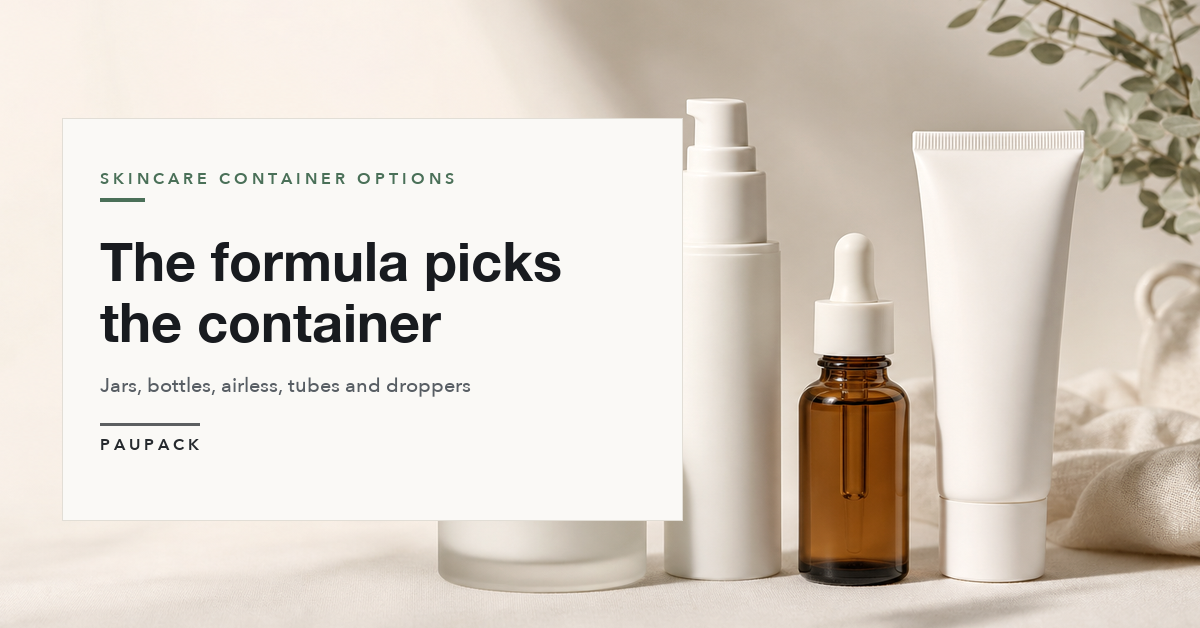
Do not choose the material first. Start with the product. A thick cream is easier in a jar or wide-mouth pack. A lotion often needs a pump. A serum may need airless packaging, a dropper, or a smaller controlled bottle. A body-care SKU sold online may need lighter packaging than a spa cream sold mainly in store.
Write down four things before asking for a quote: texture, fill volume, use habit, and sales channel. That small note keeps the project from drifting into random bottle photos.
When Glass Is Worth the Weight
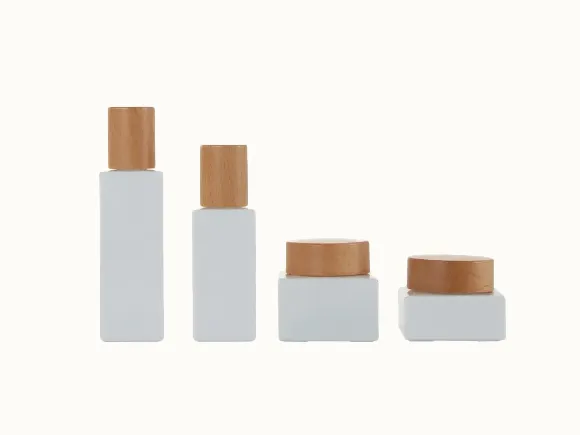
Glass cream jars and glass lotion bottles earn their place when the product needs weight and a more premium shelf feel. Think moisturizers, masks, balms, eye cream, and giftable skincare lines. Frosted glass reads softer; white glass feels cleaner and more cosmetic.
The risk is not only breakage. Weight, carton strength, lid fit, label position, and pallet plan all need checking. Put a filled jar into the intended carton and handle it like a parcel order. A weak carton in the sample room is a warning, not a small detail.
Where PCR Plastic Is Useful
PCR plastic bottles are useful when the pack needs to stay lighter, work with a pump or squeeze format, or support a recycled-content direction. Body lotion, shampoo, hand care, sprays, and refill-friendly lines are common places to test them.
Keep the review practical. Look at color under normal light. Check for surface marks. Match the cap or pump. Fill the bottle and leave it long enough to spot compatibility issues. If a label will mention recycled content, keep the supplier documents before the artwork is printed.
Do Not Guess on Pumps
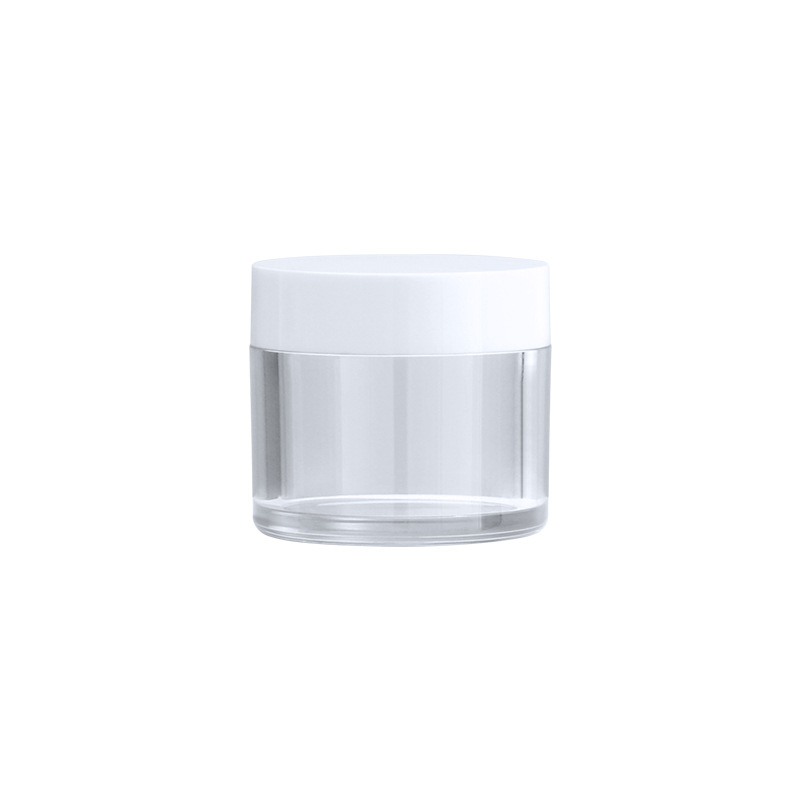
Airless bottles and pump bottles can be useful for lotions, serums, emulsions, and treatment products. They keep the pack cleaner during use and help the customer control the amount.
Test with the real formula. Check priming, output, actuator feel, cap fit, leakage after shaking, and product left inside the bottle. Water testing can be misleading when the final formula is a thick emulsion.
Notes From the Sample Table
- Glass cream jars: check weight, lid fit, label area, inner protection, and carton strength.
- Glass lotion bottles: check pump match, filling method, cap protection, and outer box size.
- PCR plastic bottles: check color, surface finish, documentation, and formula compatibility.
- Airless bottles: check output, priming, viscosity range, and remaining product after use.
- Bamboo or wooden details: check moisture control, cap fit, and surface consistency.
Keep Decoration in the First-Order Budget
Labels are often the safest first step because skincare formulas, scent names, and SKU plans may still change. Printing, hot stamping, frosting, coating, bamboo caps, and custom cartons can all look stronger. The question is whether the first order can carry the cost and lead time.
PauPack can compare the full pack together, from skincare packaging jar or bottle to pump, lid, label, carton, samples, and logistics. Browse the PauPack products page before sending reference photos.
Details Worth Sending in the First Email
Send PauPack the product type, texture, capacity, preferred material, closure or pump style, decoration idea, order quantity, destination market, and reference images. Artwork, carton requirements, and recycled-content targets should go in the same message.
Mention the sales channel too. Retail, e-commerce, spa, salon, wholesale sets, and gift boxes all put different pressure on the pack. Learn more on the PauPack about page, or contact PauPack with your project details.
Do This Before Bulk Approval
Fill samples with the real formula. Label them. Photograph them. Test the closure. Pack one sample like a customer order. Check the pack again after handling. This small routine catches the kind of problems that are painful after a full skincare packaging order is placed.
If the package uses recycled-content or environmental wording, review claim support before printing. The FTC Green Guides are a useful public reference for U.S. environmental marketing claims.