

The cap may be small—but it carries the weight of your brand’s quality promise.
In our side-by-side durability test, aluminum and PP (polypropylene) caps performed differently across stress, seal, and aging conditions—revealing key insights for essential oil packaging decisions.
Here’s how they compare—and what it means for your next product launch.

What Are the Key Differences Between Aluminum and PP Caps in Daily Use?
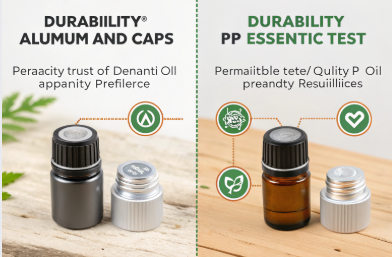
Aluminum and PP are two of the most common materials for essential oil bottle caps—but they feel and behave very differently.
Aluminum caps bring visual luxury and tactile strength, while PP caps offer cost-effectiveness, chemical resistance, and consistent molding.
Material Comparison: Aluminum vs PP
| Feature | Aluminum Cap | PP Cap |
|---|---|---|
| Appearance | Metallic, sleek, premium | Matte or glossy, color-flexible |
| Weight | Heavier | Lightweight |
| Scratch Resistance | Moderate | High (with texture) |
| Chemical Resistance | Good (but not acid-proof) | Excellent for essential oils |
| Customization | Engraving, anodizing | Injection color, silk print |
| Sustainability | Recyclable | Recyclable, more mass-produced |
At PauPack, we often use aluminum for signature product lines and PP for refill or sample sets—creating a layered brand experience with material contrast.
How Did Each Cap Type Perform Under Our Durability Stress Tests?
We tested both cap types using standard performance simulations for essential oil packaging.
In a 7-day lab test, we subjected each cap to temperature stress, repeated torque, leak simulation, and surface damage to mimic customer use and shipping scenarios.
Durability Test Results
| Test Type | Aluminum Cap | PP Cap |
|---|---|---|
| Twist/Torque Repetition (100 cycles) | Minimal degradation | No change |
| Heat Exposure (45°C, 48h) | Retained shape, minor surface dulling | Fully stable |
| Leak Seal Test (Inversion + pressure) | Passed | Passed |
| Drop Test (1.2m on hard surface) | Minor denting | No visible damage |
| Scratch Resistance (abrasive rub) | Visible marks | Minor scuffing |
Summary: Both caps sealed well—but PP wins in impact and chemical resilience, while aluminum delivers a more tactile, premium experience with some wear trade-offs.
Which Material Offers Better Long-term Seal and Leak Resistance?
Sealing isn’t just about the cap—it’s the system.
In our experience, both PP and aluminum caps seal reliably when paired with high-quality liners and properly matched neck threads—but PP liners maintain elasticity longer in high-oil environments.
Key Sealing Factors
| Component | Role |
|---|---|
| Inner liner (TPE, PE foam, silicone) | Absorbs thread tolerance gaps |
| Thread compatibility | Ensures full closure without cross-threading |
| Material fatigue | Determines cap’s longevity after repeated use |
| Dropper/Insert fit | Must compress and recover without oil seepage |
At PauPack, we recommend PP caps for citrus-rich or alcohol-based essential oils, which can corrode aluminum over time, and aluminum caps for gifting or short-cycle luxury products.
How PauPack Balances Aesthetics and Functionality in Cap Selection?
Design and durability don’t have to conflict.
PauPack offers hybrid cap solutions—such as aluminum shells with PP cores—to combine visual appeal with long-term performance.
Our design strategies include:
-
Aluminum outer, PP inner structure for luxury look + seal integrity
-
Anodized or brushed aluminum for scratch-masking texture
-
Dual-tone PP caps with matte base and glossy collar for shelf presence
-
Pre-tested dropper + liner + cap sets to eliminate leakage variables
We also offer in-house color-matching, logo debossing, and laser branding so your cap speaks the same design language as your bottle and label.
How to Choose the Right Cap for Your Essential Oil Product Line?
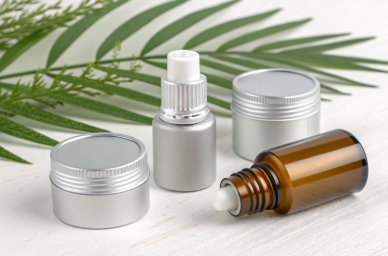
The “right” cap depends on your brand goals, product formula, and usage intent.
For long-term storage and oil-heavy formulas, PP is more practical. For gift sets, discovery kits, or DTC unboxing impact, aluminum creates emotional weight.
Decision Checklist
| Factor | Ideal Cap |
|---|---|
| Oil formula includes citrus or alcohol | PP |
| Brand position is premium / boutique | Aluminum |
| Refill / subscription model | PP for cost-efficiency |
| Retail gifting / holiday line | Aluminum or hybrid shell |
| Frequent reuse or sample kit | PP (less wear & tear) |
PauPack helps clients run compatibility tests, cost simulations, and design mockups—so the cap you choose supports your product, your customer, and your bottom line.
How Do Aluminum and PP Caps Differ in Their Environmental Footprint?
Beyond aesthetics, materials leave a mark on the planet.
Aluminum and PP (polypropylene) have very different life-cycle footprints—both in energy use during production and in recyclability.
Environmental Comparison
| Factor | Aluminum | PP |
|---|---|---|
| Raw Material | Mined bauxite, high-energy processing | Petroleum-based, lower energy to mold |
| Recyclability | Infinite with clean stream | Widely recyclable, but lower rates |
| Carbon Footprint (per kg) | ~11.2 kg CO₂ | ~1.9 kg CO₂ |
| Post-use Path | Curbside recycling, high scrap value | Recycled where facilities exist |
| Waste Impact | Heavy, often reused | Light, risk of downcycling |
At PauPack, we offer both recycled aluminum options and PCR-PP cap lines to help brands reduce emissions without sacrificing quality. We also guide clients on regional recyclability based on export destinations.
What Role Does Cap Weight Play in Consumer Perception and Shipping Cost?
Heavier doesn’t always mean better—but it does feel different.
Aluminum caps, being denser, offer a tactile weight that enhances perceived luxury. PP caps, being lighter, benefit logistics, sustainability metrics, and e-commerce shipping fees.
Weight Comparison & Impact
| Cap Type | Avg. Weight (15ml dropper cap) | Shelf Feel | Freight Factor |
|---|---|---|---|
| Aluminum | ~8.2g | Premium, cold touch | Higher per-unit shipping cost |
| PP | ~3.1g | Neutral, lighter open | Lighter for air or courier fulfillment |
PauPack helps brands match cap weight to brand storytelling: go heavier for prestige unboxing, lighter for travel kits or mass online distribution.
How Do Different Cap Textures Affect Grip, Usage, and Leak Control?
Touch matters—especially when oils are involved.
Cap texture influences how easily users can grip, open, and close essential oil bottles—especially with oily fingers, wet environments, or repeat use.
Grip and Texture Performance
| Feature | Aluminum Cap | PP Cap |
|---|---|---|
| Ribbed Edge | Optional; subtle, elegant | Easy to mold, more common |
| Matte Finish | Brushed or anodized for grip | Soft-touch coating available |
| Embossing | Possible with tooling | Easy and low-cost |
| Glossy/Polished | Looks sharp, slippery risk | Less frequent on PP |
PauPack offers a range of tactile finishes: anodized anti-slip aluminum, grooved PP, and even mixed-surface caps for brand-specific usability. We also pressure-test closure systems with all finish options to ensure leak integrity isn’t compromised.
How PauPack Recommends Cap-Material Pairings by Product Type?
Cap material should match what’s inside—and how it’s used.
At PauPack, we help brands select the optimal cap based on product category, customer behavior, and market positioning.
Smart Cap Pairing Examples
| Product Type | Recommended Cap | Reason |
|---|---|---|
| Luxury Facial Oil (30ml) | Aluminum dropper or hybrid shell | Elegant, weighty for DTC |
| Aromatherapy Kit (10ml roll-on) | PP with locking thread | Travel-safe, leakproof |
| Room Spray / Mist | PP spray cap with matte collar | Lightweight, ergonomic |
| Body Oil (50ml) | Ribbed PP with TPE liner | Grip + leak control |
| Eco Refill Line | Recycled PP flat cap | Cost-effective, consistent closure |
We also build interchangeable neck threads into our packaging systems so clients can run multiple cap options on a single bottle format.
How to Design a Cap Strategy that Balances Cost, Look, and Longevity?
It’s not about picking one cap—it’s about planning for scale, tier, and margin.
An effective cap strategy segments your product line by use case, price point, and customer behavior—so you control cost without compromising experience.
Strategic Cap Planning Tips
-
🧱 Tier your materials: Aluminum for hero SKUs, PP for core range
-
🛠️ Lock base bottle specs: Keep cap options flexible with universal necks
-
🪙 Balance tooling vs printing: Use silk screen for lower MOQ variants
-
📦 Think forward: Align cap weight with shipping method
-
🌍 Test in real environments: Especially for heat, oils, and repeated open-close cycles
PauPack offers full-cycle planning support—from R&D to tooling to market feedback loops—so your cap choice works today, and scales tomorrow.

Conclusion
Your essential oil cap is more than a closure—it’s a statement. At PauPack, we test, compare, and engineer every detail to deliver caps that look sharp, feel right, and perform every time, no matter the material.