

They smell good—but do they actually do anything? Or is it just aromatherapy hype?
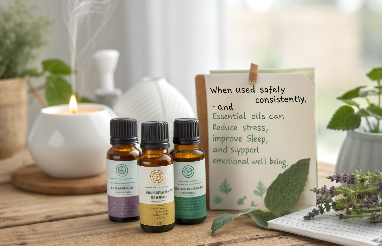
Yes, essential oils can genuinely help people feel better—by reducing stress, improving sleep, and supporting emotional well-being—when used safely and consistently.
The key is using them intentionally and understanding how they work. From calming nerves to boosting mood, essential oils offer more than fragrance—they support your mind and body in subtle but powerful ways.

Are essential oils actually effective?
People swear by lavender for sleep and peppermint for headaches—but what’s the science?
Essential oils are effective in specific applications like stress relief, mild pain reduction, sleep improvement, and mood enhancement, though results can vary by individual and oil type.
They’re not a cure-all, but they’re far from placebo. Here's why:
How Essential Oils Work
Essential oils affect the limbic system, the part of the brain that controls emotions and memory. Inhaling them can alter mood, lower cortisol, and even change heart rate or blood pressure.
| Effect | Oil Example | Evidence Type |
|---|---|---|
| Stress reduction | Lavender, bergamot | Clinical trials, EEG studies |
| Pain relief | Peppermint, clove | Topical studies, case reports |
| Improved sleep | Roman chamomile | Controlled trials, sleep tracking |
| Mental clarity | Rosemary, lemon | Cognitive testing in labs |
At PauPack, we package oils not just to preserve quality, but to enhance usability. Our custom dropper bottles and roller designs help ensure accurate, safe application—because effectiveness starts with the right dose in the right form.
What They’re Not Good For
-
Serious infections
-
Chronic diseases
-
Replacement for medication
Essential oils should complement, not replace, medical treatment. Think of them as tools in a holistic wellness toolbox.
Do essential oils actually relax you?
Close your eyes. Take a deep breath. That’s not just your imagination.
Yes, certain essential oils like lavender, ylang ylang, and chamomile have scientifically proven calming effects that can reduce anxiety, lower blood pressure, and ease nervous tension.
The sense of smell is powerful. A whiff of a comforting scent can shift your mindset in seconds.
Oils That Calm the Mind
| Oil Name | Known For | Best Use Method |
|---|---|---|
| Lavender | Sleep and stress relief | Diffuser, pillow spray |
| Roman Chamomile | Nervous system soother | Topical, inhalation |
| Ylang Ylang | Lowering blood pressure | Diffuser, bath blend |
| Frankincense | Emotional grounding | Meditation, roller blend |
Using these oils in a diffuser or as part of a bedtime ritual can promote deeper, more restorative sleep.
PauPack tip: For relaxation blends, we help brands design packaging with serene colors, calming typography, and texture that evokes a peaceful state—because unboxing is part of the relaxation journey too.
Mental Benefits Backed by Science
A 2017 meta-analysis in Evidence-Based Complementary and Alternative Medicine confirmed that aromatherapy significantly reduces anxiety in patients before surgery. If it works there, it’ll work for your Sunday night stress.
What is the 30 50 20 rule for essential oils?
You’ve seen it before, but it keeps popping up. Let’s clarify it again.
The 30-50-20 rule refers to the ideal aromatic structure of an essential oil blend: 30% top notes, 50% middle notes, and 20% base notes, ensuring balance, harmony, and lasting scent.
This isn't a marketing gimmick—it’s a proven framework used by perfumers and aromatherapists.
Why It Works
| Layer | % | Purpose | Examples |
|---|---|---|---|
| Top | 30 | Immediate impression, uplifts mood | Lemon, peppermint, orange |
| Middle | 50 | Heart of the blend, stabilizes scent | Lavender, rose, geranium |
| Base | 20 | Long-lasting depth, anchors scent | Sandalwood, patchouli |
When used correctly, the result is a blend that evolves over time and delivers continuous aromatic benefits.
At PauPack, we offer custom essential oil kit packaging that’s structured around this blend philosophy—featuring separate compartments for each note category, plus insert guides to help educate customers on how to use and mix oils at home.
How long does it take to see results from essential oils?
Some effects are instant. Others take time and routine.
Results from essential oils vary by purpose—calming effects can occur within minutes, while skin or wellness benefits may take days to weeks of consistent use.
Results by Use Case
| Application | Expected Timeline | Example Oil |
|---|---|---|
| Mood enhancement | 1–5 minutes | Bergamot, orange |
| Headache relief | 10–30 minutes | Peppermint |
| Sleep improvement | 1–7 days | Lavender |
| Skin care results | 2–4 weeks | Tea tree, frankincense |
Consistency is key. Oils don’t work like pills—you’re building up a habit and a sensory trigger.
That’s why PauPack encourages clients to build sets and routines: morning rollers, evening sprays, and diffuser blends. And we help brands design the packaging to reflect those rhythms—like AM/PM boxed sets, or week-long oil journeys.
Bonus Tip: Track Your Results
Encourage your customers to journal how they feel after using certain oils. That kind of intentionality not only boosts effectiveness—it builds brand engagement.
Conclusion
Yes, essential oils can make you feel better. Not just because they smell good—but because they support your mind and body in deeply human, deeply natural ways. Use them with intention, and the benefits will follow.