

In 2025, the PCR (Post-Consumer Resin) bottle industry is expected to undergo significant changes driven by evolving market trends, regulatory pressures, technological advancements, and shifting consumer preferences. Based on recent market research and industry analyses, here are the key anticipated impacts on the PCR bottle sector:
1.Stronger Regulatory Mandates and Recycling Targets
Governments worldwide, especially in regions like the European Union, California, and parts of Asia-Pacific, are implementing stricter regulations mandating minimum recycled content in plastic packaging. For example, the EU requires PET beverage bottles to contain at least 25% recycled PET (rPET) by 2025, increasing to 30% by 2030. Similarly, California aims for 30% PCR content in bottles by 2030.
These regulations will compelPCR bottlemanufacturers to increase the recycled content in their products, driving demand for high-quality PCR materials and innovative recycling technologies. Compliance will become a key differentiator and a prerequisite for market access.

2.Rising Demand from Beverage and Food Sectors
The beverage industry is a major driver ofPCR bottledemand, with companies like Coca-Cola, PepsiCo, and BlueTriton Brands committing to high PCR content in their bottles to meet sustainability goals and legal requirements. The growing global demand for bottled beverages, including soft drinks, water, and juices, will continue to fuel PCR bottle production.
The food packaging sector is also expanding its use of PCR bottles and containers, with fast-moving consumer goods (FMCG) brands increasingly adopting 100% recycled PET packaging to reduce environmental impact and appeal to eco-conscious consumers.
3.Supply Chain Investments and Capacity Expansion
To meet rising PCR content targets, manufacturers and recyclers are investing heavily in expanding local recycling infrastructure and improving PCR material quality. For instance, PepsiCo’s $35 million investment in Closed Loop Partners’ local recycling fund aims to increase the supply of recycled PET.
However, the PCR bottle industry faces challenges such as fluctuating PCR resin prices, supply chain bottlenecks, and the need for consistent, contaminant-free recycled materials. These factors will drive innovation in chemical recycling, sorting technologies, and supply chain integration.
4.Technological Innovation and Product Development
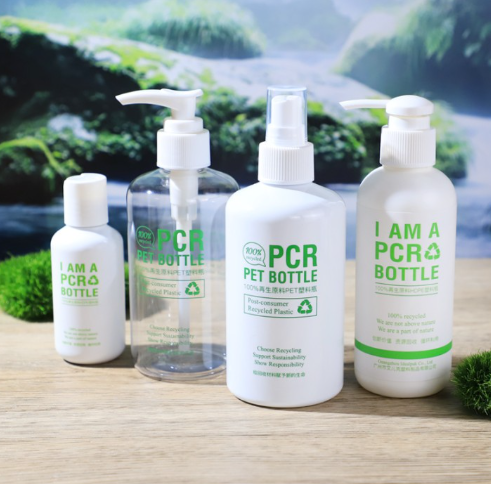
The industry is witnessing advancements inPCR bottledesign and manufacturing processes. Collaborative initiatives like Design4Circularity bring together major personal care brands and material suppliers to develop 100% PCR content bottles with enhanced printability and design differentiation.
Manufacturers are also focusing on improving the mechanical and aesthetic properties of PCR bottles to match or exceed virgin plastic performance, including clarity, strength, and barrier properties.
5.Consumer Awareness and Brand Differentiation
Increasing consumer awareness about plastic pollution and sustainability is influencing purchasing decisions. Brands using PCR bottles can leverage this in their marketing to build trust and loyalty.
Packaging innovation, including decorative printing, embossing, and smart labeling, is becoming more important to create distinctive PCR bottle designs that stand out on shelves and online platforms.
6.Regional Market Dynamics
The Asia-Pacific region is expected to experience the fastest growth in PCR packaging adoption due to rising environmental regulations and increasing consumer demand. Europe remains the largest market, driven by stringent EU policies and investment in recycling infrastructure.
In North America, brand commitments and state-level regulations are accelerating PCR bottle adoption, while emerging markets are gradually catching up.
7.Sustainability and Circular Economy Integration
PCR bottles are central to circular economy strategies, reducing reliance on virgin plastics and lowering carbon footprints. The industry trend towards closed-loop systems, where bottles are recycled back into bottles, will intensify.
Manufacturers like PauPack Bottles are pioneering sustainable production with high PCR content, renewable energy use, and closed-loop water systems, helping brands achieve environmental, social, and governance (ESG) goals.
8.Challenges and Opportunities
While the PCR bottle market grows, challenges such as quality variability, contamination risks, and higher costs compared to virgin plastics persist. Industry collaboration, innovation in sorting and recycling technologies, and supportive policies will be critical to overcoming these hurdles.
Opportunities lie in expanding PCR applications beyond bottles to other packaging formats, developing biodegradable PCR blends, and integrating digital technologies for traceability and consumer engagement.
Summary
By 2025, the PCR bottle industry will be shaped by regulatory pressure, sustainability commitments, technological innovation, and changing consumer behaviors. Manufacturers that invest in quality PCR materials, flexible production capabilities, and innovative design will lead the market. For B2B buyers and brands, partnering with experienced PCR bottle OEMs like PauPack Bottles—who offer high PCR content, customization, and global logistics support—will be essential to succeed in this evolving landscape.
PCR Bottle Industry Outlook 2025 – Key Trends & Impacts
| No. | Trend / Impact Area | Key Insights | Impact on PCR Bottle Industry |
|---|---|---|---|
| 1 | Stronger Regulatory Mandates | Governments (EU, California, Asia-Pacific) mandate minimum recycled content (e.g. 25% rPET in EU by 2025). | Drives demand for high-quality PCR materials; compliance becomes essential for market access. |
| 2 | Rising Demand from Food & Beverage | Major brands (e.g., Coca-Cola, PepsiCo) commit to higher PCR use; FMCG adopts 100% rPET bottles. | Sustains production growth and pushes industry to match virgin plastic performance. |
| 3 | Supply Chain Investments | Companies like PepsiCo invest millions in local recycling (e.g., $35M into Closed Loop Partners). | Enhances infrastructure but challenges remain: cost, contamination, and resin availability. |
| 4 | Technological Innovation | Initiatives like Design4Circularity promote 100% PCR bottles with premium look and printability. | Leads to better mechanical and visual properties; encourages adoption across industries. |
| 5 | Consumer Awareness & Branding | Consumers prefer sustainable packaging; PCR use becomes a brand trust signal. | Sparks demand for customized designs, embossing, smart labels, and eco-brand storytelling. |
| 6 | Regional Market Dynamics | Asia-Pacific sees fastest growth; Europe leads in regulations; U.S. accelerates via state policies. | Encourages region-specific strategies and flexible OEM manufacturing. |
| 7 | Circular Economy Integration | Closed-loop systems gain traction; brands seek ESG alignment and carbon reduction. | Encourages bottle-to-bottle recycling and sustainable operations like PauPack's model. |
| 8 | Challenges & Opportunities | Issues: cost, quality inconsistency, contamination; Opportunities: biodegradable PCR, smart tracking. | Innovation in recycling, digitalization, and product expansion can unlock new growth. |